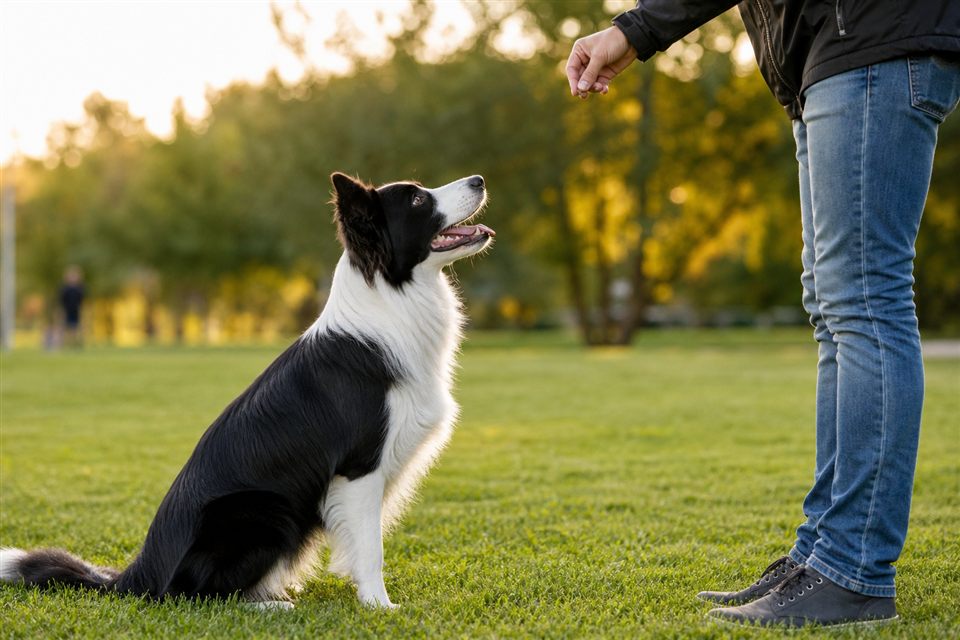
Claire noticed the pattern at the kitchen counter: the moment she stopped chopping vegetables, her Corgi, Biscuit, plopped onto her feet like a furry paperweight. Moving to the mailbox? Biscuit released. Standing still for thirty seconds? Feet occupied. Guests laughed; Claire tripped twice carrying hot mugs. She wanted to know whether Biscuit was anxious, dominant, or simply operating a small dog-shaped heating pad business—and whether the habit needed changing.
Key points at a glance
- Sitting on your feet when you stand still is usually affection, proximity-seeking, or mild anxiety—not dominance.
- Dogs use physical contact to stay connected when you might otherwise drift away.
- Herding breeds and velcro dogs show this behavior more often, though any dog can do it.
- Warmth, security, and blocking your exit are all plausible motives in the same gesture.
- Redirect gently if tripping or guests dislike it; punishment rarely helps bonded dogs.
- Sudden clinginess with trembling or pacing may signal pain or stress worth a vet visit.
What foot-sitting communicates
Dogs lack subtle social cues humans use across a room. Biscuit sitting on Claire's feet was a portable anchor: I am here, you are here, we stay together. When Claire stood still—cooking, brushing teeth, waiting for the kettle—she became a predictable landmark. Biscuit's choice was contact with minimal effort.
Scent matters too. Feet carry strong smell from sweat and floor contact. Sitting there lets Biscuit absorb your scent and leave his—a low-key marking hug.
Common reasons dogs choose feet over beds
Bonding and attention. Stillness often precedes eye contact or petting. Biscuit learned feet-sitting sometimes earned chin scratches.
Security in uncertain moments. Doorbell rings; Claire freezes listening. Biscuit lands on feet—grounding behavior during micro-stress.
Herding instinct residue. Corgis were bred to control movement of livestock. Parking yourself on the handler's feet is a miniature "hold the group" impulse.
Warmth and comfort. Tile kitchens feel cold; Claire's slippers were warm.
Blocking departure. Less common but real: dog sits when you stand near the door, physically saying wait.
None of these require a dominance diagnosis. Modern behavior science treats foot-sitting as social attachment, not rank challenge.
When the habit helps versus hinders
For Claire, foot-sitting was harmless until it wasn't—hot soup and a dog underfoot do not mix. She decided on context rules: allowed during casual standing, redirect during cooking.
Teach "place" or "bed" nearby so Biscuit had an approved spot still within sight.
Reward off-feet positioning before Biscuit chose feet—treat the mat, not the interruption.
Move before rewarding if Biscuit landed without invitation during risky tasks.
Guests who feared dogs appreciated Claire calling Biscuit to his mat when they entered.
Foot-sitting vs anxiety clinginess
Normal foot-sitting: relaxed body, soft eyes, easy to redirect, stops when Claire walks. Anxiety-driven contact: trembling, panting, whale eye, refuses to move when Claire steps, spikes after loud noises or schedule changes. If Biscuit suddenly became unable to leave Claire's feet at all, a vet check for pain (arthritis, abdominal discomfort) and behavior assessment for separation anxiety made sense.
Multi-dog households
Sometimes one dog sits on feet while another hovers—resource guarding of the human can occur. Claire watched for stiff posture or growling when the second dog approached. Separate training and equal attention reduced tension.
Puppies versus adult foot-sitters
Puppies often sit on feet during house training because they follow every movement, hoping for a potty trip. Adult dogs like Biscuit usually have clearer motives—habit, warmth, or bond maintenance. Claire noticed Biscuit started the behavior after a week Claire worked from home; the extra togetherness reinforced contact-seeking. When her schedule returned to the office, Biscuit kept the ritual at morning coffee and evening cooking—predictable anchors in the day.
Should you allow it?
If foot-sitting does not cause tripping or guest discomfort, many owners enjoy it as quiet companionship. If you need space, teach an alternative without rejecting the dog entirely. Biscuit still got chin scratches on the mat; Claire simply stopped being a floor obstacle during knife work.
The bottom line
Biscuit on Claire's feet was a love letter written in contact, not a coup attempt. Understanding the closeness motive let Claire keep the sweetness during safe moments and teach a mat during dangerous ones. Feet-sitting dogs are usually saying they prefer your orbit to any other spot in the house.
This article is for general education only and does not replace advice from a licensed veterinarian or certified behavior professional.