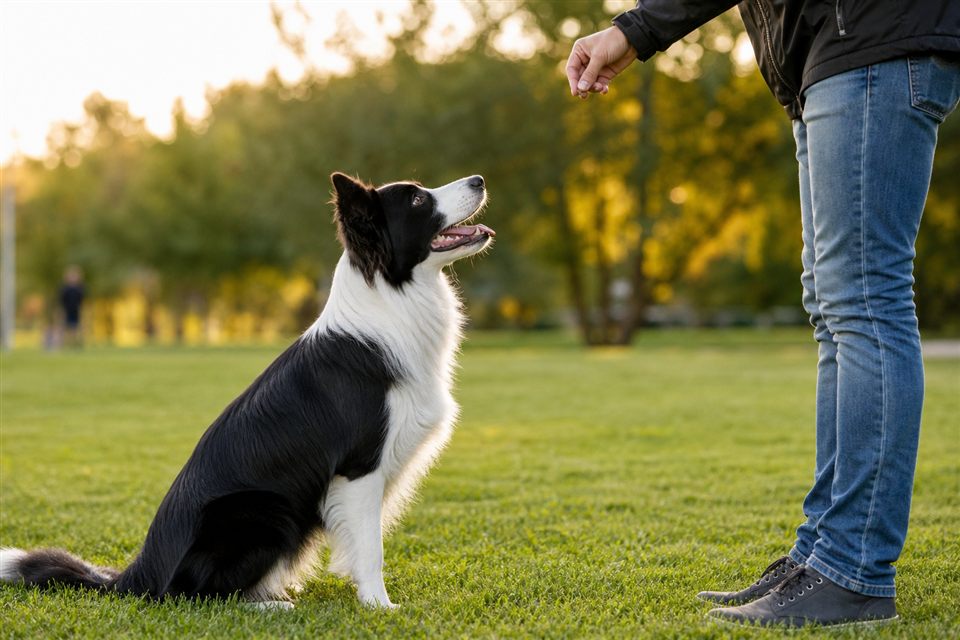
Todd heard the Kansas City doorbell at 7:15 p.m. and watched Kite, his 51-lb dog, ricochet off the rug toward the entry. Guests on the porch. Kite on hind legs. Todd wanted a crate game, not a wrestling match in the doorway. The crate had to be a payoff first: meals, a stuffed toy, a quiet chew, the door left open on boring afternoons. Then doorbell equals crate, then stuffed toy, then people come in. Using the crate only as punishment would poison the room. Kite barked again. Todd grabbed the stuffed toy and walked to the crate, not the knob.
Key points at a glance
- Pre-train the crate as a payoff for a 51-lb dog before you need it at 7:15 p.m.
- Doorbell starts a crate game: cue, toy, close, then open the front door.
- A stuffed toy is the jackpot, not a scolding march to the crate.
- Do not use the crate only as punishment after chaos; that teaches Kite to dread it.
- Practice fake doorbells when no guests are waiting on the porch.
Payoff crate before anyone rings
Feed meals in the crate with the door open. Drop a stuffed toy in there on random Tuesdays. Sit nearby and read. Kite should choose the crate when nothing exciting is happening. If he only goes in when guests arrive, the crate means exile. Build the opposite. A 51-lb dog needs a crate he can stand and turn in. Cramped crates make the game fail.
When the crate is already a snack spot, you can attach a cue: crate, then toy, then a closed door for a short count, then release.
Doorbell game, stuffed toy, not a penalty box
Have a friend ring at 7:15 p.m. while you skip the knob. Cue Kite to the crate. Stuff the toy. Close the crate. Then greet. Let him out when paws are down and voices are quiet, or keep him in with the toy if he cannot greet politely yet. Either way, the crate paid. If you only crate him after he has already body-slammed a guest, he learns that people at the door predict a bad room.
If Kite panics in the crate, vocalizes nonstop, or has never been crate-trained, stop using it as the guest plan. Use a gated room with a chew, or hire a trainer. A crate is a tool. It is not a substitute for teaching a settle.
| Moment | Your response |
|---|---|
| Boring afternoon, door open | Meals and a stuffed toy in the crate |
| Fake doorbell, no guests | Crate game, then jackpot toy |
| Real doorbell at 7:15 p.m. | Crate first, then open the front door |
| Crate only after a messy greeting | No; that is punishment timing |
| Kite panics in the crate | Stop; gated room or a trainer |
| Release to greet | Only if four paws are down |
Todd ran the doorbell-to-crate game twice that week. Kite took the stuffed toy at 7:15 p.m. before the porch light hit the rug.
This is general training information, not a behavior diagnosis. A certified trainer should help if crate use causes panic or guest greetings include nipping.