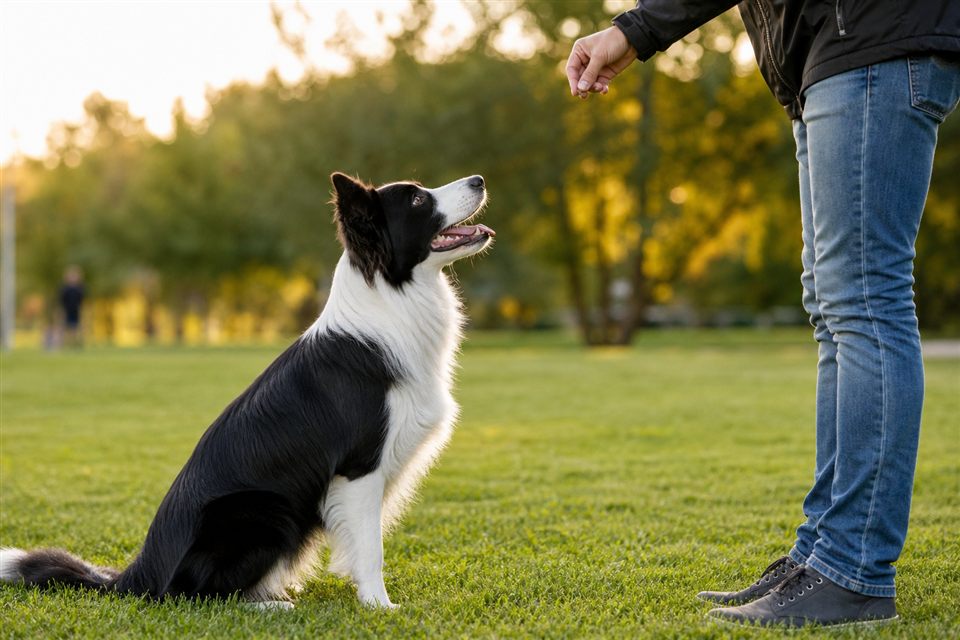
When Jonah reached for the squeaky hedgehog on the rug, his border collie, Scout, stiffened, curled lip showing, and emitted a low growl Jonah had never heard during Scout's weekly play dates with the neighbor's lab. The lab could steal toys from Scout's mouth; Jonah could not walk within three feet. Scout did not look aggressive at the park—only at family members near certain objects. Jonah wondered if he had done something wrong. He had not. He was seeing a common pattern: resource guarding directed at one species or one category of household member, but not another.
Key points at a glance
- Resource guarding is normal canine behavior—dogs protect items they value—but it becomes a problem when it targets people and risks bites.
- Dogs may guard from humans but not other dogs because history, context, and perceived threat differ by species.
- Past experiences like having toys taken forcefully, punishment near possessions, or competition with children can skew guarding toward people.
- Multi-dog homes often have implicit toy rules between dogs that do not extend to humans approaching the same items.
- Treatment focuses on changing the emotional response to approach, not dominating the dog or punishing growls.
What resource guarding looks like
Resource guarding ranges from subtle to overt. Early signals include freezing, hard staring, eating faster, or positioning the body over an object. Escalation includes growling, snapping, and biting. The guarded resource may be food, chews, resting spots, stolen laundry—or toys.
Scout's guarding was toy-specific and person-specific. He shared tug ropes with the neighbor dog. He guarded the hedgehog from Jonah and Jonah's partner when they walked past or tried to pick it up. He did not guard the couch, his bowl, or treats dropped on the floor.
Guarding is not dominance theater. It is anxiety about losing something valuable. Punishing growls removes the warning system and can push a dog straight to a bite.
| Stage | Scout's signals toward Jonah | Risk |
|---|---|---|
| Mild | Side-eye, paw on toy | Low if respected |
| Moderate | Growl, lip lift | Bite if pressed |
| Severe | Snap, chase with object | High—needs pro help |
Why guard from people but not other dogs?
Different learning histories with each species. Scout may have rehearsed successful negotiation with the lab—drop, chase, re-grab—without ever feeling truly deprived. With Jonah, perhaps someone once snatched toys to end noisy squeaking, or children grabbed items repeatedly. Dogs generalize: humans approaching while I have a toy predicts loss.
Perceived threat level. A person can pick up any object, lift the dog, or remove access entirely. Another dog is a bounded competitor in a ritualized game. Scout might trust canine social rules he learned at playgroup while viewing human hands as unpredictable.
Household role and inconsistency. If one family member always takes toys away and another always plays, guarding may target the taker. If dogs swap toys freely in a supervised group but humans interrupt with "drop it" only sometimes, the dog learns whom to warn.
Breed and individual temperament. Herding breeds like Scout often show intense object focus. Guarding can attach to high-value interactive toys more than low-value balls.
Absence of guarding toward dogs does not mean safety. Some dogs guard from people while deferring to housemates because the housemates never challenge them—or because conflict between dogs is suppressed until it is not. Never assume cross-species patterns predict intra-dog safety during high-value items.
Why punishment and forced surrender fail
Taking the toy despite growling teaches the dog that growling did not work—so next time they may skip the growl. Alpha rolls, muzzle grabs, and yelling increase fear around possessions. Scout needed to believe human approach predicts good things, not theft.
"Just show them who's boss" advice causes bites and erodes trust. Management plus counter-conditioning is the evidence-based path.
How to manage and improve toy guarding toward people
Management first. Until training progresses, high-trigger toys live in a closet. Scout got the hedgehog only during structured sessions. Jonah stopped casual reach-ins during play.
Trade-up games. Approach with a high-value treat, toss it away from the toy, and let Scout choose. When he leaves the toy, he gets the treat—not a snatched object. Repeat until approach predicts treat scatter, not loss.
Drop-it trained separately. Teach "drop" with low-value items when Scout is calm, rewarding every release with something better. Never practice only by confiscating favorites.
Desensitize approach. Jonah walked past Scout with a toy at a distance where Scout stayed loose, tossed treats, and left. Distance decreased over sessions across days, not minutes.
Children and guests. Teach kids never to corner a dog with a toy. Guest dogs may follow different rules—do not assume Scout's tolerance extends to visiting children.
When to get help. A certified behavior consultant or veterinary behaviorist should guide cases with bite history, multiple guarded categories, or guarding that generalizes to empty spaces.
Preventing guarding in puppies
Practice gentle handling around food and toys from day one: touch collar while puppy chews, drop treats into the bowl while eating, trade toys happily. Avoid games that teach "run from the human with the stolen sock." Prevention is easier than retrofitting Scout's hedgehog obsession.
The bottom line
Scout guarded toys from Jonah because he associated human hands near his favorite objects with unfair loss—not because he disrespects his owner. Dogs who share with other dogs but growl at people are showing context-specific anxiety, not random aggression. Jonah's path forward was trade-up training, managed access, and never punishing warnings. Within weeks Scout tolerated Jonah stepping near the hedgehog; within months Jonah could pick it up after a practiced drop cue. Respect the growl, change the prediction, and get professional help if bites enter the picture.
This article is for general education only and does not replace advice from a licensed veterinarian.