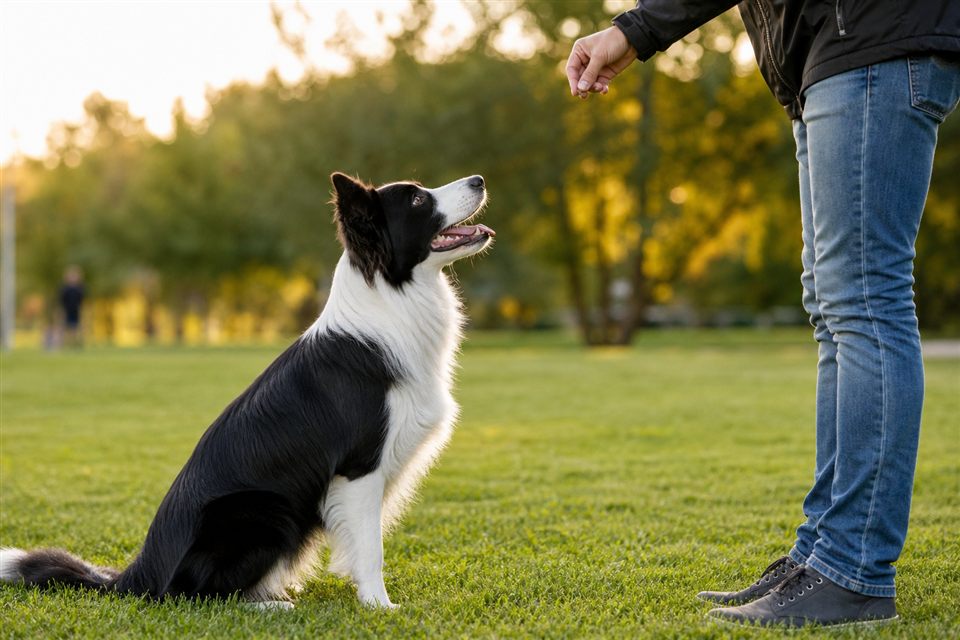
Nessa reached under Dumpling's ribs on a Thursday night to scoot him off the good cushion. Dumpling, her five-year-old Beagle mix, froze, then offered a low growl that vibrated through the upholstery. Her partner said the dog was testing her. She tried lifting him by the collar. The next growl was shorter and meaner. By Saturday she was sitting on the floor so she would not have to ask.
Key points at a glance
- A growl on the couch is information: the dog wants the contact to stop.
- Pain in hips, back, or belly makes being scooped feel like a threat.
- Punishing the growl often removes the warning and leaves a snap.
- Teach "off" with a food trail so leaving the cushion pays.
- Guests, kids, and sudden grabs raise the stakes; manage access until the cue is fluent.
- A new growl in a dog who always hopped down needs a pain check.
Is this dominance, or is the couch a resource?
The couch is warm, smells like you, and sits above the room. For Dumpling it was also the spot with the fewest stairs. Resource guarding of furniture is common. So is simple conflict: a sleeping dog, a hand under the ribs, no warning. Dominance lectures usually lead people to shove or roll the dog, which makes the next growl cheaper to skip.
Some dogs guard the person on the couch, not the fabric. If he only growled when Nessa's partner sat down, that is a different map. Sleep startle looks similar. A deep sleeper who snarls when touched may need a verbal wake-up first, not a haul by the armpits.
Could it be pain?
Yes, and it is the first question worth spending money on. Arthritis, a pulled back, anal gland flare, and a sore belly all make lifting miserable. Dumpling had slowed on the three porch steps that spring. The clinic found sore hips and extra weight. A dog who used to hop down and now growls when you slide a hand under the chest is not "getting bold." Ask for an orthopedic look before you hire a trainer to fix attitude.
| How the growl shows up | More likely story | First move |
|---|---|---|
| Only when lifted or rolled | Pain or startle | Vet exam; stop scooping |
| When you approach with food | Resource guarding | Trade, do not grab |
| Only with one person | History of rough handling | That person feeds "off" |
| New, with panting or restlessness | Medical until proven otherwise | Same-week clinic visit |
How do you get the dog off without a fight?
Stop the grab. Nessa tossed a trail of cheese from the cushion to a mat. When Dumpling's paws hit the rug, she said "off" and dropped two more pieces. Do this when you do not need the seat. After a week, say "off" first, then show the food.
If he growls, you already asked too hard. Back up. Do not scold. The growl did its job. Block the couch when you cannot train. A gate is how you keep teeth out of the story. Kids should not move a growling dog. If a child has been snapped at, call a veterinary behaviorist, not a board-and-train that promises to show him who's boss.
Do not alpha-roll. Do not jab the neck. Do not prove a point in front of company. Nessa's partner wanted a furniture ban forever. That can work as management. It does not teach a dog in pain to trust hands. Pain meds plus a paid "off" plus a small ramp off the sofa changed the Thursday-night sound in about three weeks.
This article is for general education only and does not replace veterinary or behaviorist care. Call your vet if couch growling is new, if your dog has snapped, or if getting up looks stiff or painful.