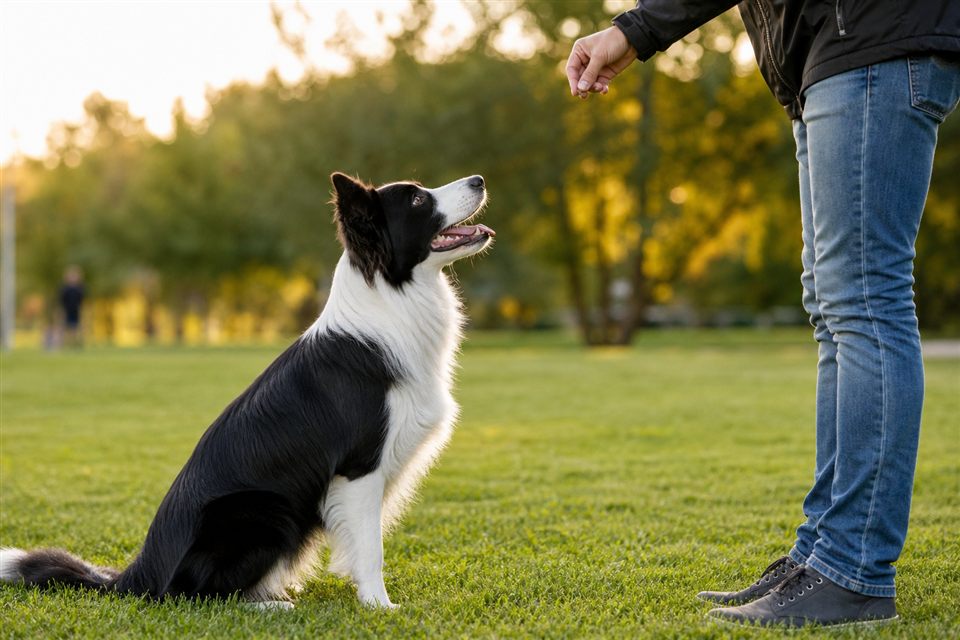
Tuesday at 6:50 a.m., Seth thought he had a polite goldendoodle until the loop past the soccer field. Moxie, 48 pounds, dropped her nose, froze, and vacuumed a frozen gift by the bleachers. Seth yelled. Moxie swallowed. The rest of the walk was a tug every time the grass looked irregular. By Friday he was walking at dawn to “beat the poop,” which is a schedule, not a plan. A trainer’s $90 “leave it” package sat unopened in his email.
Key points at a glance
- Coprophagia means eating feces; on walks it is usually scavenging
- Hunger, leftover calories in stool, and attention can all keep the habit
- Medical checks matter if the dog is losing weight or eating nonstop
- Management (leash, distance, pickup, muzzle) stops rehearsals while you teach “leave it”
- Punishment after the swallow teaches the dog to eat faster
- Other dogs’ stools can carry parasites; this is a health issue, not only an ick issue
Why a well-fed dog still eats it
Dogs are scavengers. Feces, especially from other animals, can smell like leftover protein and fat. If the original dog’s food was rich, the leftover is a calorie packet. Puppies explore with their mouths. Some adults keep the hobby because it worked: they got the item, and they got Seth’s full attention.
Underfeeding, a diet that races through the gut, pancreatic trouble, parasites, and malabsorption can increase the drive. Frozen winter stools are oddly popular. Parks at 7 a.m. are a buffet. Mother dogs eat puppy stool as housekeeping. That does not explain Moxie at the bleachers, but it shows the behavior sits in the species.
What to rule out before you buy a deterrent chew
If Moxie had been skinny, eating dirt, or producing huge pale stools, Seth would have started at the clinic. A fecal test and a body-condition score are reasonable when coprophagia is new in an adult. Enzyme supplements help some medical cases. They do nothing for a talented scavenger on a long line.
Skip pineapple and meat tenderizer unless your vet is in on it. Deterrent chews sometimes help when a dog eats their own stool at home. They rarely flavor the anonymous mix on a public lawn.
| Drive | What you see | Better response |
|---|---|---|
| Scavenger | Nose down, snatch on walks | Leash skills, leave it, management |
| Hunger / poor diet | Thin, always foraging | Weigh, feed enough, vet if needed |
| Attention | Eats, then looks at you | Pay a look-back; less drama |
| Medical | Weight loss, huge appetite, odd stool | Diagnostics first |
| Puppy exploration | Under 8 months, eats many things | Supervise, teach, pick up the yard |
A walk plan that does not rely on shouting
Shorten the leash in hot zones: field edges, hydrants, snowbanks. Scan ahead. Arc away before the nose hits a pile. Practice “leave it” with dropped kibble at home, then lower-value trash, then the park at a distance from real stool.
Reward the look-back. Seth paid Moxie with a high-value cube every time her nose lifted near the bleachers. She cannot eat poop and collect steak at the same time. A basket muzzle, introduced with treats, is a seatbelt for dogs who swallow before a cue can land.
Pick up your own yard daily. Carry bags. Do not jam the mouth shut and shout. Do not put cayenne on stools in a public park. Coprophagia fades when the dog cannot practice it and another behavior pays better.
Moxie still inspects the soccer field. She does not get to own it. Dawn walks continued, plus a muzzle for Saturday games, plus a leave-it that finally held at six feet. Seth still carries extra bags. He no longer plans his life around beating the poop.
Eating stool can be training, management, or medical. If the habit is sudden, extreme, or paired with weight loss, ask your veterinarian before you only train.