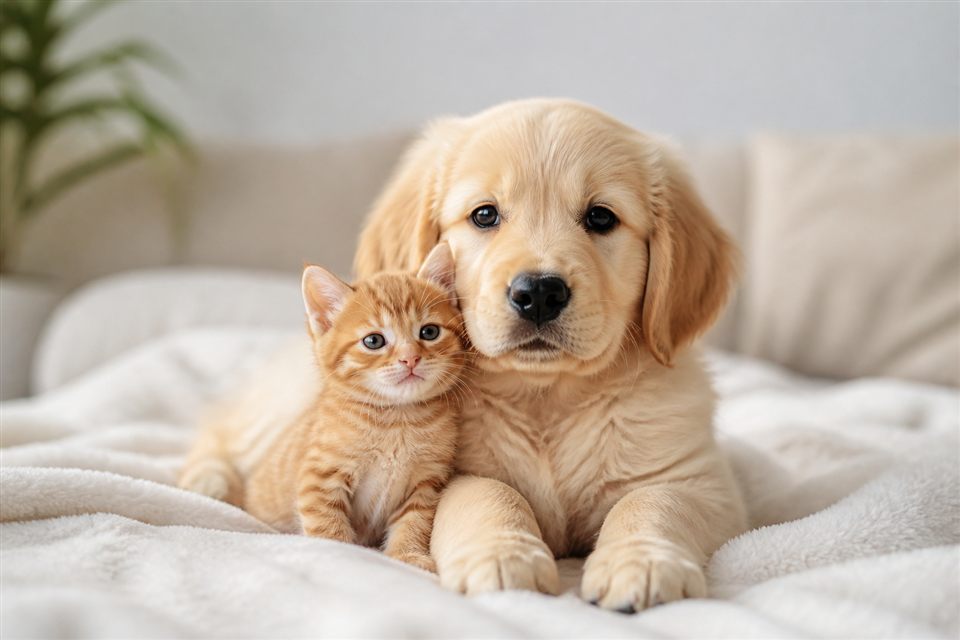
When foster coordinator Nina brought home a three-week-old tabby named Pip, she heard squeaks, chirps, and the occasional dramatic yowl — but never the rumbling purr she expected from every kitten photo on social media. Pip nursed eagerly, gained weight, and kneaded Nina's sweater without a sound. Nina started wondering whether something was wrong with Pip's throat, or whether some kittens simply arrive without a motor. Most kittens begin purring within their first week of life, often by day two or three, though volume and frequency vary wildly. A kitten who never audibly purrs is not always ill — but understanding normal development helps you tell quiet contentment from a problem worth investigating.
Key points at a glance
- Kittens typically start purring within the first week of life, sometimes as early as day two or three.
- Purring serves nursing kittens by signaling calm to the mother and may support bone and tissue development through low-frequency vibration.
- Some cats purr so quietly or at frequencies humans struggle to hear that owners assume silence when the kitten is actually purring.
- Absence of purring alone rarely indicates illness if eating, playing, grooming, and growing normally.
- Seek veterinary evaluation if a kitten is also lethargic, not nursing, has labored breathing, or shows pain when handled around the neck or chest.
Why kittens purr and when it usually starts
Purring is one of the earliest vocal behaviors kittens develop. Newborn kittens are blind and deaf at birth, but they feel vibration. A nursing kitten purring against the mother communicates safety and satisfaction; the mother may purr back, creating a feedback loop that keeps the litter settled during feeding.
By one week old, most healthy kittens purr during nursing and when held warmly after meals. By weaning age, purring expands to play, grooming, and resting near trusted humans. Pip, at three weeks, purred only when Nina held her against her chest after bottle feeds — a soft buzz Nina felt through her ribs more than heard through her ears.
| Age | Typical purring behavior |
|---|---|
| 0–7 days | Purring during nursing; often faint |
| 1–3 weeks | Purring when warm, fed, and handled gently |
| 4–8 weeks | Purring during play, kneading, and resting with littermates |
| Adulthood | Individual variation — loud, quiet, or situational |
When a silent kitten is probably fine
Not every cat is a loud purr machine. Breed, personality, and early environment all shape vocal habits. Some cats express contentment through slow blinks, relaxed ears, kneading, and loafing instead of audible rumbling. Pip eventually purred audibly at six weeks — Nina simply had to listen in a quiet room with her hand on his chest.
Signs of a healthy quiet kitten: steady weight gain, bright eyes, normal stool, playful bursts, self-grooming, and seeking warmth and contact without hiding constantly.
Try noticing subtle purrs: place a hand on the chest or throat during relaxed nursing or petting; use a quiet room; some phones pick up low frequencies in voice memo recordings that human ears miss.
When silence warrants a closer look
Purring requires coordinated nerve and muscle function in the laryngeal area. Serious illness can reduce vocalization, but purring absence is almost never the only sign. Contact your veterinarian if Pip or any kitten shows:
- Difficulty suckling or repeated failure to latch
- Open-mouth breathing, wheezing, or nasal flaring
- Lethargy, cold limbs, or failure to gain weight
- Crying when touched around the jaw, neck, or chest
- No vocalizations of any kind — no mewing, not just no purring
Upper respiratory infections common in young kittens can cause congestion that muffles all sounds temporarily. Pain, dehydration, and hypothermia suppress normal kitten behaviors including purring and play.
Encouraging purring without forcing it
Nina built trust through predictable warmth: scheduled feeds, soft blankets, and gentle handling after meals rather than grabbing Pip mid-nap. Forcing contact when a kitten is overstimulated produces silence from stress, not from anatomy. Pair calm sessions with quiet voices and still environments. Avoid comparing foster kittens to adult cats who purr at vacuum-decibel levels — individual variation is normal.
The bottom line
Most kittens start purring within days of birth, but some — like Pip — rumble quietly or late without anything being wrong. Feel for vibration, watch for overall health, and treat sudden silence paired with illness signs as a vet call. Purring is one language cats speak; a kitten who shows contentment through kneading, relaxed posture, and steady growth is telling you plenty even when your ears hear nothing.
This article is for general education only and does not replace advice from a licensed veterinarian.