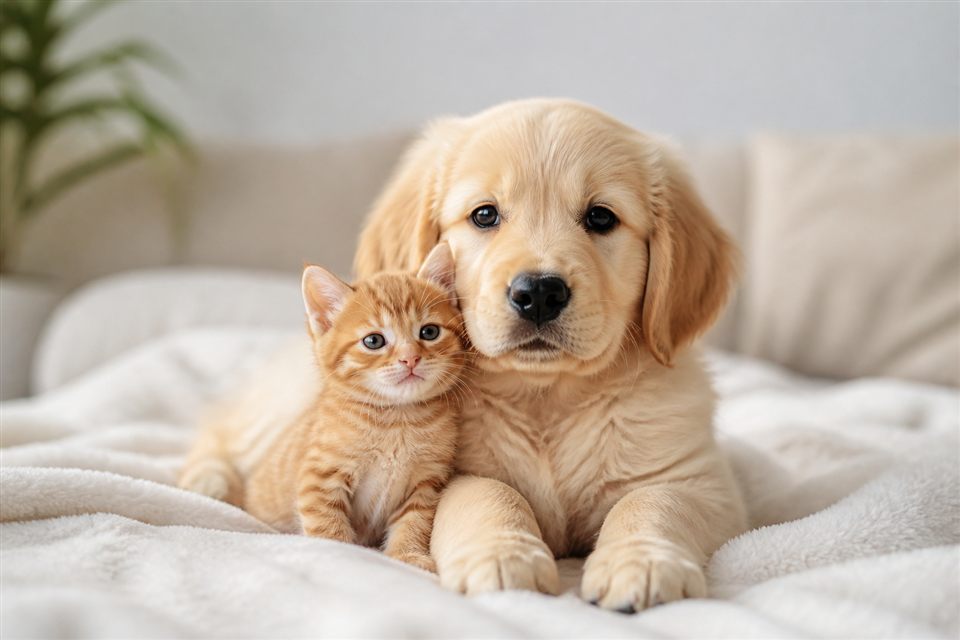
Hector found a half-soggy pile of kitten kibble in the bathroom sink at 6:45 a.m. Juniper, the smallest of his foster litter, was 7 weeks old and had gummed three pieces, then walked away. The other three kittens were face-down in a plate of wet food like it was a job. The rescue's note said "offer dry at 6 weeks." Hector had poured a cup into a bowl built for an adult cat. Juniper's head almost fit inside it. Nobody was thriving on that math.
Key points at a glance
- Most kittens nibble softened kibble around 5–6 weeks and handle more dry by 8–10 weeks.
- Weaning is gradual; milk or milk replacer does not slam off on a calendar date.
- Wet food should stay in the rotation; dry-only at 7 weeks is a common way to stall growth.
- Kitten-labeled food (not adult light formulas) matches higher calorie needs.
- Small, frequent meals beat a free-feed mountain a tiny kitten cannot finish.
- Runny stool, a kitten who will not suckle or lap, or a cold kitten is a vet problem the same day.
What does "after weaning" actually mean?
Weaning is a few weeks, not a Wednesday. Queens start offering prey and regurgitated food around 4 weeks. In a home, you offer gruel: kitten wet food mixed with warm water or kitten milk replacer until it is oatmeal-thick. At 5–6 weeks many kittens lap that and mouth softened kibble. At 8 weeks a typical kitten can eat wet food and some dry, still in four or more small meals.
Juniper at 7 weeks was not "behind." She was small. Hector mashed kibble with warm water for 10 minutes, then mixed in a teaspoon of wet food. She ate. The sink experiment had been dry pebbles and hope.
Do not use cow's milk. It loosens stool. If a kitten is under 4 weeks or cannot lap, they still need a bottle plan from a vet or experienced foster, not a bowl of adult kibble.
When is dry kibble okay as a real meal?
Think in teeth and belly, not only age. If the kitten can crunch a piece without walking away hungry, you can leave a measured amount of kitten kibble between wet meals. Many fosters keep wet food as at least half the diet through 4–6 months.
Free-feeding a huge bowl of dry can hide a kitten who is not eating. For a 7-week-old, measured meals are safer. Juniper's siblings would have vacuumed her share.
| Kitten age | Typical texture | Dry kibble role | Meals per day |
|---|---|---|---|
| 4–5 weeks | Gruel, very wet | Maybe a few softened crumbs | 4–6 |
| 6–7 weeks | Pate plus softened kibble | Practice, not the only calories | 4–5 |
| 8–10 weeks | Wet plus some dry | Can be part of each meal | 3–4 |
| 3–6 months | Kitten wet and/or dry | Dry can be a larger share | 3 |
| 6–12 months | Still kitten food | Follow the bag with a scale | 2–3 |
Read the bag. "Kitten" or "all life stages" with a kitten feeding chart is the lane. Adult indoor light food is too lean for a growing cat. Pick a brand that meets AAFCO kitten growth standards.
How do you switch without diarrhea?
Change over 5–7 days. Hector mixed the rescue's old kibble with the new brand 25 percent at a time. If stool turns to pudding, go back one step and call the vet if it lasts more than a day.
Kibble size matters. Some "kitten" kibbles are still a stretch for a 1.5-pound cat. Pulse a handful in a blender for a week. Water should sit in a shallow dish.
Keep wet leftovers no longer than 30–60 minutes, then toss. Wash dry-food bowls daily.
What if a kitten refuses dry forever?
Plenty of cats live on wet food. That is a budget and teeth conversation with your vet. Kittens should gain roughly 0.5–1 ounce a day in the early weeks; a kitchen scale is a foster tool.
Parasites and upper respiratory infections look like "picky." A kitten who cannot smell will not eat kibble. Sneezing with no appetite is a clinic day.
This article is for general education only and does not replace veterinary care. Call your vet if a kitten is not gaining, has diarrhea, or cannot eat after weaning changes.