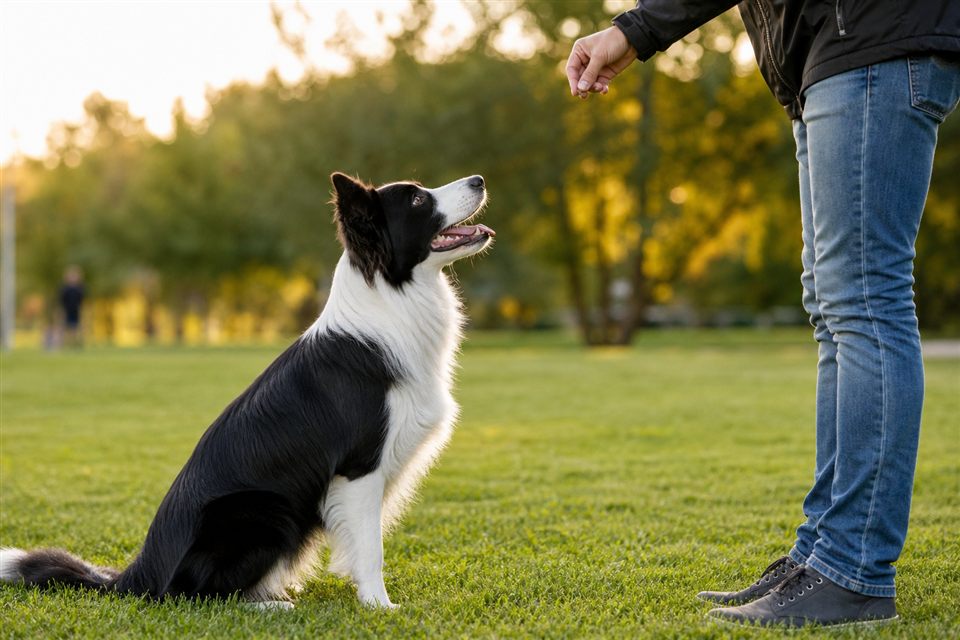
The first time Marcus called "Ranger, come!" at the open field, his husky mix looked back, grinned, and sprinted toward a distant jogger instead. Ranger wore a harness and a thirty-foot long line clipped to the back ring—but Marcus had been holding it loosely like a normal leash. The line snapped taut; Ranger hit the end and bounced. Marcus reeled him in frustrated. Ranger learned coming back ended fun. They needed a new plan: systematic long-line recall that made returning the best deal on the field, even when squirrels, dogs, and interesting smells competed for attention.
Key points at a glance
- A long line gives safety and controlled rehearsal before off-leash freedom—it is not a tool for yanking dogs backward.
- Reliable recall is built in layers: value, distance, duration of distraction, and real-world proofing.
- Distracted dogs need higher-value rewards and shorter distances before challenging contexts.
- Never call "come" unless you can enforce or heavily reward the response during training stages.
- Off-leash hiking comes only after consistent success on a long line at multiple locations.
What you need before you start
Equipment. A fixed-length long line (fifteen to thirty feet), a well-fitted harness (not a neck collar for running hits), high-value treats (real meat, cheese, or squeeze tube), and a marker word or clicker. Flat, fenced areas for early sessions help.
Cue choice. One word—"come" or "here"—used consistently. Whistles work for distance. Do not poison the cue by calling when you cannot reward or when the outcome is always bath time and crate.
Baseline check. Ranger already sat and took treats outdoors. If he would not eat outside, reduce distraction first—train in a quiet corner of the yard before the open field.
Step one: charge the recall cue at zero distraction
In your kitchen or hallway, say "Ranger, come!" once in a happy tone, then run backward three steps or pat your legs. When Ranger arrives, mark and deliver five to ten tiny treats in a row—jackpot. Release with "okay" to play. Repeat until Ranger spins toward you on the word alone.
This step builds emotional value: the cue predicts a party at your feet. Skip this and field work fails.
Step two: introduce the long line at short distance
Move to a quiet yard. Clip the long line. Let it drag or hold it loosely with slack. Walk ten feet away, call once, and reward heavily at your feet. If Ranger hesitates, gentle pressure on the line can guide—not rip—while you back up and make yourself interesting. Release to sniff again.
Practice five to ten recalls per session, not fifty. End while success is high.
| Stage | Distance | Distraction | Reward level |
|---|---|---|---|
| 1 | 10 ft | None | Jackpot treats |
| 2 | 30 ft | Mild sniffing | Jackpot treats |
| 3 | Long line full | Squirrel at distance | Roast chicken |
Step three: add movement and mild distractions
Let Ranger explore on the long line. Wait until he is sniffing—not locked on a deer—then call. If he comes, jackpot and release back to sniff. Sniffing becomes the reward after recall, pairing return with permission to resume investigating.
If he ignores, do not repeat the cue endlessly. Walk down the line, gather slack calmly, lure with treat at your feet, reward, then release. Repeating "come come come" teaches ignore.
When Ranger orients to a distraction, call before he commits to a chase. Timing beats volume.
Step four: proof around harder distractions
Progress only when stage three succeeds eight of ten times at a given location. Then visit a new park, a trail edge, or a field with distant dogs. Increase distance to distractions gradually. Use a longer line if legal and safe.
Squirrel protocol. Ranger on line sees squirrel. Marcus calls when Ranger's ears flick but before full sprint. Treat party if he turns. If he runs, line stops him; Marcus reels in without scolding, resets farther from squirrels, tries again at easier distance.
Dog distraction. Start with dogs beyond fence or on leash at fifty feet. Recall, reward, release. Decrease distance over weeks, not days.
Never set Ranger up to fail by calling mid-chase at maximum arousal until late-stage proofing.
Step five: variable rewards and real-life integration
Fade to intermittent jackpots: sometimes one treat, sometimes twenty, sometimes tug toy. Unpredictability maintains behavior better than constant single treats.
Integrate recall into walks: call once per outing minimum when you can reward, not only during formal training. Random happy recalls on the long line keep the cue fresh.
Common long-line mistakes
Holding the line tight the whole walk removes choice and teaches pulling. Calling then immediately leashing up every time makes come mean "fun over." Using the long line to jerk the dog backward creates avoidance. Practicing only in one field fails to generalize.
When is off-leash appropriate?
Marcus considered off-leash only after Ranger recalled reliably on a thirty-foot line in three different environments with moderate distractions, with no recent failures at that level. Legal leash laws still apply. Even trained dogs have bad days—carry the line or use a secure area.
The bottom line
Training reliable recall with a long line for distracted dogs is a staged contract: Ranger learns that turning toward Marcus beats every squirrel on the horizon, delivered through jackpots, release back to fun, and careful progression. Marcus stopped repeating poisoned cues and started rewarding at his feet like clockwork. Within six weeks Ranger turned on the first call in fields where he once blew him off. The long line was scaffolding, not a noose—safety while trust in come was rebuilt one jackpot at a time.
This article is for general education only and does not replace advice from a licensed veterinarian.