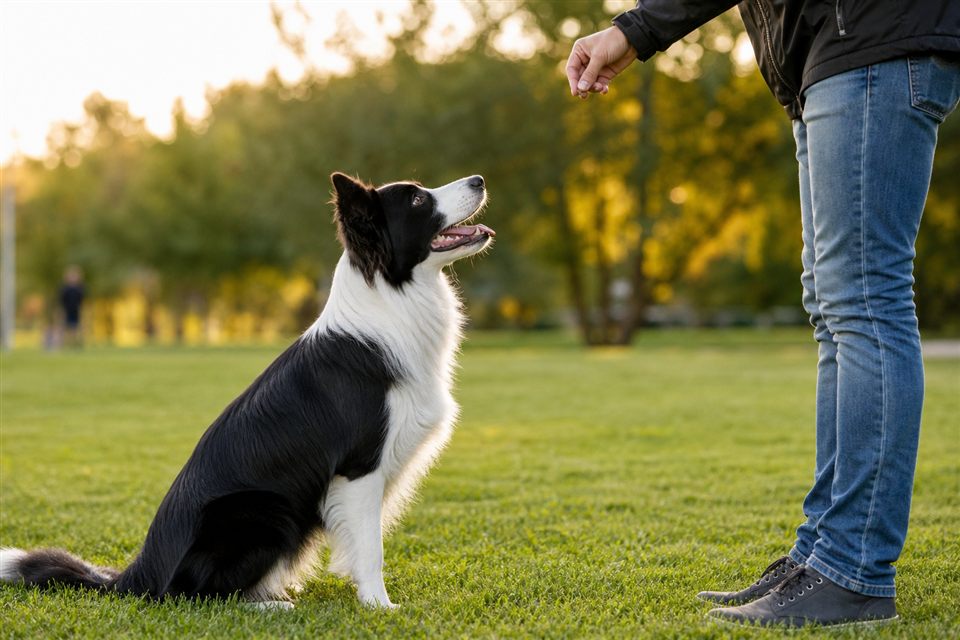
At a family barbecue, Nina's terrier mix, Pepper, became the star of the patio by offering her paw to every guest who said "shake." Nina had not taught the trick by grabbing Pepper's foot or holding treats hostage until she surrendered. She built it in five-minute sessions with treats, patience, and a cue that actually meant something to Pepper — not just a reflex from having her wrist squeezed.
Key points at a glance
- Positive shake training captures or lures voluntary paw lifts — never forced paw grabbing.
- Start with a clear reward marker like "yes" or a clicker before adding a verbal cue.
- Fade the lure quickly so Pepper shakes on word alone, not only when a fistful of chicken appears.
- Practice both paws separately if you want "other shake" later; most dogs favor one side first.
- Keep sessions short and fun — three to five repetitions beat twenty boring ones.
Why positive training works better than grabbing paws
Many dogs dislike having feet handled. Forced shaking teaches tolerance at best and hand shyness at worst. Pepper learned that lifting her paw predicted chicken and praise — not restraint.
Step-by-step: teaching shake with positive reinforcement
Step 1: Mark natural paw movement. Nina sat with treats visible. When Pepper shifted weight and lifted a front paw — even slightly — Nina marked with "yes" and tossed a treat. No cue yet. She waited for Pepper to offer again. Within a few sessions, Pepper started lifting her paw deliberately.
Step 2: Add a gentle lure if needed. If Pepper stopped offering, Nina held a treat near Pepper's nose and moved it slightly toward the opposite shoulder. Many dogs lift the near paw to follow. Mark and reward the lift. Do not grab the paw to pull it up.
Step 3: Introduce a hand target. Nina opened her palm low beside Pepper's chest. When Pepper's paw touched the hand, mark and treat. This builds the finished picture — paw to open palm.
Step 4: Name the behavior. Once Pepper reliably placed her paw in Nina's hand five times in a row, Nina said "shake" just before offering her palm. Word first, then hand. Repeat until Pepper heard the word and lifted without waiting for the hand to hover.
Step 5: Fade the lure. Treats moved from visible in the lure hand to a pouch. Nina rewarded after the shake, not before. The cue became the promise, not the chicken fist.
Step 6: Generalize. Nina practiced on carpet, grass, and with family members sitting instead of kneeling. Dogs do not automatically transfer tricks to new people or places.
| Training phase | Nina's action | Pepper's goal |
|---|---|---|
| Capture | Mark any paw lift | Offer paw for treat |
| Lure | Treat near shoulder | Lift paw toward hand |
| Hand target | Open palm, mark contact | Paw meets palm |
| Add cue | Say "shake" then present hand | Respond to word |
| Proof | New people, locations | Reliable shake anywhere polite |
Troubleshooting common problems
Pepper jumps instead of shaking. Reward four paws on the floor first. Lower criteria — mark a tiny paw lift before demanding full contact.
She uses the wrong paw. That is fine for beginners. Teach one side completely before adding "other shake" with the opposite paw.
She mouths the treat hand. Deliver treats from the other hand after the shake completes.
Building on shake for real-life benefits
Shake is more than a party trick. Voluntary paw handling helps with nail trim desensitization, vet exams, and wiping muddy feet. Nina paired gentle paw holds after shakes with extra treats so Pepper learned foot contact could stay positive.
When to pause and consult a professional
If Pepper growls, snaps, or freezes when you approach her feet, stop paw training and work with a force-free trainer on handling sensitivity. Shake should never override communication that says "I'm uncomfortable."
The bottom line
Teaching a dog to shake paws on cue with positive training means capturing or luring voluntary lifts, marking the moment, adding a clear verbal cue, and fading food lures once the behavior is reliable. Pepper's patio performance came from short rewarded sessions — not wrist grabbing. With patience, most dogs learn shake in a week of casual practice. The trick looks charming; the training underneath builds trust with every paw offered freely.
This article is for general informational purposes only and does not replace advice from your veterinarian or a certified force-free dog trainer.