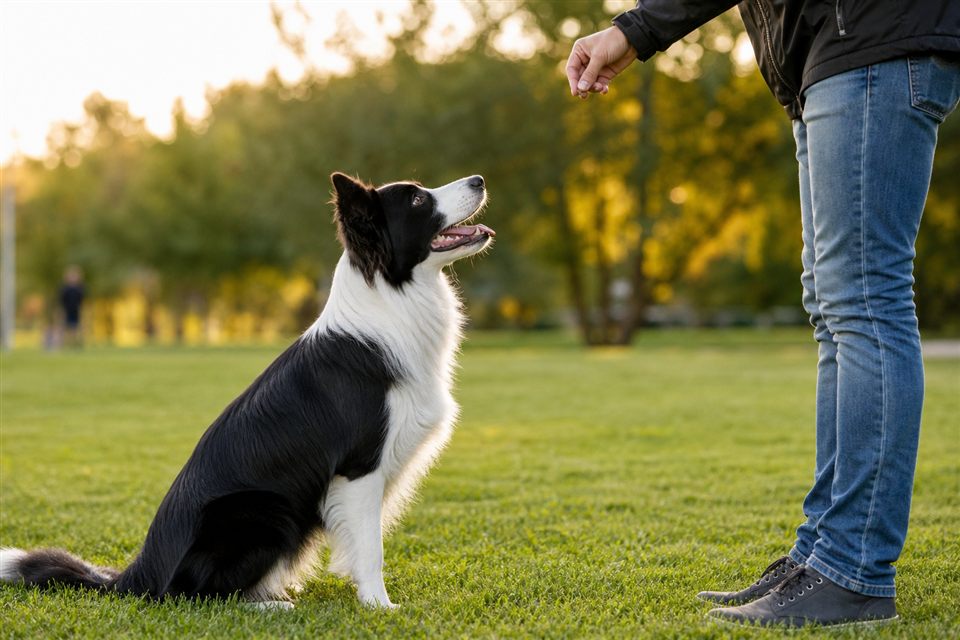
Every evening around nine, Rachel's Border Collie, Finn, paced the living room while she tried to watch a show. He nudged her elbow, dropped a toy in her lap, and barked once at the kitchen—demanding engagement she no longer had energy to give. Rachel wanted a calm signal that meant "your spot, quiet time," not another round of fetch. Teaching Finn to go to bed on cue with positive training turned that nightly negotiation into a thirty-second routine both of them could rely on.
Key points at a glance
- "Go to bed" works best when you train a specific mat or bed as a happy place, not a punishment corner.
- Shaping—rewarding small steps toward the goal—builds reliable behavior faster than forcing a dog onto furniture.
- One clear cue word, consistent hand signal, and immediate rewards create a strong association.
- Duration and distraction are trained separately after the dog understands the location.
- Positive training means no dragging, scolding, or shutting doors on a confused dog.
- A solid bed cue helps during cooking, guests, and bedtime without replacing exercise and mental enrichment.
Choose the bed and make it rewarding
Pick one mat, crate bed, or dog bed and keep it in a predictable spot. Finn's mat lived beside the couch where Rachel could see him but he was out of foot traffic. Toss treats on the mat before training formally so Finn learned good things happen there. If the bed smells like anxiety from past forced crate time, swap to a fresh mat and rebuild trust.
Shape the behavior step by step
Step 1: Capture interest. Mark with a click or "yes" when Finn sniffed the mat, then treat on the mat.
Step 2: Four paws on. Reward any contact with all four feet on the surface.
Step 3: Sit or down. Wait for a relaxed down before treating; lying down predicts longer stays.
Step 4: Add duration. Count two seconds, then five, then ten between treats while Finn stays down.
Step 5: Add the cue. Once Finn moved to the mat willingly, Rachel said "go to bed" as he stepped on, then treated. She did not repeat the cue if he failed—she lured with a treat to the mat instead.
Step 6: Increase distance. Stand one step away, then across the room, cue, and reward when Finn arrived and settled.
| Training phase | Goal | Common mistake |
|---|---|---|
| Introduction | Dog chooses mat freely | Cueing before dog understands location |
| Duration | Stay through one TV scene | Expecting ten minutes on day three |
| Distraction | Stay when doorbell rings | Skipping proofing entirely |
Release and real-life use
Every stay needs a release word—"okay" or "free"—so Finn knew when he could leave. Rachel used the bed cue during cooking: Finn on mat, treat every few minutes, release when she finished. Guests arrived; Finn went to bed for stuffed Kong time instead of jumping. The cue became a management tool, not a substitute for his afternoon walk.
Troubleshooting
Dog leaves immediately. Shorten duration and reward more often on the mat.
Dog ignores cue from another room. Train closer first; add distance slowly.
Dog only goes when food is visible. Fade the lure; reward after the down, not before.
Multiple beds confuse the dog. One trained mat until reliable, then generalize if needed.
When to consult a professional
If Finn growled when approached on the bed, refused all handling near resting spots, or could not settle despite adequate exercise, a certified positive trainer or veterinary behaviorist can rule out pain, anxiety, or resource guarding.
The bottom line
Finn now hears "go to bed," trots to his mat, and flops down while Rachel finishes her show. Positive training built the behavior through rewards and small steps—not yelling from across the room. A reliable bed cue gives dogs clarity and owners breathing room, as long as the mat stays a good place to be.
This article is for general education only and does not replace advice from a licensed veterinarian or certified behavior professional.