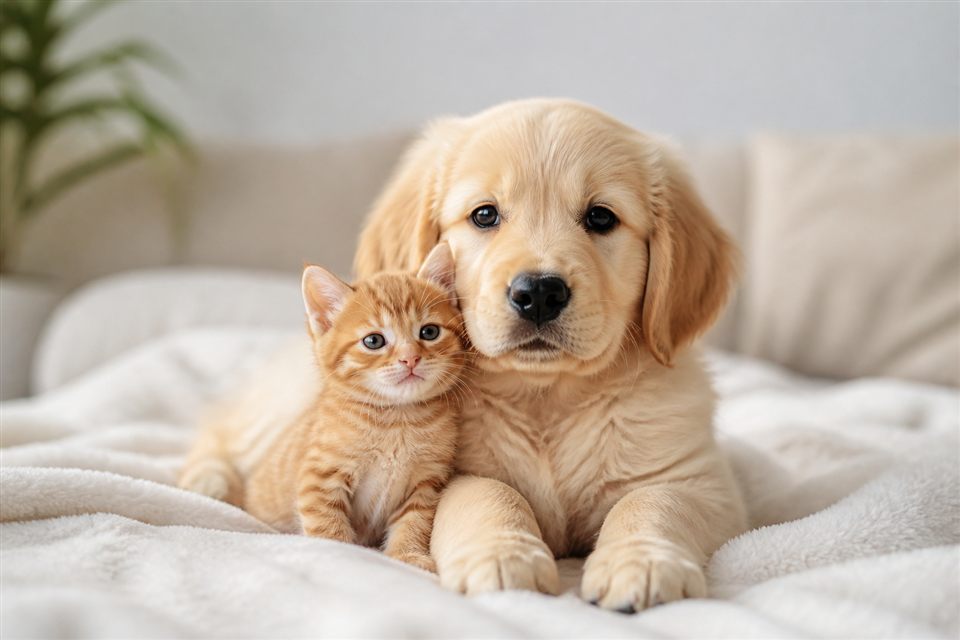
Every evening, Zoe's foster kitten, Pixel, launched ambush attacks on her scrolling hand—teeth sunk into thumb, hind claws rabbit-kicking Zoe's wrist, tail flagged like a victory banner. Zoe waved her hand to shake him off; Pixel hung on and batted again. She had accidentally turned her phone time into hunting season. Kittens bite hands during rough play because wiggling fingers trigger predatory motor patterns, not because Pixel was mean. Stopping the behavior means never using hands as toys, redirecting to appropriate prey objects, and teaching bite inhibition the way littermates would.
Key points at a glance
- Hand biting peaks in kittens aged eight to sixteen weeks during peak play aggression development.
- Wiggling fingers, rough wrestling, and pulling away fast reinforce chasing and biting.
- Redirect to wand toys, kick sticks, and throw toys before teeth contact skin.
- Teach bite inhibition by ending play calmly when pressure hurts—mimicking littermate yelp.
- Scheduled vigorous play twice daily prevents most evening ambush sessions.
Why kittens bite hands during play
Predatory instinct. Kittens practice hunting on moving targets. Fingers scrolling, typing, or eating chips move like rodent heads or insect flutter. Pixel pounced on motion, not malice.
Teething. Deciduous teeth erupt and fall between three and six months; gums itch. Chewing hands relieves pressure—redirect to rubber chew.
Littermate deprivation. Kittens learn bite limits when sibling yelps and stops playing. Singleton or early-separated kittens like Pixel miss feedback loop with humans unless Zoe teaches it.
Accidental reinforcement. Zoe's jerking hand = prey thrashing. Laughing then petting = mixed signal. Even "no!" provides attention fuel.
Under-stimulation. Indoor kittens without twice-daily hunting simulation store energy for ankle and hand ambushes at dusk—crepuscular peak.
| Trigger | Pixel's response | Zoe's fix |
|---|---|---|
| Scrolling phone | Paw + bite | Toy on floor first |
| Walking past | Ankle grab | Pre-walk play session |
| Petting belly | Overstim bite | Pet head only, short |
| Idle hands | Ambush | Wand toy ready |
How to redirect properly when kitten goes for hands
Step 1: Freeze, do not flail. Sudden withdrawal triggers chase. Hold still; disengage eye contact. Pixel loses interest faster when prey stops moving.
Step 2: Offer immediate alternative prey. Keep wand toy within reach on couch. When Pixel orientates toward hand, drag toy away in jerky rodent-like motion across floor—not toward face.
Step 3: Reward four-on-the-floor play. When Pixel bats toy instead of hand, let capture and bite plush end—full predatory sequence satisfaction.
Step 4: End session on toy success. Short positive stop beats overstimulated hand return.
Kick sticks satisfy bunny-kick drive when Pixel grabs wrist—place long fabric toy under belly instead of arm.
Never use hands to wrestle belly or pin kitten—teaches larger cats that human skin is wrestling mat.
Teaching bite inhibition without yelling
When Pixel bites too hard on accidental hand contact:
- Emit short high "ouch" or "yow"—one syllable, not lecture
- Go still and withdraw hands for ten seconds
- Resume only with toy offered
Repeat consistently. Pixel learns pressure above threshold ends game—same lesson littermates teach.
Do not scruff young kittens routinely—stressful and outdated for most handling. Brief calm timeout suffices.
Structured play schedule to prevent hand biting
Morning ten minutes: Wand hunt ending with catch on plush mouse.
Evening fifteen minutes before Zoe's downtime: Same sequence when Pixel's crepuscular drive peaks.
Feed after play: Hunt-catch-eat mirrors wild pattern and promotes nap.
Puzzle feeders for dry meals add mental work.
Predictable hunts reduce random hand terrorism during laptop hours.
What Zoe stopped doing
No finger wiggling under blankets to "tease" Pixel—cute in videos, expensive in blood.
No rough hand play because he was small—habits scale with teeth size.
No mixed messages petting belly until overstim then scolding bite—predictable overstimulation.
No spray bottles—increases fear biting.
When hand biting needs more help
Consult veterinarian if biting is constant outside play, paired with hiding or aggression when not touching Pixel, or if sudden change in adult cat who previously gentle—pain possible.
Consult certified cat behaviorist if skin breaks daily despite two weeks consistent redirect, or if children in home cannot execute protocol safely.
Single kitten homes benefit from second compatible kitten for mutual bite education—optional, not required if human protocol consistent.
Children and hand-biting kittens
Teach kids freeze-and-call-adult rule—not run screaming (triggers chase). Supervise all interactions under ten years. Pixel-sized kittens injure soft skin fast.
When does hand biting usually improve?
Most kittens show peak mouthing between ten and eighteen weeks as predatory play matures. With consistent redirect, Zoe noticed Pixel's bites became softer by four months—more grab than puncture—and ambushes clustered after skipped play sessions rather than hourly.
By six to eight months, many cats prefer toys over hands if they never learned hands were prey. Regression can happen during adolescence (roughly six to twelve months) when energy spikes again. Zoe kept the same wand routine through that phase instead of assuming training had failed.
Adult cats who suddenly bite hands after years of gentleness need a vet exam first—dental pain, arthritis, and hyperthyroidism change tolerance for touch. Pixel's story applies to normal kitten play, not pain-driven aggression in older cats.
The bottom line
Zoe stopped Pixel from biting hands during rough play by retiring her fingers as prey objects and promoting wand toys to full-time job status. Freeze, redirect, end on toy kill, play hard twice daily—Pixel's thumb punctures healed and ambushes moved to feather mice where they belonged. Kittens are tiny predators doing homework; give them appropriate homework paper.
This article is for general education only and does not replace advice from a licensed veterinarian.