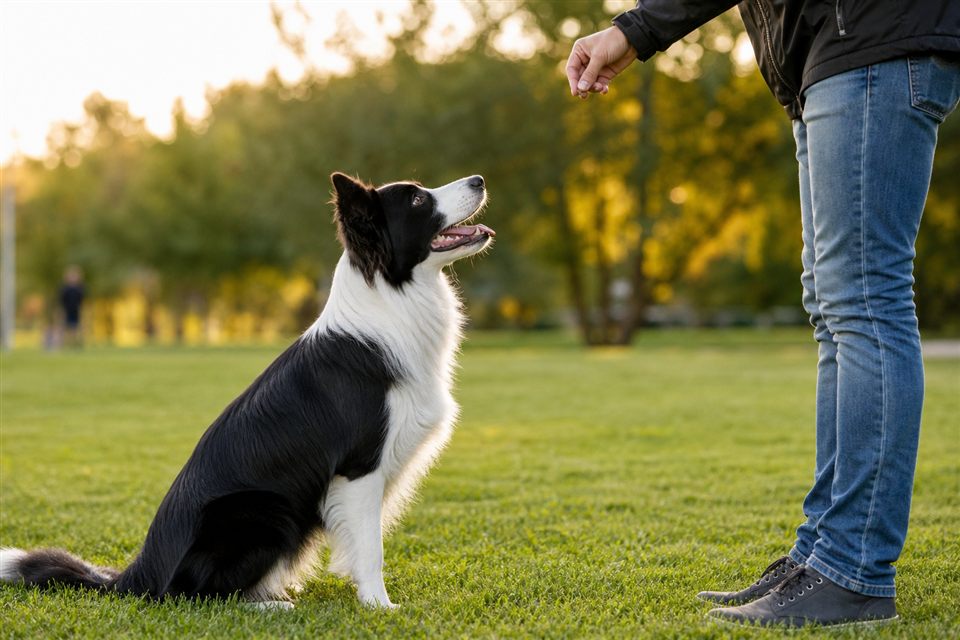
Every evening walk ended with Jenna yelping and her Australian cattle dog, Scout, grinning at her ankles. Scout did not growl or lunge — he darted behind Jenna, tagged her heel with his teeth, and bounced away as if the sidewalk were a sheep pen. Jenna's trainer asked one question first: "Does he do it when you jog, turn corners, or when kids run?" Scout did all three. Herding instinct was part of the story. Training was the rest.
Key points at a glance
- Heel nipping on walks is common in herding breeds and often triggered by movement, not aggression.
- Herding instinct drives dogs to control motion — your legs become livestock unless taught otherwise.
- Stop the behavior with management, impulse-control training, and appropriate outlets — not knee-jerk physical corrections.
- Punishment can suppress warning signals while leaving the urge intact, worsening frustration bites.
- Persistent nipping with stiff body language, growling, or breaking skin needs professional behavior help.
Is heel nipping herding instinct?
Often yes — especially in breeds developed to move cattle, sheep, or ducks by nipping at heels. Scout saw Jenna's walking rhythm as something to organize. Quick turns, jogging children, bicycles, and other dogs amplified the urge.
Herding nips are usually:
- Directed at moving feet or ankles
- Quick, inhibited bites without sustained pressure
- Accompanied by alert, focused body language rather than flat aggression
- Worse when the handler speeds up or flails
Not all heel nipping is herding. Over-arousal, frustrated leash reactivity, and predatory chase of small running targets can look similar. Context and breed history help tell them apart.
Why walks make it worse
Leash frustration. Scout could not complete a natural herding arc, so he compressed the behavior into ankle tags.
Predictable motion. Human gait is rhythmic — perfect for triggering chase-and-nip sequences.
Under-exercised brains. Physical walks without mental work left Scout seeking a job mid-route.
Accidental reinforcement. Jenna sometimes laughed, sped up, or squealed — all exciting feedback.
How Jenna stopped heel nipping on walks
Management first. Scout wore a front-clip harness and a lightweight house line in high-trigger areas until training caught up. Jenna increased distance from jogging paths and kid-heavy playgrounds during peak learning weeks.
Teach an incompatible behavior. Scout learned "touch" — nose to hand — and "with me" loose-leash walking with frequent rewards at Jenna's left side, not behind her heels. Nose to hand is hard to combine with mouth on ankle.
Redirect the herding drive. Daily flirt pole sessions, fetch, and structured tug with drop cues gave Scout legal outlets for chase and grab.
Stop moving when nipping starts. Jenna became boring the instant teeth touched shoe. She planted her feet, waited for four paws calm or a sit, then rewarded and resumed walking. Running away fed the game.
Reward calm proximity. Treats appeared when Scout walked beside or slightly behind without targeting feet — not only after a nip occurred.
| Trigger | Jenna's response | Scout learned |
|---|---|---|
| Jenna speed-walks | Slow pace, reward side position | Speed ≠ chase ankles |
| Kids run nearby | Cross street, hand target | Look at handler, not heels |
| Corner turns | Cue "with me" before turn | Predict structure, not surprise motion |
| Evening energy peak | Flirt pole before walk | Less pent-up herding on route |
Training exercises that help long term
Impulse-control games. Sit-stays, wait at doors, and leave-it with food build brakes Scout could use on sidewalks.
Parallel walking with calm dogs. Movement near others without nipping required gradual proofing — not day-one dog park sprints.
Recall on long line. Interrupting chase mid-thought prevented rehearsal.
When heel nipping is not harmless herding
See a veterinarian or certified trainer if Scout:
- Breaks skin or escalates pressure over time
- Shows stiff posture, hard staring, or growling unrelated to play bows
- Nips at faces or children unpredictably
- Cannot calm after redirection
Those patterns may indicate fear, frustration aggression, or pain — not herding play.
The bottom line
Stopping a dog from nipping heels when walking means recognizing herding instinct as a common driver — then managing triggers, teaching incompatible behaviors like hand targets and loose-leash position, and providing daily outlets for chase drive. Jenna's walks improved when Scout got legal herding games before leashing up and when moving feet stopped being the most exciting thing on the block. Herding nips are trainable; they are not a life sentence of bandaged ankles.
This article is for general informational purposes only and does not replace advice from your veterinarian or a certified force-free dog trainer.