Every weekend near the park, Nina braced herself when wheels appeared. Her mixed-breed terrier, Scout, transformed from loose-leash companion to sled dog the second a skateboard rattled past—barking, straining, front paws skidding on pavement. Scooter riders swerved. Nina swore under her breath. Scout was not aggressive toward people; he was obsessed with fast, rolling, buzzing things. Nina needed a plan that kept everyone safe without giving up city walks entirely.
Key points at a glance
- Lunging at skateboards and scooters usually stems from prey drive, fear, frustration, or overstimulation—not necessarily hatred of riders.
- Distance is your most powerful tool; training starts where Scout notices the trigger but can still take treats.
- Counter-conditioning pairs wheels with rewards so they predict good things instead of chaos.
- A front-clip harness or head halter improves handler control while you train; they are not substitutes for behavior work.
- Consistency beats intensity—short successful sessions beat one long overwhelming walk.
- Severe reactivity with biting history needs a certified trainer or veterinary behaviorist.
Understand what Scout's brain is doing
Skateboards combine speed, vibration, and unpredictable trajectory—prey-like signals. Scooters add motor whine. Some dogs chase; others lunge from fear when escape feels blocked by the leash. Leash tension turns excitement into frustration, amplifying the outburst.
Scout's body language before lunge: stiff stare, ears forward, weight on front feet, maybe a small whine. Nina learned to act in that window, not after the bark.
Build a foundation at safe distance
Find the threshold distance where Scout sees a skateboard but can eat a treat and glance back at Nina. That might be forty feet at first. At threshold:
- Mark with "yes" when Scout looks at the board without lunging.
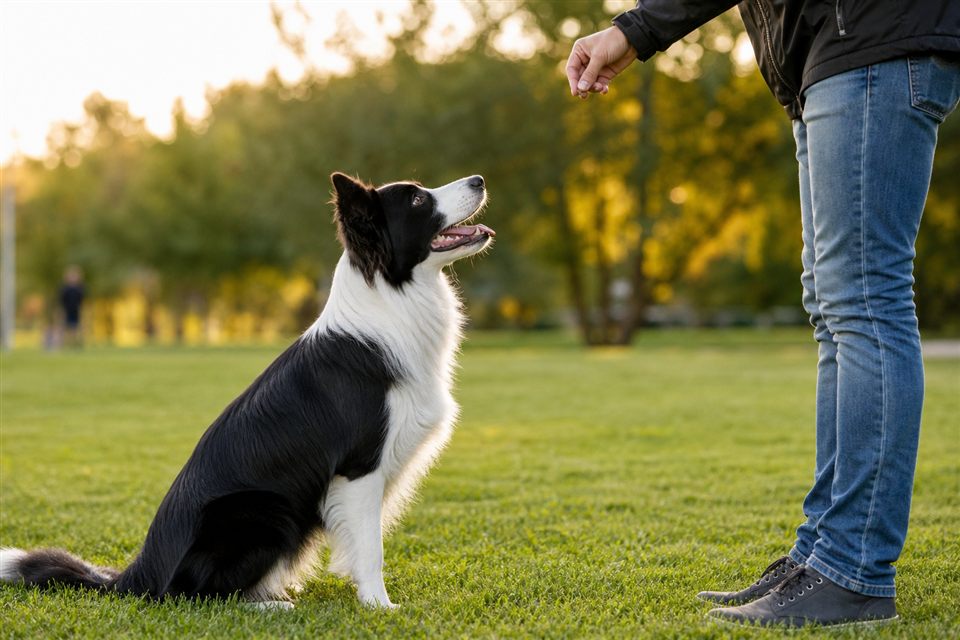
- Treat from your hand at your knee—reward calm choices, not staring.
- Increase distance if he cannot eat; decrease only when success repeats five times in a row.
Nina practiced near a skate park perimeter during quiet weekday mornings—predictable triggers, controlled spacing.
Add movement gradually
Static boards help early stages. Next: slow rolls across the street at max distance. Then faster passes. Nina never jumped stages because Scout "did fine once." Regression is normal when speed or angle changes.
U-turn exits when a rider appears too close—teach a cue like "let's go" with treat party three steps away. Leaving is success, not failure.
Teach incompatible behaviors
Scout learned eye contact on cue ("watch me") before board work. A dog looking at you cannot simultaneously launch at wheels. Hand target ("touch") gave Nina a redirect during close calls.
Loose-leash walking drills at home built the muscle memory for slack line during real triggers.
Equipment and walk management
Front-clip harness reduced Scout's leverage. Nina avoided retractable leashes near traffic—they snap tension and remove steering. High-value treats—real chicken, not stale kibble—made counter-conditioning worth Scout's attention.
She told riders when possible: "training, passing wide." Most appreciated the heads-up.
Common mistakes to avoid
Punishing after the lunge teaches fear of skateboards and humans, not calmness.
Flooding—forcing close exposure hoping Scout "gets used to it"—often worsens reactivity.
Inconsistent rules—sometimes chasing is funny on video, sometimes not—confuses dogs.
Skipping exercise before training walks leaves Scout too wired to learn.
Building progress you can measure
Nina kept a simple log on her phone: date, closest pass distance, whether Scout lunged, and treat count. Patterns emerged—Scout improved on cloudy days when the skate park was empty but regressed after skipped walks. Data turned frustration into small wins she could celebrate instead of guessing.
Progress is rarely linear. A great Tuesday does not guarantee a perfect Wednesday. Nina learned to judge weeks, not single outings.
When to get professional help
If Scout has snapped at riders, injured himself on leash, or cannot recover below threshold despite weeks of structured work, a positive-reinforcement trainer or veterinary behaviorist can design a custom desensitization plan and rule out pain or anxiety disorders.
The bottom line
Scout still notices every wheel—but Nina now sees the stiffening early, creates distance, and pays him for calm glances. Lunging at skateboards and scooters improves with patience, distance, and rewards tied to the trigger itself. City walks became manageable again, one threshold at a time.
This article is for general education only and does not replace advice from a licensed veterinarian or certified behavior professional.