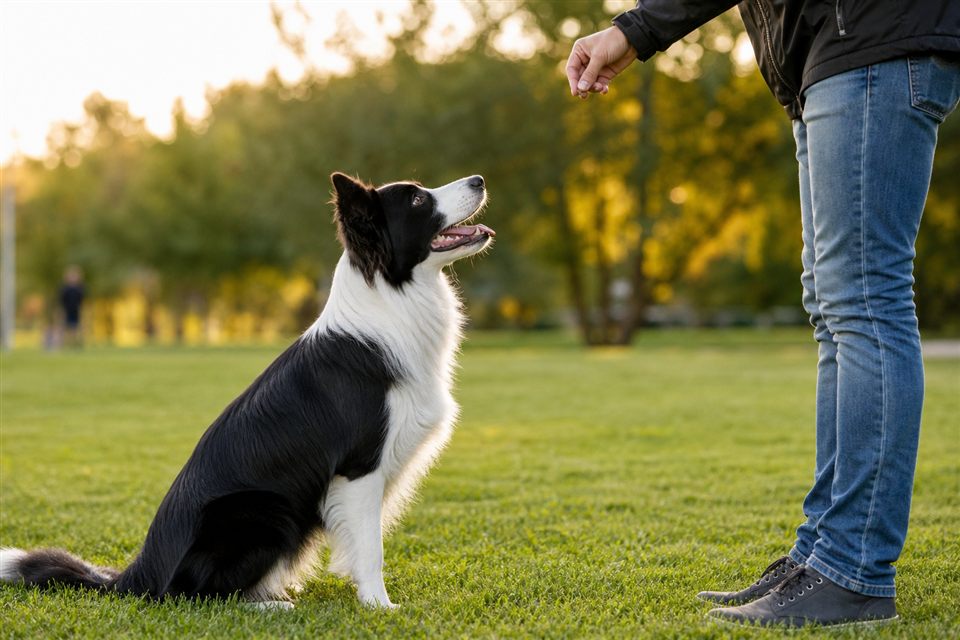
Marcus had walked his cattle dog, Rufus, on the same suburban sidewalk for two years before the chasing started. A school bus rumbled past, Rufus bolted to the end of the leash with a sharp lunge, and Marcus felt the harness bite into his shoulder. Rufus did not catch the bus—dogs never do—but the thrill of the chase lit him up like a switch. Within a week, he was lunging at sedans, cyclists, and the mail truck. Marcus needed prevention before someone got hurt.
Key points at a glance
- Car chasing is dangerous, self-reinforcing, and often rooted in herding instinct, prey drive, or frustration.
- Prevention means controlling distance and equipment so the dog cannot practice the behavior.
- Training builds focus, impulse control, and a positive association with moving vehicles at safe distances.
- Punishment and leash corrections often increase arousal and make lunging worse over time.
- Severe cases need professional help and may require temporary route changes.
Why dogs chase cars in the first place
Moving vehicles trigger several hardwired and learned responses:
Predatory sequence. Chase, grab, shake. Cars simulate fleeing prey—fast, noisy, just out of reach. Even a failed chase floods the brain with excitement. Rufus got a neurochemical reward every time he lunged.
Herding and motion sensitivity. Breeds developed to control moving livestock often react to wheels, runners, and bikes. The bus was not prey to Rufus—it was something that needed to be stopped.
Frustration on leash. Trapped behind a harness, a dog cannot complete the chase. That frustration can explode as barking, spinning, and harder lunges next time.
Learned habit. Each successful lunge—meaning the car "fled"—strengthens the behavior. Marcus's dog was training himself on every walk.
Understanding the motivation does not excuse the risk. It tells you which tools fit.
Prevention first—before training can work
You cannot teach calm while Rufus rehearses full-speed lunges at passing traffic. Prevention is not giving up; it is creating conditions where learning is possible.
Change the route and time. Walk at quieter hours. Use parks away from busy roads during the training phase. Marcus shifted to 6 a.m. loops until Rufus had basics in place.
Increase distance from triggers. Cross the street before a car approaches. Use driveways and parked cars as visual blocks. Distance is your most powerful dial.
Use appropriate equipment. A front-clip harness or head halter gives better steering than a flat collar for strong lungers. Avoid retractable leashes near roads—they extend into traffic and snap back unpredictably.
Never off-leash near streets. Even a usually reliable dog can chase once and not return.
Block visual triggers when helpful. A "calming cap" or positioning Rufus behind Marcus's body can reduce sight-chasing during early work.
Prevention stops the behavior from getting stronger while you train replacements.
Training plan—building calm around moving vehicles
Work below threshold—the distance where Rufus notices a car but can still eat, sniff, or respond to cues. If his ears pin forward and his body locks, you are too close.
Step 1: Name the trigger calmly. When a car appears at a safe distance, say "car" in a neutral tone and feed a treat. Car equals snack, not chase. Repeat until Rufus glances at you when he hears the word.
Step 2: Teach "look" and "let's go." Eye contact on cue gives Rufus a job. "Let's go" in the opposite direction ends the moment before arousal spikes.
Step 3: Add movement gradually. Start with slow traffic far away. Reward every calm choice—loose leash, sniffing, sitting. Shrink distance over weeks, not minutes.
Step 4: Impulse control games at home. "Wait" at doors, "leave it" with moving toys, and settle on a mat build the same brain muscles needed on the sidewalk.
Step 5: Structured desensitization to sounds. Play traffic audio at low volume while Rufus eats. Raise volume slowly. Some dogs chase partly on sound.
| Training stage | Rufus's task | Success looks like |
|---|---|---|
| Beginner | Watch car 50+ feet away, eat treats | Loose body, takes food |
| Intermediate | Walk parallel to slow traffic across the street | No lunge, responds to "look" |
| Advanced | Pass closer traffic with cues | Brief glance, continues walking |
Sessions should be short. Five calm passes beat one traumatic close call.
What not to do
Jerking the leash can injure the neck and associate cars with pain—not calm.
Yelling "no" adds chaos without teaching an alternative behavior.
Chasing games in the yard can sharpen the same drive you are trying to reduce near roads, unless carefully structured with clear start and stop cues.
Assuming age will fix it. Rufus was three. Car chasing rarely fades without intervention.
When professional help is warranted
Consult a certified dog trainer or behaviorist if Rufus has broken free and chased, if Marcus cannot physically manage the dog, or if lunging extends to people and bikes with similar intensity. Veterinary behaviorists can address compulsive or extreme chase behavior. Some communities offer herding-satisfied outlets through sports like treibball under professional guidance—never as a substitute for road safety.
Long-term management
Even after solid training, Marcus kept Rufus on a fixed-length leash near busy roads and maintained distance around buses and delivery trucks. Prevention and training work together permanently. The goal is not perfection at six inches from a speeding truck—it is a dog who can live in a world full of motion without putting himself or Marcus in danger.
The bottom line
Rufus chased cars because movement triggered instinct and every lunge felt rewarding. Marcus stopped the behavior by preventing rehearsals, choosing safer routes, and teaching that vehicles at a distance predict treats and calm walking—not pursuit. Car chasing is an emergency-level habit. Treat it that way from day one with management first, gradual training second, and professional support when the dog's strength or drive exceeds what you can safely handle alone.
This article is for general education only and does not replace advice from a licensed veterinarian.