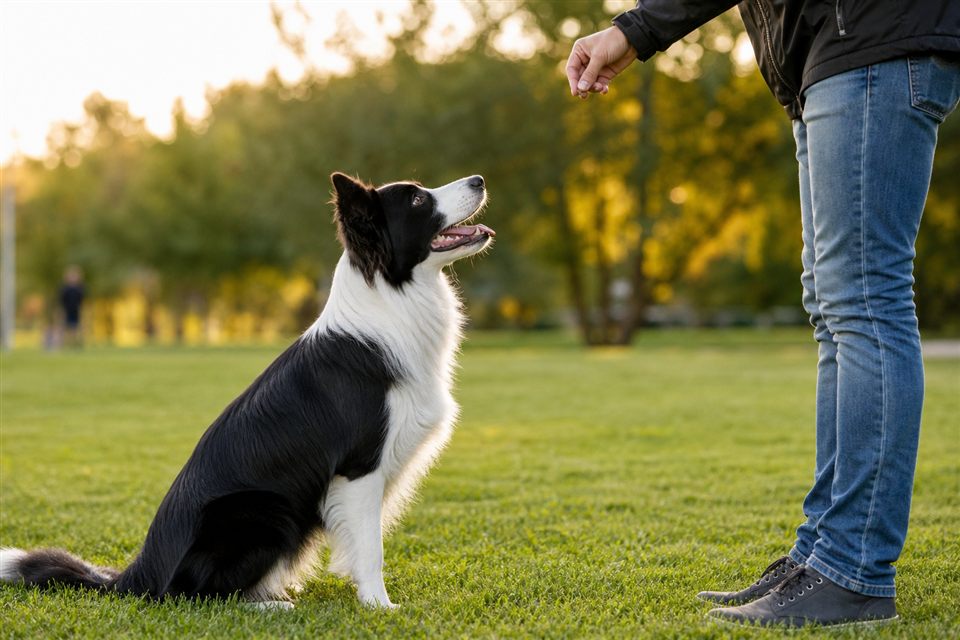
Farah parked at school pickup in Ann Arbor at 3:12 p.m. and opened the back door. Comet, her 47-lb boxer mix, had been calm for the 11-minute ride. Then two second-graders ran up, backpacks bouncing. Comet hit the end of the leash and jumped, paws on a child's shoulders. Farah had spent 3 weeks teaching a solid sit for adult guests. Comet still used it for the mail carrier. Children were a different trigger: higher voices, faster hands, faces at jump height. A neighbor had told her to knee the chest. She would not. She shortened the leash to 2 feet, asked the kids to freeze, and reached for the treat pouch she now kept in the cup holder.
Key points at a glance
- Kids are more exciting and closer to eye level; adult sit does not automatically transfer.
- Teach four-on-floor: pay when all paws are down, even for 1–2 seconds at first.
- Have children toss 3–5 treats on the ground so Comet's head goes down, not up.
- Never knee the chest, step on paws, or yell. Pain and startle make jumping worse or scary.
- Clip a 6-foot leash before kids enter the yard or the car door opens.
Kids are a different trigger than adults
Adults stand still, talk lower, and often ignore the dog. Children squeal, flap sleeves, and crouch. A 47-lb boxer mix can put paws on a 4-foot-tall kid without leaving the ground much. That is why the living-room sit dies at 3:12 p.m. Train the kid context on purpose. Start with one calm child who can follow a script, not a cluster at pickup. Distance first: Comet on leash 10–15 feet from the child. Pay for looking at Farah. Then 8 feet. Then 6. If he loads up—stiff, staring, closed mouth—you moved in too soon.
Keep the leash on when children come through the door at home. Two feet of slack, not a taut yank. You are preventing rehearsal, not hanging him. Practice 5 arrivals a week if you can: child enters, treats hit the floor, Comet sniffs, child walks past. Ninety seconds is a full drill. Pickup lines are advanced homework. Use the car as a barrier until the ground-treat pattern is easy in the driveway.
Four-on-floor, treats on the ground
Four-on-floor means you pay the moment paws land, before you ask for a sit. Sits fail when the kid is already hugging. A scatter of 3–5 pea-size treats between the child's feet turns the greeting into a sniff. Coach the kids: freeze, toss, then pet the shoulder only if the dog is still down. No running. No "up, up." If a child cannot toss yet, Farah tosses. The dog still learns that children predict food on the floor, not a jumping jackpot.
Kneeing the chest hurts ribs and teaches some dogs to jump harder or to bite the approaching knee. Skip it. If Comet is too amped, you leave. Walk him 40 feet from the school doors, pay for four on the floor, then try again, or skip the sidewalk meet and greet from the car window with the leash short. Safety of the second-graders beats a photo.
| Setup | What kids do | What you do |
|---|---|---|
| Leash on before kids appear | Freeze, no running | 2 ft slack, 6-ft leash |
| Four-on-floor | Wait | Pay 1–2 seconds of paws down |
| Treat scatter | Toss 3–5 pieces on the ground | Mark the sniff, not the jump |
| Adult sit practice | Not enough alone | Retrain with child distance 10–15 ft |
| Knee to chest | Never | 0 times; it is not a cue |
| School pickup | One calm child first | Car barrier until driveway drills are easy |
Farah kept the pouch in the cup holder. The next pickup, the second-graders tossed cheese on the sidewalk. Comet's paws stayed down for the 8 seconds it took to clip the leash shorter. No knees. No shoulders.
This is general training education, not a substitute for a force-free trainer if jumping includes snapping, or for safety rules around children and dogs.