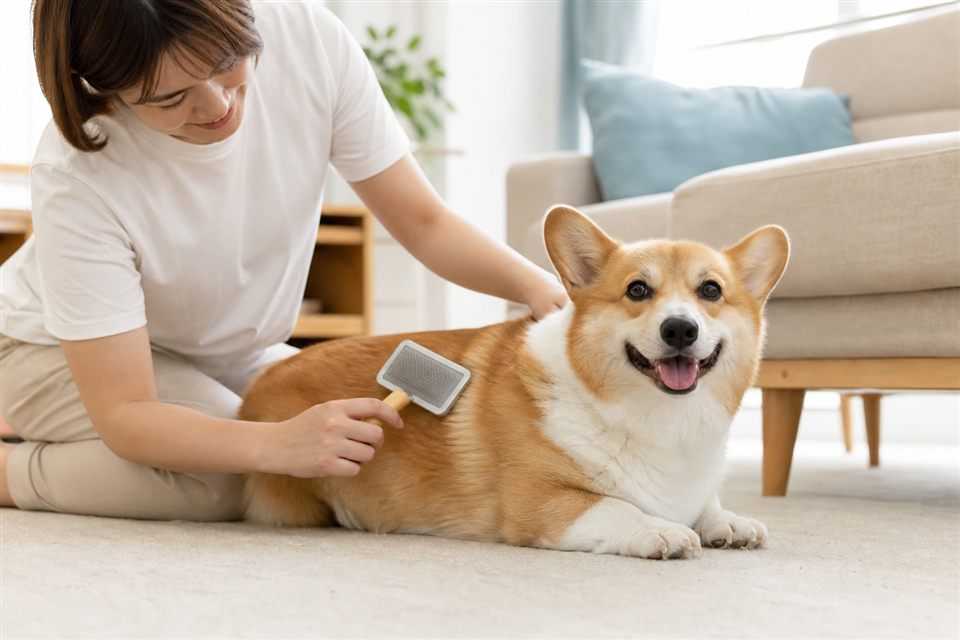
DeShawn’s Maine Coon, Quill, started leaving gray commas on every dark shirt in late April. The apartment looked like a second cat lived in the vents. Quill hated the plastic slicker from a late-night scroll, and one bad session ended with a swipe and two days under the dresser. DeShawn needed the coat thinner before July without making the brush a threat.
Key points at a glance
- Work in three-to-five-minute sessions, not one marathon.
- Start with a metal comb, then a tool that reaches the undercoat.
- Never shave a cat at home to “beat the heat.”
- Pair each pass with food, not restraint.
- Shed more in spring; a sudden bald patch is a vet issue, not a grooming win.
Why summer shedding is not a one-weekend project
Cats blow coat when daylight stretches. Indoor cats still do it because lamps and windows fake a longer season. The loose hair is mostly undercoat. If it stays in, it mats behind the ears, in the armpits, and along the pants line. Mats pull skin. They also make Quill overheat because trapped fur holds warmth against the body.
A single heroic grooming day usually fails. The cat leaves, you chase, and the next time the comb appears the ears go flat. DeShawn got further by treating deshedding like a daily habit: same chair, same snack, then stop while Quill still wanted more. Do not bath a cat to force the shed unless a vet or groomer is already involved. Water plus panic plus a wet undercoat creates worse mats.
Tools that remove hair without scraping skin
| Tool | Best for | Skip if |
|---|---|---|
| Wide metal comb | Daily check, small knots | The coat is already tight mats |
| Undercoat rake with rounded teeth | Thick coats like Quill’s | You feel the skin lift with each pull |
| Rubber curry or grooming glove | Short-haired cats and finishing | You need to reach dense fluff |
| Slicker with a light hand | Finishing the top coat | The cat flinches on first contact |
| Clippers at home | Almost never | You are not a groomer |
Hold the skin taut so the tool glides instead of tugging. Work with the hair, then a little against it only if the cat stays loose. Start at the cheeks and chest, where many cats like a scratch, and save the belly for last or skip it.
If you hit a mat smaller than a pea, tease it with the comb. If it is flat to the skin, stop. Scissors next to a wriggling cat cut ears and nipples. A groomer or vet can shave a mat safely. DeShawn retired the cheap slicker. Quill accepted a comb and a rake with widely spaced teeth.
A low-stress session you can repeat
Pick a room Quill already claims. Close the door so a spooked cat does not vanish into the couch frame. Set a towel on your lap. Offer a lickable treat on a spoon and comb while he eats. Ten strokes is a full session on day one.
Watch the tail. A twitching tip means you are close to the limit. Stop, pay, and leave the tools out so they become furniture, not an ambush. Next day, add a few strokes on the back. By the end of a week you can cover the sides.
A second person can help only if they hold a treat, not the cat. Pinning Quill taught him that grooming equals capture. Vacuum after, not during. Wash the comb so old hair does not drag through the next pass.
What not to do when the heat arrives
Shaving a cat “for summer” often backfires. The coat protects skin from sun. A bad clip leaves stubble that itches and can grow back patchy. Lions cuts belong in a salon, and even then they are for mats or medical access, not a before-and-after photo.
If Quill suddenly sheds in clumps, has bald rims on the ears, or grooms until the skin is pink, that is not seasonal coat. Allergies, overgrooming, and thyroid disease show up as hair on the floor too. Deshedding will not fix those.
The shirts improved by June. Quill still sat on his chest. That was the point.
This article is general grooming guidance, not a diagnosis. Bald spots, open skin, or mats tight to the body should be checked by a veterinarian or a professional groomer before you keep pulling hair at home.