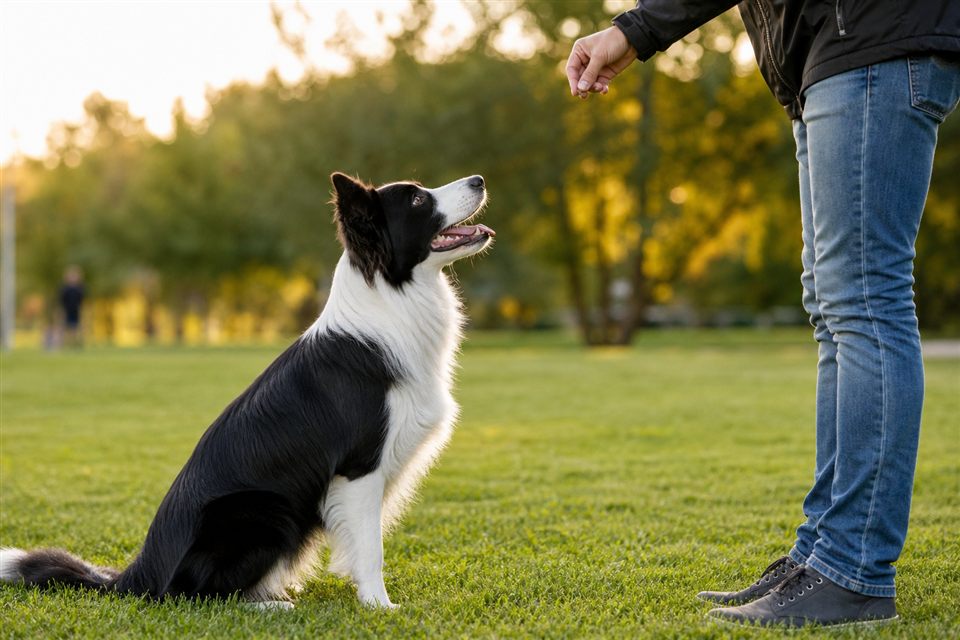
The doorbell turned Maple into a tornado — barking, jumping, spinning, then launching at whoever entered. Her owner, Diane, apologized through every visit while guests shielded their faces with coats. Maple was friendly; she was simply operating at eleven when guests deserved a four.
Key points at a glance
- Door excitement is normal social arousal amplified by sound, motion, and anticipation.
- Punishing after the burst rarely prevents the next one; rehearsal happens in seconds.
- Pre-visit exercise and a trained mat spot reduce peak intensity more than yelling "off."
- Guests must ignore jumping until four paws hit the floor — consistency across people matters.
- Severe reactivity with growling or biting needs professional behavior support.
Why arrivals trigger chaos
The doorbell predicts novelty — new scents, voices, hands to sniff, possible play. Dogs with insufficient daily stimulation stockpile energy that detonates at the threshold. Guarding breeds add alert barking; social breeds add body contact. Every successful jump that gets laughed off or petted reinforces the greeting style.
Before the door opens
- Burn energy: A twenty-minute sniff walk or fetch session before expected guests lowers baseline arousal.
- Manage the environment: Leash by the door, baby gate to hallway, or confinement in a back room with a stuffed Kong until guests settle inside.
- Train a mat default: Weeks of practice placing a bed near — not blocking — the entry and rewarding calm downs pays off on guest night.
During the greeting
Ask guests to enter quietly without high-pitched baby talk at the threshold. Ignore Maple until she sits or stands with four paws down; then gentle attention. Turning away from jumps deprives the behavior of its reward — your face and hands.
If Maple is on leash, stand on it lightly to prevent launch while rewarding eye contact and loose leash. Release to greet only when body language softens.
The doorbell itself
Desensitize separately: record doorbell sounds at low volume, treat for calm, increase volume over sessions. Pair real doorbell with tossed treats on the mat before opening the door — change the prediction from "person explosion" to "food then calm."
Long-term habits
Regular impulse-control games — sit-stays, wait at doors, nothing in life is free for pushy greeters — generalize beyond guest night. Rotate which family member answers the door so Maple does not fixate on one handler.
Practice with friendly neighbors or delivery drivers when possible. Real arrivals with low stakes build reliability faster than only training on major holidays when excitement is already peaked.
When to get help
If excitement includes snapping, resource guarding near the entry, or fear-based barking at strangers, consult a force-free trainer. Friendly jumping differs from anxiety aggression; both need tailored plans.
The bottom line
Calming an overexcited dog when guests arrive means preparing before the bell rings, giving an alternative behavior like mat settling, and enlisting guests to reward calm — not chaos. Diane's visits improved when Maple rehearsed quiet greetings daily and guests stopped fueling acrobatics with attention. Most friendly jumpers mature with structure; intensity that frightens visitors deserves expert guidance.
This article is for general education only and does not replace advice from a licensed veterinarian.