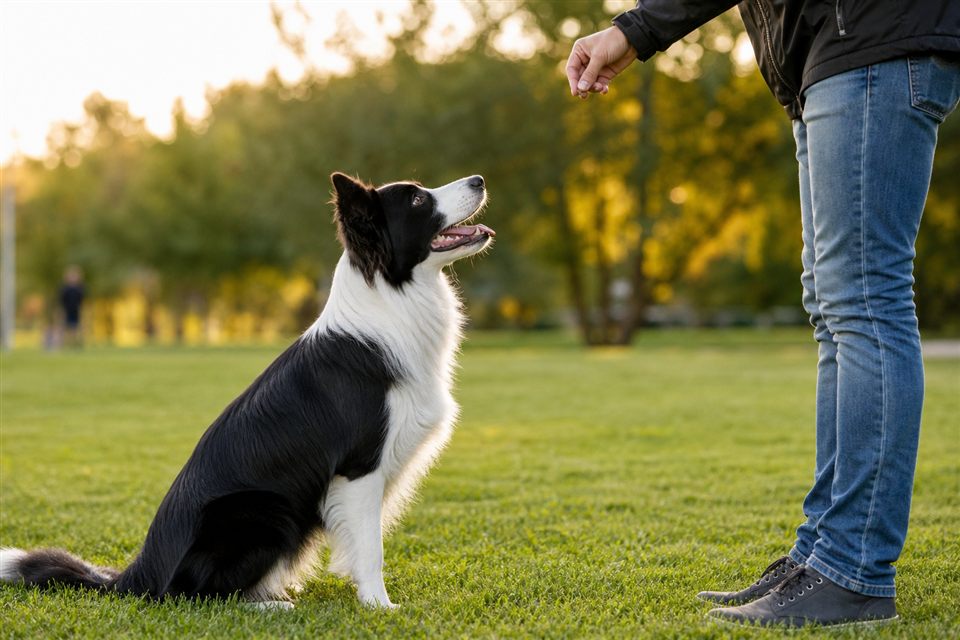
Resource guarding means your dog uses growling, stiff body language, or snapping to keep people or other pets away from something they value—food bowls, chews, beds, or even your lap. It is a survival strategy, not spite; punishing growls often suppresses warning signals and raises bite risk without fixing the underlying fear of loss.
Key Points
- Early signs: eating faster when you approach, freezing over a bone, whale eye (whites showing) when someone walks near the bowl.
- Never grab items from a guarding dog's mouth—trade for higher-value food (chicken cube) tossed at a distance, then pick up the object when they move away.
- Feed guarded dogs behind a baby gate or in a separate room until a trainer builds "drop" and "leave it" with positive reinforcement.
- Children must not approach eating or chewing dogs; most bites to kids involve food or resting spots.
- Seek a certified behavior professional if there are bites, multiple triggers, or guarding toward every household member—progress takes weeks, not one dominance exercise.
Practical Tips
- Hand-feed 5–10 kibble pieces during calm moments so your presence near food predicts good things, not theft.
- Provide two identical chews in separate rooms for multi-dog homes to reduce competition at the source.
- Record a short video of a guarding episode (from a safe distance) for your behavior consultant—words alone miss body language.
This article is for general educational purposes only and does not replace professional veterinary advice. Contact your vet if your pet shows ongoing symptoms.