
You turn off the lights, the thermostat reads 68°F, and your dog lies beside the bed panting like they just finished a five-mile run. No walk happened. No thunderstorm. Just wet breaths and restless shifting at midnight. Cool-night panting is one of those symptoms owners dismiss as "maybe a bad dream" — but it often points to pain, respiratory strain, hormonal disease, or anxiety that deserves a daytime vet conversation.
Key points at a glance
- Normal dogs pant to cool down after exercise or heat; resting panting in a cool room is not normal long-term.
- Pain (arthritis, abdominal discomfort, ear infection) frequently shows up as nighttime restlessness and panting when distractions fade.
- Heart disease and lung problems reduce oxygen efficiency — panting is the body's compensation.
- Cognitive dysfunction in senior dogs can disrupt sleep cycles and increase night pacing plus panting.
- Blue gums, collapse, or panting that won't stop — emergency care tonight, not tomorrow.
Normal panting vs. worrisome night panting
| Normal | Worth investigating |
|---|---|
| After play or walk, stops within 20–30 minutes | Starts at rest, lasts 30+ minutes repeatedly |
| Hot day, seeks water and shade | Cool room, water available, still panting |
| Excitement when guests arrive | Nightly pattern for a week or more |
| Short-nosed breed after mild activity | Sudden change in a previously quiet sleeper |
Common medical causes
Pain and orthopedic issues
Dogs hide discomfort during busy daytime hours. At night, joint stiffness from arthritis, back pain, or an undiagnosed injury becomes harder to ignore. Watch for difficulty jumping on the bed, lip licking, or reluctance to lie on one side.
Heart disease
Mitral valve disease and dilated cardiomyopathy are common in older small and large breeds respectively. Fluid in the lungs makes lying flat uncomfortable — dogs pant and reposition. Coughing at night or a belly breathing pattern strengthens suspicion.
Respiratory and airway problems
Laryngeal paralysis (common in older Labradors), collapsing trachea in small breeds, and pneumonia all increase breathing effort. Brachycephalic breeds (bulldogs, pugs) may pant at night even when cool due to narrowed airways.
Cushing's disease (hyperadrenocorticism)
Excess cortisol causes increased thirst, pot belly, thin skin, and panting — often noticed by owners before other signs. Middle-aged and senior dogs are most affected.
Medications and toxins
Prednisone and other steroids commonly trigger panting. Recent pesticide exposure, chocolate, or stimulant ingestion can cause overnight symptoms — review anything your dog reached in the last 48 hours.
Anxiety and cognitive decline
Separation anxiety, noise phobias, or canine cognitive dysfunction (dog dementia) disrupt sleep. Panting pairs with pacing, staring at walls, or getting stuck in corners. New rescue dogs may show temporary night anxiety that improves with routine.
What you can do tonight
- Offer fresh water — dehydration worsens discomfort.
- Move your dog to a well-ventilated, quiet spot; avoid heavy blankets on short-nosed breeds.
- Film 30 seconds of video showing breathing rate and posture for your vet.
- Count breaths at rest: over 40 breaths per minute while truly resting is elevated — note the number.
Do not give human sedatives, alcohol, or leftover pain meds without veterinary instruction.
When to go to emergency care
- Gums pale, blue, or gray instead of pink.
- Distended abdomen with unproductive retching (bloat suspicion in deep-chested breeds).
- Panting suddenly severe after medication, toxin, or bee sting.
- Cannot lie down or collapses after minimal activity.
What your veterinarian will likely check
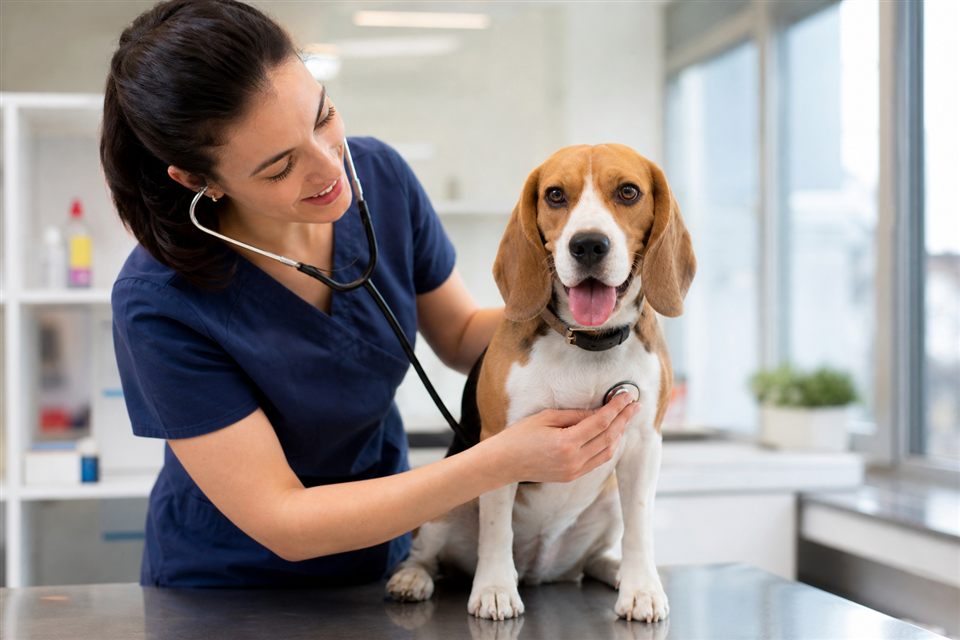
Expect questions about appetite, cough, water intake, and exercise tolerance. The exam may include:
- Heart and lung auscultation.
- Orthopedic palpation and gait check.
- Blood work (CBC, chemistry, thyroid if indicated).
- Chest X-rays or echocardiogram for persistent cases.
Treatment follows diagnosis — pain management for arthritis, diuretics for heart fluid, specific therapy for Cushing's, or behavioral support for anxiety. There is rarely one-size-fits-all medication for "night panting" without knowing the cause.
Helping senior dogs sleep better
- Orthopedic bed with ramp access reduces joint strain.
- White noise for mild anxiety — not a substitute for medical workup if panting is new.
- Consistent bedtime potty and short calm walk before sleep.
- Discuss melatonin or prescription anxiolytics only with your vet if cognitive dysfunction is diagnosed.
The bottom line
Cool-night panting without exercise is your dog's body signaling that something does not feel right — not a quirk to ignore. Track when it started, record a video, and schedule a veterinary exam for patterns lasting more than a few nights. Emergency signs demand immediate care. Catching heart, pain, or hormonal issues early dramatically improves comfort and outcomes.
This article is for general education only and does not replace advice from a licensed veterinarian. Breathing difficulty can become life-threatening quickly — call emergency services when in doubt.