Harold noticed it during their evening walk: his boxer, Duke, stopped twice to cough — not the dry hack of dust in the throat, but something deeper, wet, like he was trying to clear water from his chest. Duke shook it off and kept walking. By midnight, the cough had a rhythm to it, and Harold was googling with one hand on Duke's ribcage, counting breaths.
Key points at a glance
- A wet or productive cough often means fluid, mucus, or inflammation in the lungs or airways.
- Common causes include kennel cough, pneumonia, heart disease, and tracheal problems.
- Seek emergency care if your dog has blue gums, collapse, breathing open-mouthed at rest, or coughs blood.
- Same-day vet visits are warranted for fever, lethargy, appetite loss, or worsening cough over 24 hours.
- Mild, isolated coughs in otherwise normal dogs still deserve a vet call within a day or two.
What a "wet" cough actually sounds like
Owners describe wet coughs as gurgling, rattling, honking with a moist finish, or like the dog is "bringing something up" without necessarily producing visible phlegm. The sound suggests material in the lower airways or lung tissue — mucus, pus, blood, or fluid from heart failure backing up into the lungs.
Dry coughs often originate higher — throat irritation, collapsed trachea, or early kennel cough. Wet coughs point lower and usually warrant quicker attention. That distinction isn't absolute; some conditions start dry and turn wet as infection progresses.
Record a 10-second video of the cough — vets diagnose a surprising amount from audio and posture.
Common causes behind the fluid-like sound
Infectious tracheobronchitis (kennel cough) spreads in group settings and may produce mucus as it progresses. Fever, green discharge, and lethargy suggest secondary bacterial infection.
Pneumonia — bacterial, viral, or aspiration — fills air sacs with fluid. Dogs cough wetly, breathe faster, and often refuse food.
Congestive heart failure causes fluid to leak into lung tissue. The cough worsens at night or after lying down; you may notice exercise intolerance or abdominal swelling.
Chronic bronchitis in older dogs produces daily moist coughing. Lung tumors, fungal infections, and parasitic migration are less common but serious.
Red flags — don't wait
| Symptom | Action |
|---|---|
| Gums blue, gray, or pale | Emergency vet immediately |
| Breathing rate over 40/min at rest | Emergency or same-day urgent |
| Open-mouth breathing while resting | Emergency |
| Collapse or fainting | Emergency |
| Coughing blood | Emergency |
| Distended abdomen with weak cough | Same-day — possible heart failure |
| Fever, not eating 24+ hours | Same-day appointment |
Harold counted Duke's breaths: 36 per minute lying on the floor. Borderline elevated. Combined with the wet sound and Duke's age, that was enough for an after-hours call rather than waiting until morning.
When monitoring at home is reasonable — briefly
A single cough episode in an otherwise bright, eating, normal-breathing dog after pulling on a leash might be irritation. Rest, remove collar pressure, and watch for 12 hours. If it doesn't repeat, mention it at the next routine visit.
Monitoring stops being reasonable when the cough repeats, sleep interrupts, or breathing changes. Don't give human cough suppressants without veterinary direction.
What your vet will likely do
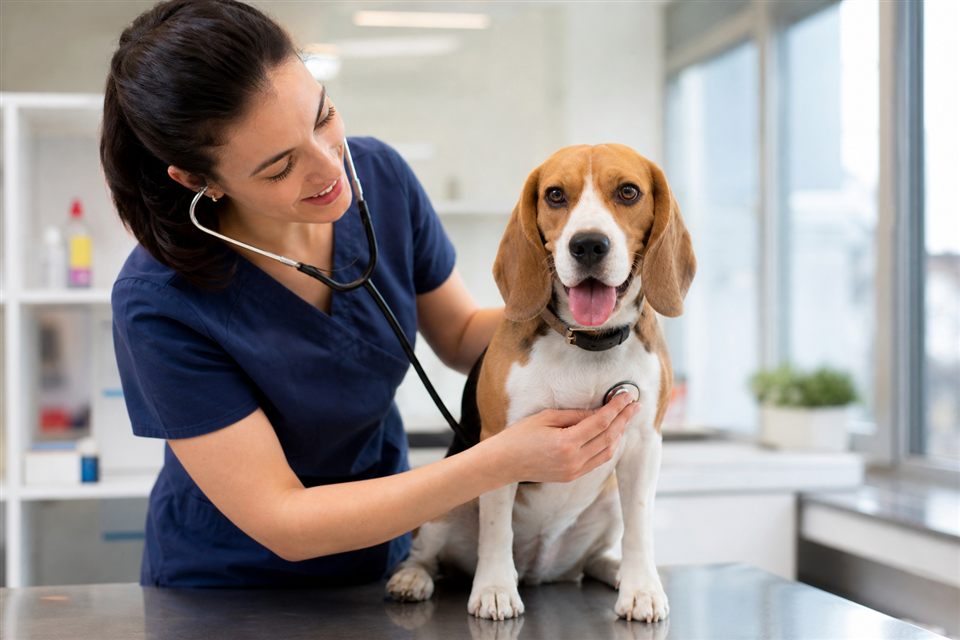
Expect a thorough auscultation (listening with a stethoscope), temperature check, and possibly chest X-rays. Blood work, heartworm test, echocardiogram, or airway swabs follow depending on findings. Treatment ranges from antibiotics and rest for uncomplicated infections to diuretics and heart medications for congestive failure.
Kennel cough often resolves with supportive care; pneumonia and heart disease do not self-correct.
The bottom line
A wet cough that sounds like fluid in the chest is your dog's airways or lungs asking for attention — not something to ride out for a week. Kennel cough, pneumonia, and heart failure all sit on the possibility list, and they need different treatments. Duke turned out to have early bronchitis after a boarding stay; antibiotics and rest cleared it. Harold's midnight breath count wasn't overkill — it was the difference between worrying blindly and acting on data.
This article is for general informational purposes only and does not replace advice from your veterinarian. If your dog is coughing, breathing abnormally, or showing signs of distress, contact your vet or an emergency clinic promptly.