Wednesday at 7:35 a.m., Nedra Shaw clipped the leash and took Vesper, her 19-pound Pug, around a Raleigh block. The sidewalk read 52°F on her phone. Two houses down, Vesper’s tongue was a wide ribbon and her sides pumped like she had run a mile. They turned back at the maple. On the porch she stood, dripping, for nine minutes before she would lie down. Last October a similar “short walk” had ended in a $240 ER triage for a temperature of 104.1°F. Nedra started timing recovery instead of arguing with the weather.
Key points at a glance
- Cool air does not cancel panting in flat-faced or unfit dogs
- Recovery time after you stop tells you more than the walk length
- Pain, anemia, heart disease, and airway collapse also drive panting
- Excitement and pulling can look like “she can’t handle the cold”
- Skip muzzles that clamp the mouth on a panting pug
- Same-day care if gums pale, collapse, or panting will not settle at rest
Cool weather is not a free pass
Dogs dump heat through panting. A Pug starts behind. Short nose, small nostrils, a soft palate that flaps. Fifty-two degrees feels pleasant to Nedra. Vesper is still wearing a fur coat and moving a compressed airway. Humidity matters more than the number on the phone. A damp 52°F can be harder than a dry 60°F.
Fitness is the other quiet factor. A dog who spends weekdays on the couch has a two-block cardiovascular system. Pulling is work. Vesper’s old collar made her gag, then pant more. Nedra thought 19 pounds looked “solid.” The clinic chart said closer to 16.
When panting is a medical flag
| Pattern | More likely | Action |
|---|---|---|
| Settles in 5–10 minutes, pink gums | Effort, excitement, conformation | Slow the walk; recheck fitness |
| Still pumping 20+ minutes at rest | Pain, heart, airway, heat load | Call the clinic that day |
| Worse on cool, damp, exciting days | Airway plus arousal | Harness, shorter loops |
| New in a senior who used to trot | Heart, lung, anemia, arthritis | Exam and likely bloodwork |
| Plus cough at night or fainting | Cardiac or tracheal issue | Do not wait for “next vaccines” |
Heart disease can show up as a walk that used to be easy. You may hear a cough after she lies down. Anemia makes dogs air-hungry. Pain from hips raises respiratory rate too; they pant instead of whimper.
Tracheal collapse shows up as a honk. If Vesper honks and then cannot catch her breath, that is not a training problem. Anxiety copies the look. A dog who hates skateboards will pant at 52°F because the Tuesday skateboard kid exists. Nedra filmed one loop. No skateboard. Still the ribbon tongue.
How to measure this at home
Count breaths at rest on the cool kitchen floor before you leave. After the walk, time how long until the tongue goes back in. Write the distance, the temperature, and whether she ate first.
Check gums. Pink and moist is the goal. Pale, gray, or brick-red with a dog who will not settle is a ride, not a note in the phone.
Change one variable. Shorter loop. Harness that does not ride the throat. Skip the sweater if she is already dumping heat; Pugs do not need a fleece at 52°F unless they are shaved or sick.
Never use a tight muzzle that blocks panting on a flat-faced dog. They need that mouth open.
What the appointment is for
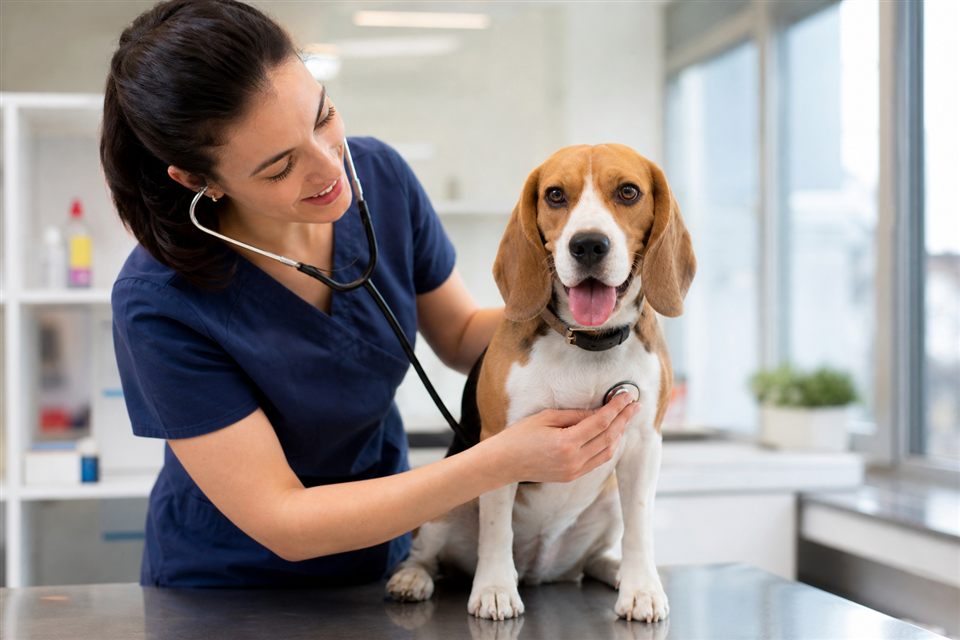
The vet will listen to heart and lungs, look at nostrils, and maybe suggest chest X-rays if this is new. For a Pug, they may talk stenotic nares or palate surgery if daily life is this hard. Not every Pug needs surgery. Every Pug needs an owner who treats two-block collapse as data.
Nedra’s ER visit last fall had been heat plus a walk she should have cut in half. This Wednesday was cooler and still too much. They cut the loop to the first driveway and back, twice a day. Recovery dropped to four minutes. Vesper still sounds like a small engine. She no longer looks like she is drowning on a 52°F sidewalk.
Heavy panting that does not settle, or that arrives with weakness or pale gums, needs a veterinarian. This article is general education, not a clearance for exercise.