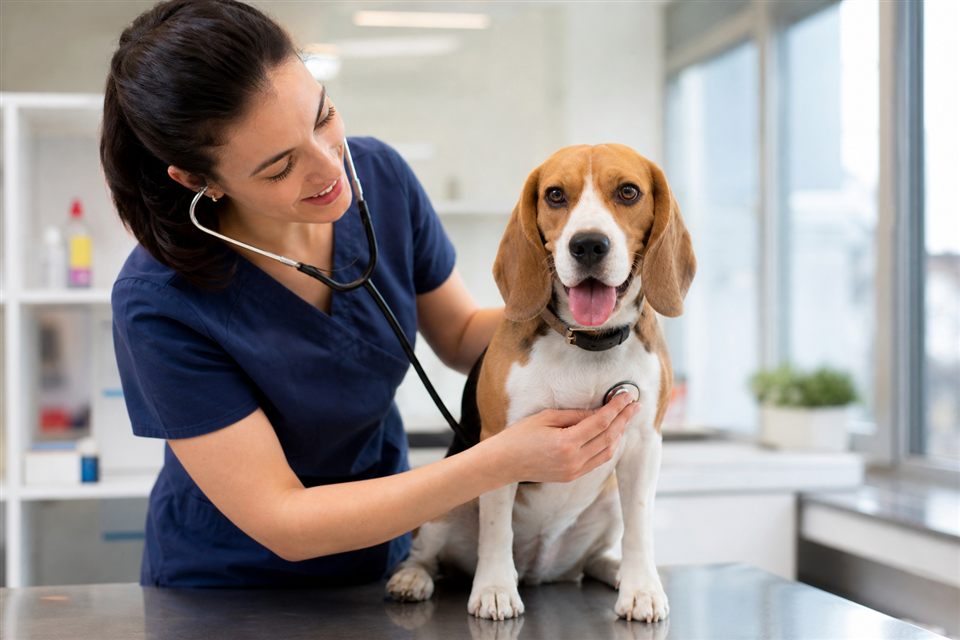
When Marcus noticed his beagle, Piper, had stopped perking both ears at the treat jar and instead held her left ear flat against her head, he assumed she was tired. By evening she shook her head hard enough to wake the cat, scratched the same ear until it reddened, and flinched when Marcus touched it. One ear down, one ear normal—sudden asymmetry in a dog who usually looked like a satellite dish on legs deserved more than a wait-and-see shrug.
Key points at a glance
- A suddenly drooping ear on one side often signals pain, inflammation, or nerve involvement—not a harmless quirk.
- Otitis externa (outer ear infection) is the most common cause: head shaking, odor, discharge, and scratching usually accompany the droop.
- Ear injuries from rough play, bites, foreign bodies like grass awns, and hematomas from head shaking can drop an ear quickly.
- Neurologic causes such as facial nerve weakness are less common but important when infection signs are absent.
- Do not pour alcohol, vinegar, or essential oils into the ear without veterinary guidance.
- Same-day or next-day vet contact is wise when the ear is painful, smelly, swollen, or bleeding.
Why one ear drops while the other stays up
Healthy dogs carry both ears similarly most of the time. When one ear suddenly hangs lower, something is interfering with comfort, muscle tone, or the ear's normal position. The pinna—the floppy or upright outer ear—is supported by cartilage and small muscles. Pain inside the canal makes dogs hold the ear still. Swelling from infection or a blood-filled hematoma adds weight and stiffness.
Piper's left ear told a classic infection story. Beagles, spaniels, and other floppy-eared breeds trap moisture and debris, creating yeast and bacterial overgrowth. Marcus had skipped last month's ear cleaning after a rainy hiking week—not catastrophic alone, but enough to tip a sensitive ear over the edge.
Injury is the second major category. Dogs wrestling in the yard can bite or scratch an ear flap. Grass seeds lodge in canals and cause intense pain with little visible discharge at first. Aural hematomas—blood pooling between cartilage layers after violent head shaking—make the ear feel thick and warm, often overnight.
| Sign | More suggestive of | Action |
|---|---|---|
| Brown/yellow discharge, odor | Infection | Vet exam, ear cytology |
| Head tilt, no odor | Foreign body, deep infection | Prompt vet visit |
| Swollen, fluid-filled flap | Hematoma | Vet within 24–48 hours |
| Drooping ear, no pain, drooling one side | Nerve issue | Vet same day |
| Both ears down, lethargy | Systemic illness | Vet promptly |
Infection versus injury: how they overlap
Ear infections rarely appear without behavioral clues. Dogs shake, scratch, rub ears on furniture, and may whine when yawning or chewing because jaw movement shifts the ear canal. The canal looks red on peeking; discharge ranges from waxy brown to yellow pus. Yeast infections smell sweet or musty; bacterial ones can smell foul.
Injuries may lack odor initially. Marcus felt a warm, puffy thickness along Piper's ear edge—the hematoma forming after days of minor irritation she had hidden. Some dogs hide ear pain until it becomes unbearable; do not assume absence of scratching means all is well.
Foreign bodies mimic infection: head tilt toward the painful side, sudden onset, intense reaction to ear touch. Attempting home extraction risks rupturing the eardrum.
What your veterinarian will do
Otoscopic exam visualizes the canal and tympanic membrane. Ear swabs identify yeast, bacteria, and mites. Treatment includes cleaner and medication matched to cytology; hematomas may need drainage or surgery. Foreign bodies are removed under sedation. Recurrent cases warrant allergy workup and anatomy review.
The bottom line
One ear down suddenly usually means Piper's ear hurts or is swollen inside—not that she is being dramatic. Infection and injury are the top suspects; both need veterinary assessment before home remedies make things worse. Marcus's prompt visit caught otitis before the hematoma needed surgery. Asymmetric ears are a detail worth acting on, not ignoring.
This article is for general informational purposes and is not a substitute for professional veterinary advice. Seek veterinary care if your dog shows ear pain, head tilt, balance loss, or swelling.