After forty minutes at the off-leash field, Marcus watched his Labrador, Cooper, slow from a full sprint to a three-legged hop on the right hind leg. Cooper still wanted the ball, tail wagging, but each landing on that leg ended in a tiny skip. Marcus felt along the knee and got a brief lip curl. He wondered whether this was a simple sprain from a bad pivot or something more serious — the kind of knee injury that changes a dog's life.
A back-leg limp that appears right after running or rough play is one of the most common reasons owners call the vet. The cause ranges from a torn nail or bruised pad to partial or complete rupture of the cranial cruciate ligament — the canine equivalent of an ACL tear in people. Knowing how to tell a minor strain from a ligament injury helps you choose between rest-and-monitor and same-day evaluation.
Key points at a glance
- Sudden hind-leg lameness after twisting, jumping, or sprinting often involves the stifle (knee) joint.
- Cruciate tears cause persistent limping, joint swelling, and sometimes a subtle "sit with leg out" posture.
- Mild sprains may improve within forty-eight to seventy-two hours of strict rest; worsening or non-improving lameness needs imaging.
- Overweight, middle-aged, and certain breeds — Labs, Rottweilers, Newfoundlands — carry higher cruciate risk.
- Never give human painkillers; controlled rest and a vet exam beat guessing.
What Cooper's limp looked like at first
Cooper's injury happened during a sharp turn chasing a frisbee. He did not cry out, which fooled Marcus into thinking it was minor. Many cruciate injuries are partial tears at first — the dog bears weight intermittently, especially when adrenaline is high. Once Cooper cooled down in the car, the limp became obvious.
Marcus checked the foot first, as every vet recommends. No cut pad, no broken nail, no thorn between toes. Moving up the leg, Cooper flinched when Marcus gently flexed the stifle. There was no dramatic swelling yet, but the joint felt slightly warm compared to the left knee.
That pattern — activity-related onset, toe-to-stifle exam negative until the knee, reluctance to fully extend the joint — fits stifle injury until proven otherwise. Soft tissue sprains of the hip or thigh happen too, but the knee is the prime suspect after pivoting play.
Cruciate tear versus sprain: how they differ
The cranial cruciate ligament stabilizes the knee so the shin does not slide forward relative to the thigh bone. When it tears, inflammation follows, and the joint becomes unstable. Dogs may develop a cranial drawer sign — the tibia shifts forward when the vet manipulates the relaxed knee — though partial tears can be subtle early on.
Signs that lean toward cruciate injury:
- Limping that persists beyond two to three days of strict rest
- Swelling on the inside or front of the knee
- Sitting with the sore leg slightly extended to the side instead of tucked neatly
- Difficulty rising from a sit, especially on slippery floors
- Progressive lameness over weeks from a partial tear that fully ruptures later
- A popping sensation some owners feel or hear (less common)
Signs that lean toward mild soft-tissue strain:
- Limping that improves noticeably within forty-eight hours when the dog is leashed for potty breaks only
- No swelling or only mild, fleeting swelling
- Full willingness to extend and flex the joint once initial soreness fades
- Normal sit posture returning quickly
Cooper's limp was still present the next morning. That alone justified a vet visit even before Marcus learned that Labs are cruciate-prone.
Other causes of post-run hind-leg limping
Not every rear lameness is the knee. Your vet will consider:
Toe and pad injuries — Torn nails, cuts, burns from hot pavement, or foreign bodies. Always start the exam at the foot.
Hip dysplasia flare — Chronic condition; exercise can aggravate it. Often bilateral history or bunny-hopping as a puppy.
Iliopsoas strain — Deep hip flexor muscle injury common in athletic dogs; pain on hip extension.
Patellar luxation — Kneecap slips medially; common in small breeds but seen in others. May cause intermittent skipping.
Fracture or dislocation — Trauma from collision or hole in ground; non-weight-bearing lameness.
Degenerative myelopathy or neurologic disease — Usually gradual, not acute after one run; both legs affected over time.
Tick-borne illness — Polyarthritis can cause shifting leg lameness days after exposure, not typically one instant after sprinting.
Marcus's timeline — one play session, one leg, knee sensitivity — kept cruciate at the top of the list.
What to do in the first forty-eight hours
Strict rest means leash walks for bathroom only, no ball, no stairs if avoidable, no jumping on furniture. Use a crate or gated room if Cooper would otherwise re-injure himself. Ice the knee for ten to fifteen minutes two to three times daily if your vet agrees; some prefer compression and anti-inflammatory medication instead of home icing alone.
Do not administer ibuprofen, naproxen, aspirin without veterinary direction, or acetaminophen. Dog-safe pain control requires a prescription and protects the stomach and kidneys.
If Cooper improved dramatically in two days, Marcus might still schedule an exam to confirm no partial ligament damage — silent partial tears often fail later under normal activity. If limping worsened, swelling appeared, or Cooper stopped using the leg entirely, that was same-day care.
When the vet visit becomes urgent
Seek prompt or emergency care if:
- Cooper cannot bear any weight on the leg
- The leg looks angular or shorter — possible fracture or luxation
- Swelling grows rapidly or the joint is hot and extremely painful
- Fever, lethargy, or loss of appetite accompany lameness — infection or systemic illness
- Marcus heard a pop and Cooper screamed at the time of injury
- Known trauma — hit by car, fall from height
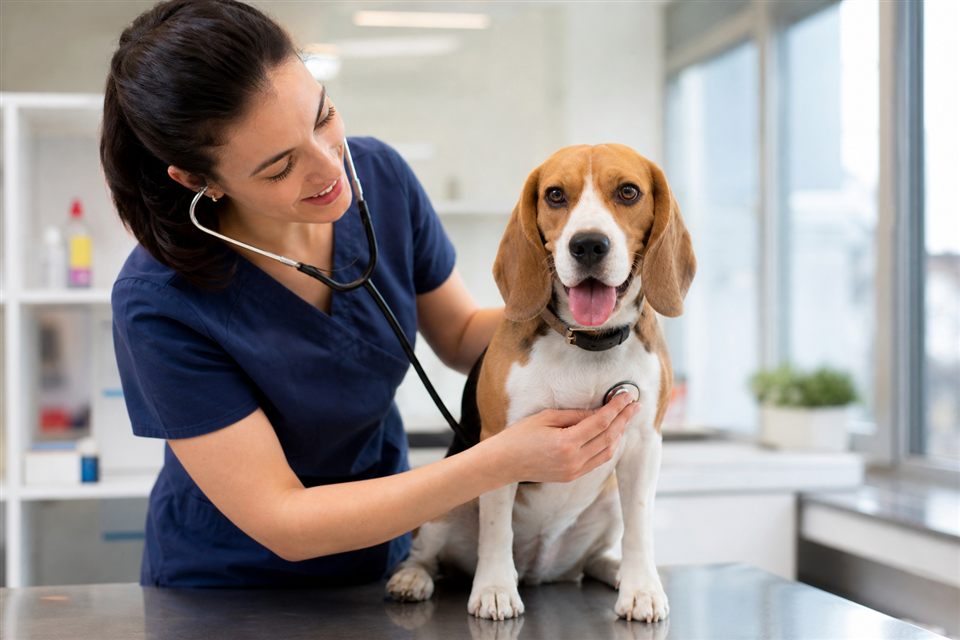
For stable but persistent lameness, an appointment within twenty-four to forty-eight hours is reasonable. The vet will perform an orthopedic exam, possibly sedated radiographs, and discuss drawer test findings. Advanced imaging like MRI is reserved for equivocal cases or surgical planning.
Treatment for cruciate disease ranges from conservative management — weight loss, physical therapy, knee braces in select cases — to surgical stabilization techniques such as TPLO or lateral suture, depending on size, age, activity level, and tear severity. Partial tears in some dogs heal with rest and rehab; many medium and large active dogs eventually need surgery for full function.
Long-term outlook for dogs like Cooper
Weight management is the single biggest modifiable factor after any hind-leg injury. Every extra pound multiplies force across the stifle. Marcus started measuring Cooper's meals and swapping some fetch sessions for swimming once cleared by the vet.
Whether Cooper had a sprain or a tear, early professional assessment prevented weeks of masked pain and secondary arthritis from unstable joint use. Many owners wait until the dog is consistently three-legged; by then, meniscal damage and osteoarthritis may already be advancing.
The bottom line
A back-leg limp after running is not automatically a cruciate tear, but it is never something to run off. Cooper's enthusiastic return to the ball hid a knee that needed rest and evaluation. If limping persists beyond a couple of days of strict rest, if the knee swells, or if your dog sits oddly with one hind leg sticking out, schedule a veterinary orthopedic exam. Marcus did not overreact by calling the clinic — he gave Cooper the best chance to heal without turning a partial tear into a permanent lameness.
This article is for general information only and is not a substitute for advice from your veterinarian.