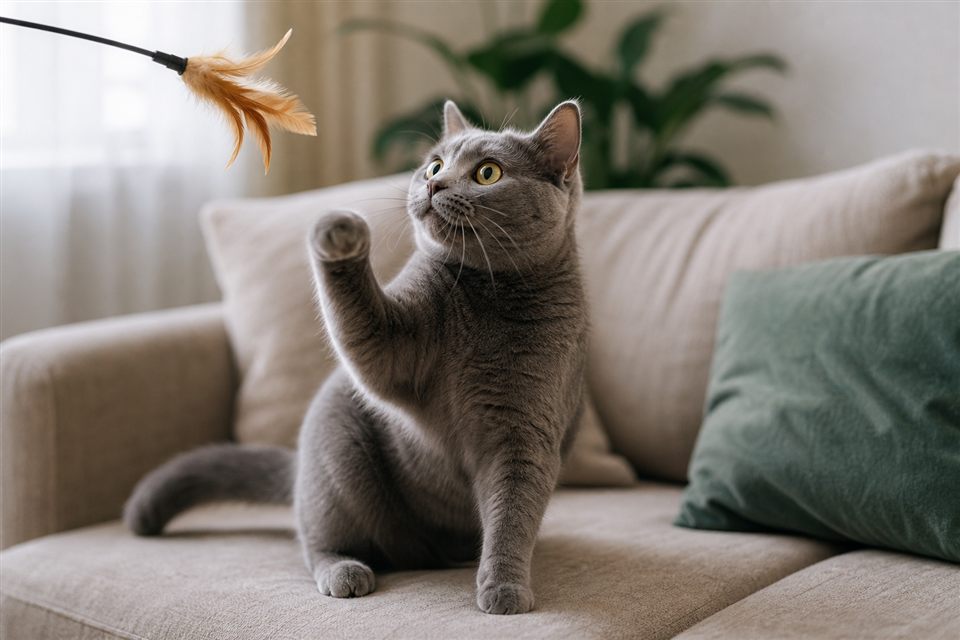
Kira heard claws on tile at 5:50 p.m. in her St. Louis bungalow, then a skitter. Moth, her 8-lb cat, had just stolen kibble from Bean's bowl and was already under the couch. Bean, a 50-lb mixed dog, stood over the $22 steel dish, ears back. The bowl had held 2 cups of adult dog food. About a third was gone. Moth does this four nights a week, always when Kira is plating her own dinner. Bean has started eating faster, finishing in under 90 seconds. Kira does not want a food fight. She wants Moth on cat food and Bean able to finish a meal without hovering.
Key points at a glance
- Dog kibble is often palatable to cats and typically higher in carbohydrate than cat food.
- An 8-lb cat raiding a 50-lb dog's 2-cup bowl is a nutrition problem if it happens most nights.
- Feed in separate rooms with a closed door or a gate the cat cannot defeat in 10 seconds.
- Fast eating and a stiff body over the bowl are early resource-guarding signs in the dog.
- Do not chase the cat as a joke and do not let them "share." Timed, isolated meals beat free-for-all bowls.
Why dog food tastes like a heist
Many adult dog kibbles sit around 30–50% carbohydrate on a dry-matter basis. Cat food is built as a higher-protein, higher-fat ration. To an 8-lb cat, Bean's bowl is crunchy, starchy, and easy to grab in 3 seconds. The run afterward is not guilt. It is "I have the goods and a 50-lb mouth is turning."
Once or twice is a snack. Four nights a week means Moth's calorie math is off and Bean's meal is incomplete. Cat food already has the taurine and arachidonic acid a cat needs. Dog food does not match that profile as a daily diet. A regular raid is a feeding-system failure, not a cute roommate quirk.
Separate rooms, timed bowls, watch the dog
Feed Bean behind a closed door for 10–15 minutes. Park Moth's meals in another room at the same time, up high if needed. Pick up Bean's bowl when the timer ends. Free-choice dog food on the floor is an open buffet. If Bean is a slow eater, use a puzzle feeder in his room, not a hallway buffet.
Watch Bean's face. Ears back, eating in under 90 seconds, blocking the bowl with his shoulder—those are guarding rehearsals. A 50-lb snap at an 8-lb cat is a hospital visit. If guarding is already there, ask a qualified trainer or veterinary behaviorist. Do not add a second dog bowl in a narrow hall as a test.
Keep cat food where Bean cannot vacuum it. A 30-inch baby gate with a cat door, or a bedroom latch, beats a "leave it" cue you only use at 5:50 p.m. while stirring pasta.
| Pattern | Number | Action |
|---|---|---|
| Occasional stolen kibble | 1–2 times a week | Still separate meals; do not shrug |
| Regular raids | 4+ nights a week | Closed-door feeding; recast both diets |
| Bean's meal | 2 cups, finished in under 90 seconds | Slow feeder in a private room |
| Moth's weight | 8 lb and climbing | Weigh every 2 weeks; vet if over body-condition 6/9 |
| Guarding signs | Stiff freeze, side-eye, snap | Stop mixed feeding; get behavior help |
Kira now feeds Bean in the laundry room for 12 minutes and Moth on the fridge-adjacent shelf with the door shut. The 5:50 p.m. skitter stopped by night three. Bean finished 2 cups without ears pinned. Moth's next weigh-in is on the calendar.
This article is general education, not a veterinary diagnosis. Contact a veterinarian if the cat lives on dog food, loses or gains weight fast, or if the dog stiffens, growls, or snaps at meals.