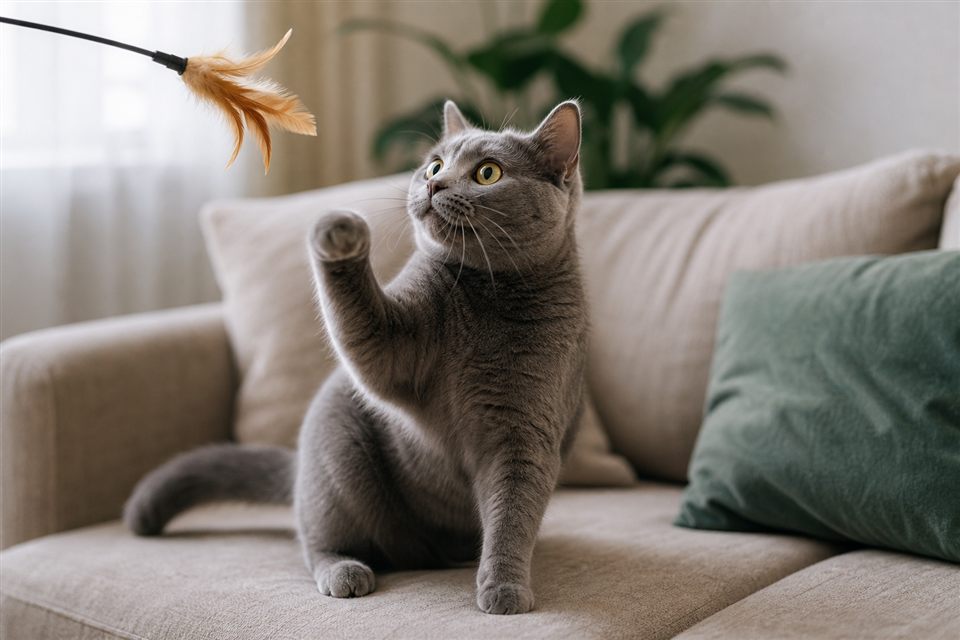

Few feline habits frustrate owners like the deliberate swipe that sends a glass, pen, or phone crashing to the floor — often while the cat makes direct eye contact. Is it spite? Hunting practice? A bid for attention? Feline behaviorists say it is usually a mix of instinct, enrichment gaps, and learned rewards. Understanding the "why" helps you redirect the habit without damaging your bond.
Key points at a glance
- Knocking objects over triggers movement and sound, which mimics prey responses.
- Cats quickly learn that swatting objects makes humans appear — accidental reinforcement.
- Kittens and high-energy breeds do this more when play and climbing needs are unmet.
- Punishment after the fact rarely works; environmental management plus scheduled play does.
- Sudden increase in destructive behavior can signal stress, pain, or hyperthyroidism — ask your vet if patterns change abruptly.
The main reasons cats push items off surfaces
1. Predatory play instinct
Cats are ambush hunters. A stationary mug becomes a target: one paw tests whether it moves, wobbles, or falls — all satisfying feedback. The behavior peaks in morning and evening, natural hunting windows.
2. Attention seeking
If every crash brings you running — even yelling — your cat learns the cause-and-effect chain. Negative attention still counts as attention. This pattern is common in homes where play sessions are irregular but reactions to messes are instant.
3. Boredom and under-stimulation
Indoor cats with limited vertical space, solo time, and no interactive play may invent their own games. Countertops and desks offer interesting textures, rolling objects, and high vantage points.
4. Exploration and sensory mapping
Whiskers, paws, and noses gather information. Lightweight objects get pushed because the cat is curious about weight, balance, and outcome — not because they hate your favorite mug.
5. Stress or medical issues (less common)
A previously calm cat that suddenly clears every shelf may be anxious about a new pet, construction noise, or pain. Hyperthyroid cats sometimes show increased activity and mischief. Schedule a vet check if age, appetite, or weight changed alongside the behavior.
How to tell which motive fits your cat
| Clue | Likely primary motive |
|---|---|
| Looks at you, then pushes | Attention seeking |
| Pounces after object falls | Predatory play |
| Does it when you are gone | Boredom / exploration |
| Only on high perches at dawn/dusk | Hunting rhythm |
| New after household change | Stress |
| Also hyperactive, losing weight | Medical workup needed |
You can address more than one cause at the same time.
What not to do
- Do not punish physically — fear increases hiding and may worsen scratching or aggression elsewhere.
- Do not laugh and film every time if you want the behavior to stop; engagement rewards it.
- Do not assume spite — cats do not knock items off to "get revenge" for a late dinner.
Instead, change the environment and meet needs proactively.
Effective strategies to reduce knocking behavior
1. Schedule two daily interactive play sessions
Use wand toys for 10–15 minutes morning and evening. End with a small treat or meal to mimic hunt-eat-groom-sleep cycle.
2. Provide legal vertical territory
Cat trees, wall shelves, and window hammocks give observation posts that are more appealing than a cluttered desk edge.
3. Secure or remove temptations
- Store fragile items in closed cabinets.
- Use museum putty under decorative objects during training phases.
- Keep phones and earbuds in drawers — rolling items are cat magnets.
4. Offer alternative "push and chase" toys
Lightweight balls, spring toys, and cardboard tubes on a rug satisfy swat-and-track urges safely.
5. Ignore the crash when safe to do so
If nothing dangerous broke and your cat is not hungry or trapped, delay your appearance until calm. Then engage on your schedule with play, not scolding.
6. Use puzzle feeders
Food-motivated cats redirect energy toward extracting kibble instead of clearing nightstands.
7. Clicker-train incompatible behaviors
Reward paws on mat or sitting on a designated shelf with treats. Positive training builds cooperation faster than shouting "no."
When knocking signals a bigger problem
Consult your veterinarian if:
- Behavior started suddenly in a senior cat.
- Your cat also vocalizes excessively, drinks more, or loses weight.
- Destruction includes self-injury, extreme clinginess, or litter-box changes.
- New pets, babies, or moving triggered ongoing anxiety signs.
Behavior modification helps stress cases too — but rule out medical contributors first.
Living with a reformed "office terrorist"
Most cats improve within two to four weeks of consistent play, cleared surfaces, and ignored attention rewards. Some always test gravity occasionally — management beats perfection. A cat who knocks a pen once a month while otherwise enriched is a success story, not a failure.
The bottom line
Cats knock things off tables because falling objects move like prey, sound interesting, and often summon their favorite human. The fix is not dominance or spray bottles — it is richer play, safer climbing options, securing breakables, and refusing to reward chaos with instant drama. If the habit explodes overnight in an older cat, check health before assuming mischief.
This article is for general education only and does not replace advice from a licensed veterinarian or certified feline behavior consultant.