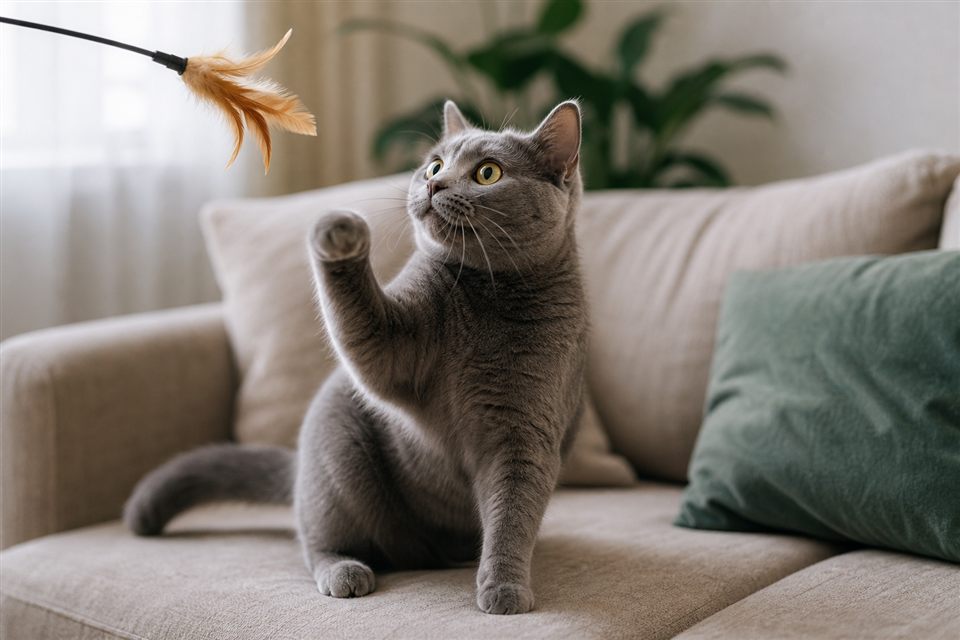

If your cat climbs onto a soft blanket, pushes their paws in and out like a baker, purrs like a motor, then suddenly grabs the fabric in their teeth — you are watching one of feline life's most common rituals. Owners call it "making biscuits." Behaviorists call it kneading, and that optional bite at the end has its own explanation. Neither habit usually means your cat is broken; both trace back to kittenhood, comfort, and how cats mark what they love.
Key points at a glance
- Kneading starts in nursing kittens stimulating milk flow; many adults keep the motion for life.
- Purring during kneading usually signals contentment, not pain.
- Fabric biting often follows overstimulation or a play redirect — not true aggression toward you.
- Declawed cats still knead; the behavior is not only about sharpening claws.
- Sudden kneading on your belly with vocalizing, restlessness, and appetite changes in unspayed females can signal heat or pain — ask your vet.
What kneading looks like and why cats do it
Alternating front paws press into a soft surface — a blanket, your lap, a dog's sleeping back if you live in a multi-species house. Claws may extend and retract. Some cats drool a little while purring. The rhythm is slow and trance-like.
Common triggers:
- Comfort and security before a nap.
- Scent marking — paw pads release pheromones claiming "this spot is mine."
- Stretching shoulder and back muscles after a long lounge.
- Habit from early weaning — kittens pulled from mom too young sometimes knead more intensely as adults.
Why the bite happens mid-knead
That gentle chomp on the blanket — or your sweater sleeve — confuses people who think purring means pure bliss. In most cases:
- Overstimulation built up from repetitive motion; biting releases tension.
- Play instinct — fabric texture mimics prey resistance.
- Nursing carryover — some cats gently hold fabric the way they kneaded their mother.
It is rarely a warning that your cat hates you. Watch for flattened ears, dilated pupils, and a stiff tail right before the bite — that is the "I'm done" signal. Respect it and stop petting instead of scolding.
Kneading vs. other paw behaviors
| Behavior | What you see | Likely meaning |
|---|---|---|
| Slow kneading + purr | Eyes half-closed, relaxed body | Contentment |
| Fast digging in litter | Outside mealtime | Litter preference or stress |
| Scratching furniture | Vertical shredding | Claw maintenance, territory |
| Biting then running off | Sudden burst | Play invitation or overstimulation |
| Kneading only one spot on you | Same time daily | Routine bonding |
When kneading becomes a problem
Most kneading is harmless. Intervene when:
- Claws snag your skin — trim nails or keep a thick blanket barrier on your lap.
- Your cat sucks wool or eats fabric (pica) — can cause intestinal blockages; remove access and consult your vet.
- Kneading turns aggressive with hissing, swatting, or biting you repeatedly.
- An older cat never kneaded before and suddenly kneads constantly while losing weight — schedule a checkup to rule out hyperthyroidism or pain-seeking behavior.
How to live with a dedicated biscuit maker
- Provide designated kneading zones — fleece throws on the couch beat your bare legs.
- Trim front claws every two to three weeks if snags are an issue.
- When bites start, stand up calmly and redirect to a toy — not punishment.
- For wool suckers, switch to synthetic blankets and offer food puzzles for oral fixation.
Avoid declawing as a "fix" — it does not stop kneading and creates long-term pain issues.
Do all cats knead?
No. Some cats never knead; that is normal too. Personality and early life experience vary. A cat who prefers head bumps over paw pressing is not less affectionate — just different.
The bottom line
Blanket kneading with purring is usually your cat's way of saying this spot feels safe. The occasional fabric bite is often overstimulation or play, not spite. Offer soft surfaces, watch body language, and redirect wool chewing if it appears. See your veterinarian if the behavior erupts suddenly in a senior cat or comes with illness signs.
This article is for general education only and does not replace advice from a licensed veterinarian or certified feline behavior consultant.