Your cat locks onto a sparrow on the fence. The tail twitches. Then comes a rapid ek-ek-ek — jaw vibrating, ears forward, whole body tense. Owners call it chattering, chirping, or "ekekeking." It looks like frustration. It sounds like excitement. Behaviorists generally agree it is predatory arousal wired into indoor cats who never get to finish the hunt.
Key points at a glance
- Chattering at birds, squirrels, or bugs through glass is common and usually harmless.
- The behavior reflects high arousal — not pain and rarely aggression toward you.
- Indoor-only cats may chatter more because window prey is visible but unreachable.
- Offer scheduled play with wand toys to discharge hunting drive.
- Constant pacing, yowling, or self-injury at windows suggests stress worth a vet or behavior consult.
What chattering looks and sounds like
Unlike a meow or hiss, chattering is short, repetitive vocalizations with jaw movement. Some cats add a silent open-mouth stare. You may see:
- Rapid lower jaw vibration.
- Tail tip flicking or full tail lashing.
- Crouched shoulders, weight on front paws.
- Dilated pupils fixed on prey.
Episodes last seconds to a minute and end when the bird flies off or the cat loses interest.
Leading explanations — none fully proven
Predatory frustration
The most popular theory: cats see prey they cannot reach. Chattering may be overflow motor activity — the hunting sequence (stalk, pounce, bite) interrupted by glass.
Practice bite or kill-bite reflex
Some researchers link the jaw motion to the neck bite wild cats use on birds. Indoor cats may rehearse the movement without contact.
Excitement vocalization
Mother cats use chirps to call kittens; adults may repurpose similar sounds during intense focus. Not every cat vocalizes — silent chattering still happens.
Less common: dental discomfort
Rarely, jaw tremors relate to oral pain. If chattering occurs without visual prey, during eating, or with drooling, schedule a dental exam instead of assuming bird TV.
Chattering vs. other cat sounds
| Sound | Context | Meaning |
|---|---|---|
| Chatter/chirp | Bird or squirrel visible | Predatory arousal |
| Trill/chirrup | Greeting you | Friendly |
| Hiss | Threat close by | Fear or defense |
| Yowl | Night, no prey | Pain, mating, cognitive issues |
| Teeth chattering when cold | Shivering | Temperature, not birds |
Is it cruel to let cats watch birds they cannot catch?
For most cats, window watching is enrichment — mental stimulation beats blank walls. Problems arise when:
- Your cat attacks other pets after failed hunts.
- Weight gain from all-day couch surveillance without play.
- Obsessive fixation — ignores food, litter box, or sleep.
Rotate bird feeders away from sensitive windows or add frosted film lower on the glass if one cat cannot disengage.
Channel the hunting instinct productively
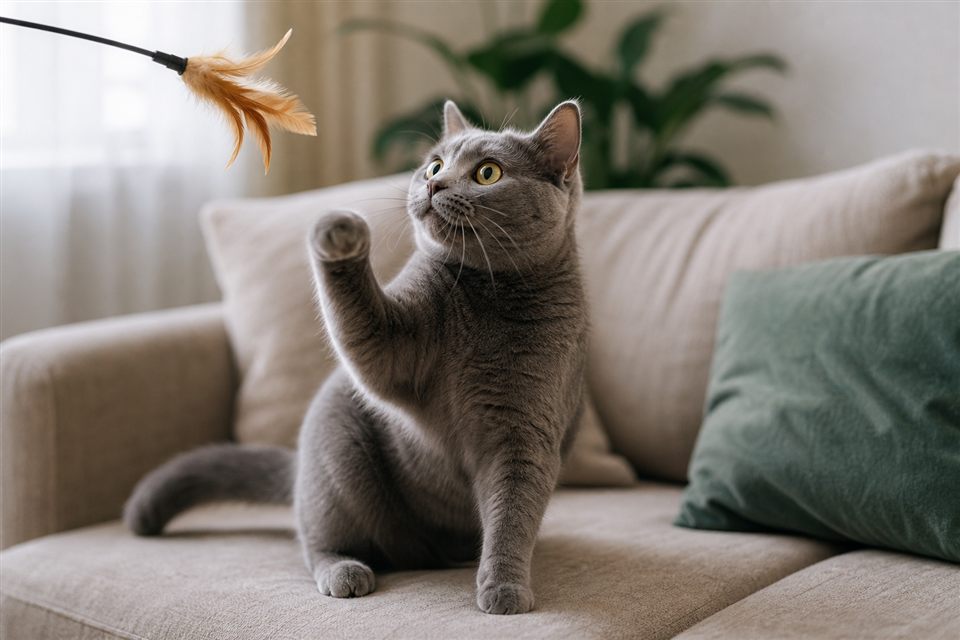
- Two daily wand sessions — 10 minutes, mimic bird flight with erratic movements.
- End with a small meal or treat — completes hunt-eat-groom-sleep cycle.
- Puzzle feeders for kibble instead of free bowls.
- Catios or secured window boxes let safe outdoor smells without escape.
Avoid laser pointers as the only toy — they never allow a "catch," which frustrates some cats.
When to talk to your veterinarian
- Chattering without prey stimulus or during meals.
- Head tilt, balance loss, or seizures — neurologic issues mimic jaw movement.
- Sudden behavior change in senior cats with weight loss — rule out hyperthyroidism.
- Redirected aggression toward people after window sessions escalates.
The bottom line
Chirping and teeth chattering at birds is normal cat language for "I see prey and I am ready." Glass blocks the pounce, not the instinct. Let your cat enjoy the show within reason, then offer real play that ends in a catch. Unusual jaw movement off-window deserves a dental or medical check, not a YouTube compilation.
This article is for general education only and does not replace advice from a licensed veterinarian or certified feline behavior consultant.