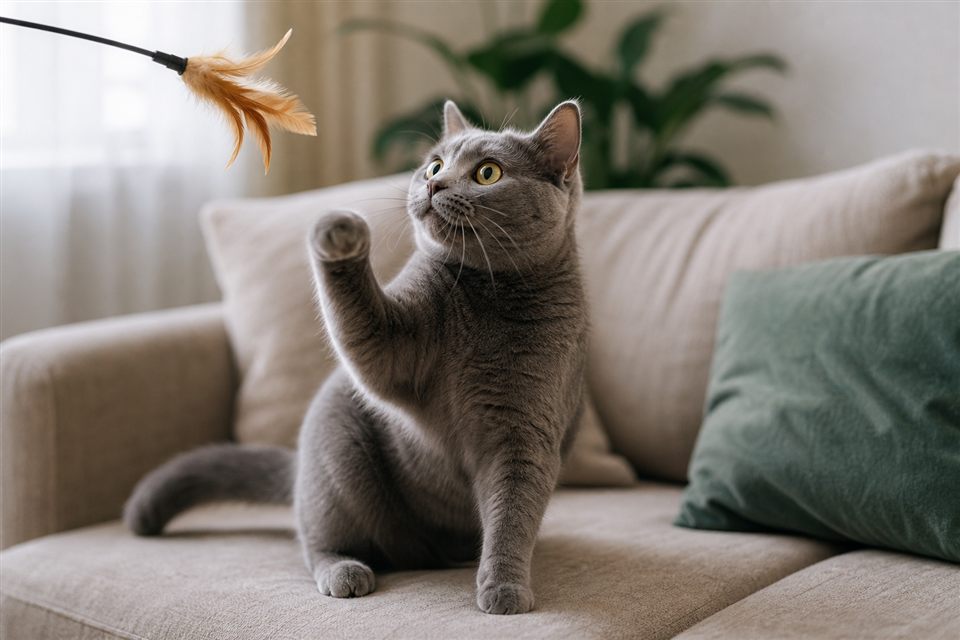
Harlan set Pixel's 3-ounce pate on the kitchen mat at 6:00 p.m. in his Chicago studio. Pixel, a 10-lb gray tabby, dropped a gray mouse toy into the dish before the first lick. The mouse was damp. It had lived under the sofa since noon. Pixel did this four nights running: hunt, carry, deposit, then eat around the toy. Harlan had paid $4 for the mouse on a three-pack. He once tossed it in the sink. Pixel retrieved it in 40 seconds and put it back in the bowl. A roommate called it a gift tax. Harlan does not want a theory about tribute. He wants kibble that is not fur-coated and a cat who can finish dinner without a corpse in the gravy.
Key points at a glance
- A toy in the bowl is leftover hunting plus a meal-time habit, not a gift tax you owe the cat.
- Pixel is chaining "kill" to "eat," the same sequence a hunter uses on a real rodent.
- Run about 10 minutes of wand play before the 6:00 p.m. meal so the hunt ends on a toy, not in the pate.
- Fish the mouse out, rinse the dish, and feed. Do not scold or hide every toy as punishment.
- Call a veterinarian if she stops eating, loses weight, or only "hunts" around the clock with no rest.
Leftover hunting, not rent
Indoor cats keep the hunt-catch-kill-eat sequence even when dinner is a 3-ounce tray. Pixel stalks the $4 mouse, "kills" it, and needs a place that already smells like food. The bowl is that place. Meal association does the rest: 6:00 p.m. predicts pate, so the toy arrives as a prop for the ritual.
A roommate's gift-tax joke is cute and wrong. Cats do not pay you in mice for groceries. They finish a hunt where the calories usually appear. Punishment at the dish only teaches her to dump the mouse when you are in the shower.
Play first, then the tray
Use a wand or fishing-pole toy for about 10 minutes before you open the can. Let her catch it 3–4 times. End on a catch. Then set down the pate. A lot of cats drop the toy-in-bowl habit in 7–14 days once the hunt has a legal ending.
Keep 2–3 mice in rotation so one can be washed. Pick the toy out every time. Warm water. No soap film. If she brings real prey, that is hygiene and screens, not a $4 fabric mouse.
Skip the lecture. The sequence you want is play, catch, meal. Same script at 6:00 p.m. for two weeks beats a new theory every night.
| What you see | What it usually is | What to do |
|---|---|---|
| Toy in bowl at 6:00 p.m. | Hunt leftover + meal cue | 10 min play, then feed |
| Toy in bowl at random hours | Play leftover, not hunger | Offer a meal or ignore |
| Real rodent in the dish | Actual hunt | Remove prey; check screens |
| Scolding at the dish | Fear of you at meals | Stop. Rinse bowl. Play earlier. |
| Stops eating around the toy | Bowl aversion or nausea | Fresh dish; vet if it lasts 24 hours |
Harlan moved wand play to 5:50 p.m. Pixel still nosed the mouse on night one. By night six the $4 toy stayed on the mat, not in the gravy.
This article is general education, not a veterinary diagnosis. Contact a veterinarian if your cat stops eating, loses weight, or cannot settle after hunting play.