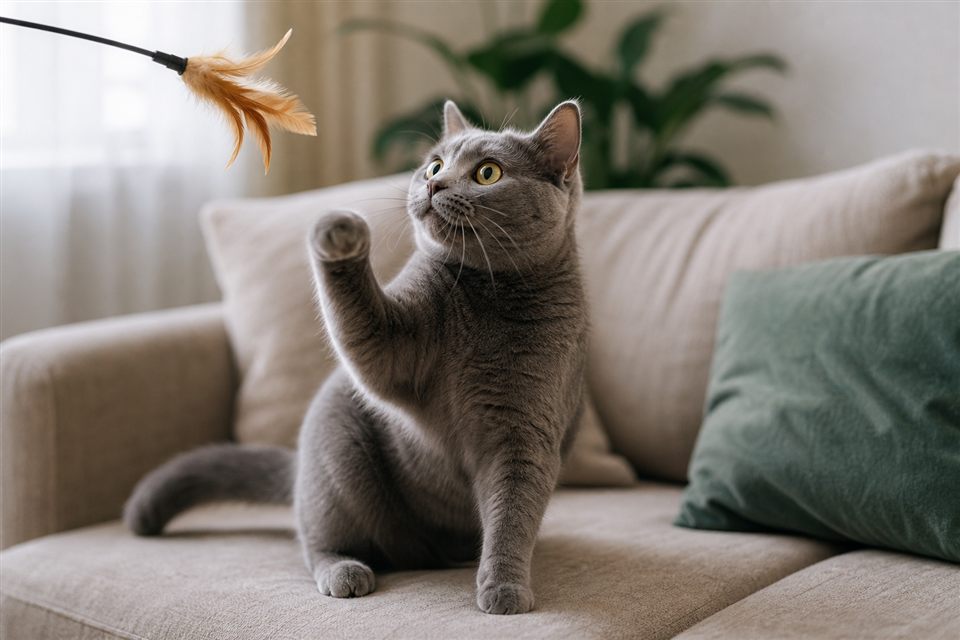
At 3:07 a.m., a thundering gallop shook Teresa's apartment. Mochi, her one-year-old domestic shorthair, sprinted from bedroom to kitchen, skidded on the hardwood, ricocheted off the hall corner, and vocalized a single triumphant trill before going silent—until the next lap five minutes later. Teresa lay awake wondering if Mochi was haunted, sick, or plotting revenge for an early dinner. None of the above. Mochi was running crepuscular software on a diurnal human's sleep schedule—and hallway races at witching hour are one of the most common complaints in cat behavior forums for good reason.
Key points at a glance
- Cats are crepuscular—most active at dawn and dusk—with many indoor cats adding midnight bursts.
- 3 a.m. zoomies often reflect pent-up hunting energy, boredom, or attention learning—not supernatural causes.
- Pre-bed play, feeding schedule shifts, and daytime enrichment reduce nocturnal hallway races.
- Ignore attention-seeking night antics when safe; reward calm nighttime behavior during the day.
- Sudden night vocalization or pacing in senior cats may signal hyperthyroidism, pain, or cognitive dysfunction—see a vet.
What 3 a.m. cat zoomies look like
The hallmarks: sudden sprinting, corner banking, vertical jumps off furniture, bunny hops, chirps or yowls, and abrupt cessation as if nothing happened. Sessions may last thirty seconds or repeat for twenty minutes. Multiple cats sometimes join in relay fashion.
Mochi's races peaked between 2:30 and 4:00 a.m., silent in daylight except for standard evening play. Body language during zoomies was loose and playful—tail up, ears forward—not panicked.
| Pattern | Usually normal | See vet |
|---|---|---|
| Weekly sprints, playful | Yes | — |
| Nightly hours-long yowling | Maybe habit | If new in senior |
| Pacing, disorientation | No | Yes |
| Weight change + night activity | No | Yes |
Why cats get zoomies at 3 a.m.
Crepuscular biology. Wild felids hunt most actively at twilight. Domestic cats retain partial wiring for dawn and dusk activity—even indoor cats with no mice to catch. Midnight sits between peaks; bored cats create their own peak.
Energy banking. Indoor cats sleep fifteen hours daily but still need predatory exercise. Without daytime hunting simulation, energy discharges when the house is quiet and cool—often middle of the night when Teresa stopped moving.
Attention reinforcement. If Teresa once fed Mochi or played after a 3 a.m. lap because she could not sleep, Mochi learned night races summon breakfast or chase games. Even groggy petting counts as payoff.
Environmental triggers. Automatic feeders clicking, raccoons outside, neighbor cars, or HVAC cycles can startle cats into play-chase mode. Hallways amplify galloping sound—small cat, huge acoustic event.
Social scheduling. Single cats in studio apartments may race when the only social partner has been still for hours. Your stillness becomes the cue for "party time."
Is hallway racing at night normal?
For healthy young and middle-aged cats, occasional to frequent zoomies are normal—even if Teresa's sanity disagrees. Normal does not mean immovable. It means not pathological unless paired with distress signs.
Senior cats who suddenly develop nightly hallway pacing, loud yowling, or disorientation need veterinary evaluation. Hyperthyroidism, hypertension, pain, and cognitive dysfunction mimic or amplify night activity. Mochi at one year old was in the benign zoomie camp.
How to sleep through it—or reduce it
Heavy pre-bed play. Fifteen to twenty minutes before Teresa's bedtime: wand toy hunt ending with a catch-kill-bite on a plush toy. Simulate full predatory sequence—stalk, chase, pounce, bite. Exhaust hunting drive, not just running.
Late evening meal. Feed largest portion right after play session. Full belly promotes sleep. Automatic feeder at 5 a.m. can pull hunger-driven 4 a.m. sprints earlier if Mochi raced for food anticipation.
Ignore attention-seeking races. If Mochi slows when Teresa opens the bedroom door, the behavior has a social component. Blackout blinds on bedroom gap, white noise machine, and zero play or feed response until alarm time. Boring nights eventually reduce payoff—expect extinction burst first ( louder week).
Daytime enrichment. Puzzle feeders, window bird feeders, cardboard mazes, and short training sessions spread stimulation across daylight so less stores for 3 a.m.
Safe runway management. Non-slip runners in hall reduce thundering (helps sleep even if cat still runs). Secure fragile items. Closed doors to rooms with breakables.
Second cat consideration. Some cats zoom less with compatible playmate; others double chaos. Match temperament carefully—another cat is not a guaranteed fix.
Acceptance strategy. If Mochi's zoomies last ninety seconds twice weekly and Teresa cannot shift schedule, earplugs and viewing it as normal cat tax may beat fighting biology entirely.
What not to do at 3 a.m.
Do not spray, yell, or throw objects—it stresses cats and can create fear aggression. Do not lock Mochi in bathroom without bed, litter, water—that increases anxiety. Do not assume sedation without vet guidance. Do not free-feed unlimited calories to "keep cat sleepy"—obesity causes other problems.
When night behavior needs medical attention
Book a vet visit if night activity is new in a cat over ten, if yowling sounds distressed not playful, if appetite or weight changed, if Mochi seems lost in familiar halls, or if zoomies include inappropriate elimination or self-harm. Nighttime is when pain and cognitive decline show loudest.
The bottom line
Mochi's 3 a.m. hallway races were normal crepuscular energy with a dash of learned attention seeking—not a ghost in the hall mirror. Teresa shifted intense play and feeding to late evening, ignored door-opening reinforcement, and added daytime puzzles. Races dropped from nightly to twice weekly, ninety seconds each. Teresa still kept earplugs—but she slept again. You may not eliminate every midnight lap in a young cat; you can move most energy to hours that do not steal REM sleep.
This article is for general education only and does not replace advice from a licensed veterinarian.