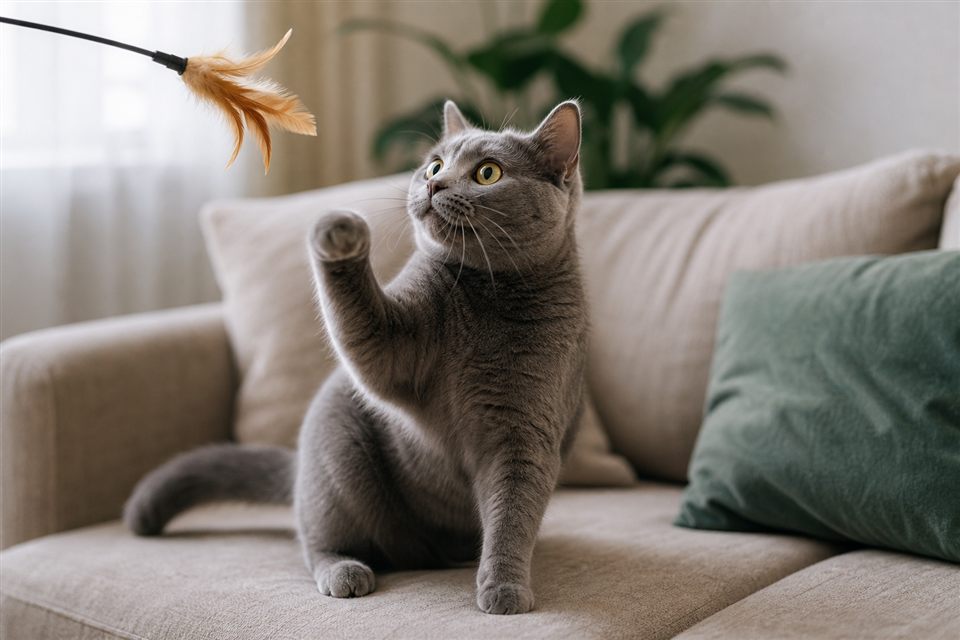
The pen hits the floor. Then your phone case. Your cat sits in the moonlight like an artist who finished a installation. 5 a.m. furniture golf combines peak feline hunting hours, boredom, and — sometimes — your accidental applause in the form of getting up to feed them.
Key points at a glance
- Cats are crepuscular — most active dawn and dusk by biology.
- Knocking objects triggers movement and sound like prey — plus your reaction.
- Feeding immediately after wake-up trains the alarm clock cat.
- Evening play plus later timed breakfast fixes many cases in 2–3 weeks.
- Sudden night chaos in seniors with thirst or yowling — vet check for hyperthyroidism.
Why the nightstand specifically
Elevated surfaces = safe vantage. Small objects = perfect bat-able prey. Glasses and pens roll and clatter — maximum feedback. Your bed proximity means you are the audience whether you want the show or not.
Accidental training loop
| You do | Cat learns |
|---|---|
| Get up and feed at first crash | Crash = breakfast |
| Yell and chase | Exciting predatory play |
| Pick cat up lovingly | Attention jackpot |
| Ignore safely (nothing breakable) | Behavior fades over time |
Hard when valuables sit on open nightstands — cat-proof the stage.
Fix the schedule, not just the cat
1. Automated feeder before your wake time
Timed feeder dispenses small meal 15–30 minutes before you want to rise — cat learns machine feeds, not knocker feeds.
2. Heavy evening hunt play
15 minutes wand toy ending with treat before your bedtime — completes hunt-eat-groom-sleep cycle.
3. Remove launchable objects
Clear nightstand; museum putty under lamp if needed temporarily.
4. Ignore non-dangerous crashes
If safe, do not enter room theatrically — boring response starves behavior. Hard first week; effective long-term.
5. Blackout curtains
Delay visual dawn trigger slightly — not cure alone but helps winter early sun.
When early waking is medical
Senior cat newly active at 4–5 a.m. with weight loss, hunger, vocalizing — hyperthyroidism common. Pain (arthritis) causes restlessness — vet exam if pattern is new.
Kittens and young cats — often normal energy improving with age plus enrichment.
Do not punish
Spray bottles and shouting increase anxiety — may shift to vocalizing or litter issues. Positive schedule change beats punishment.
Realistic timeline
Most owners see improvement in 2–4 weeks of consistent feeder timing, evening play, and boring responses. Perfect silence rare in young cats — management is success.
The bottom line
Cats knock nightstand items at dawn because biology says hunt now and your reaction may say breakfast now. Auto-feed slightly before wake time, play hard at night, clear temptations, and stop rewarding crashes with food and drama. New senior night chaos deserves a vet visit before blaming mischief.
This article is for general education only and does not replace advice from a licensed veterinarian or certified feline behavior consultant.