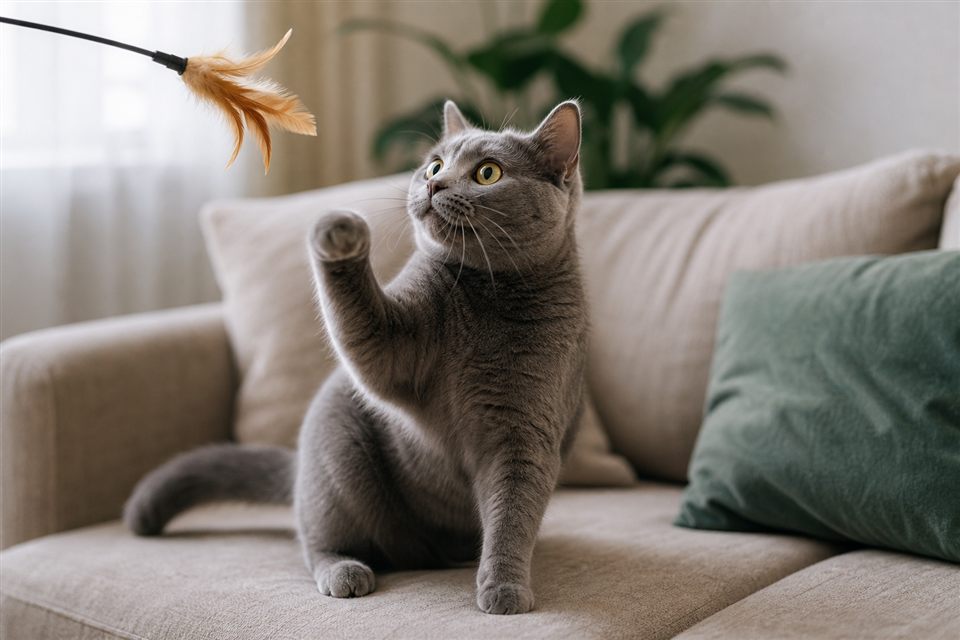
During feather wand play, Lila's calico, Ginger, batted the toy with open paws—pads visible, claws tucked safely away. Two minutes later, when Lila scratched Ginger's belly one stroke too many, Ginger swatted Lila's hand with claws fully extended, leaving thin red lines. Same cat, same evening, different swats. Lila wondered if Ginger was inconsistent or moody. Ginger was demonstrating precise claw control—using retracted bats for play and extended claws for boundary enforcement or escalated arousal.
Key points at a glance
- Cats voluntarily extend or retract claws during swats—retraction during play is deliberate motor control, not accident.
- Clawless swats usually signal play, invitation, or gentle warning; clawed swats signal overstimulation, fear, or redirected aggression.
- Body language context—ears, tail, vocalization—matters more than the swat alone.
- Hand play teaches cats that fingers are toys; wand toys and timing petting prevent mixed messages.
- Declawing is not a training solution—it causes chronic pain and behavior problems.
How feline claw control works
Cats extend claws by flexing tendons in the toes. Retraction is the default resting state for locomotion and most social contact. During play with trusted companions or toys, cats often keep claws sheathed to avoid injury—especially cat-to-cat play among friends.
Ginger's retracted swats at the wand were practice hunting—fast, repetitive, non-damaging. Extended swats at Lila's hand were stop signals or defensive tools when Ginger felt trapped or over-touched.
Kittens learn claw inhibition through littermate feedback—too hard a bite or claw earns a yelp and end of play. Singleton kittens or early-separated kittens may have sloppier inhibition with humans until taught.
| Swat type | Claws | Typical meaning |
|---|---|---|
| Play bat | Retracted | Invitation, hunting practice |
| Warning tap | Often retracted | "Back off" first notice |
| Defensive strike | Extended | Fear, pain, or high arousal |
| Ambush pounce | Mixed | Predatory play on moving feet |
Why cats swat without claws
Play and predatory practice. Toys, other cats, and sometimes human hands receive soft bats simulating prey capture without shredding. Ginger's wand swats were pure play—loose body, forward ears, silent or chirping.
Social communication. Cats swat littermates to initiate chase games. A retracted paw tap on Lila's arm might mean "engage with me" when paired with a play bow-like crouch.
Measured warning. Many cats escalate gradually: stare → swat without claws → swat with claws → bite. The first swat is a polite cease-and-desist before weapons deploy.
Affectionate boops. Some cats tap faces or noses gently without claws—a quirky greeting. Context distinguishes from warning.
Why cats swat with claws extended
Overstimulation during petting. Static hand contact overstimulates some cats after thirty seconds. Skin ripples, tail thumps, then clawed swat—"stop now." Lila's belly rub crossed Ginger's threshold.
Fear or pain. Vet table, forced hug, or touching a sore joint produces fast clawed swat with flattened ears, hiss, or withdrawal afterward.
Redirected aggression. Window cat sighting frustrates Ginger; Lila walks past; clawed swat lands on available moving target. Not personal—misdirected prey drive.
True aggression. Territorial dispute, resource guarding, or chronic stress can produce clawed swats with stiff body, growling, and sustained offensive posture—rare in well-socialized indoor cats but possible.
Play gone wrong with humans. Hand wrestling teaches claws-out contact. Kittens escalate bite and claw pressure because human skin tolerates more than littermate skin did—until it does not.
Play aggression versus overstimulation
Play aggression features stalking, ambush from hiding, retracted or semi-retracted claws, inhibited bite pressure, and willingness to re-engage after short breaks. Overstimulation features mounting tension during petting, quick escalation, extended claws, sometimes vocal protest, and avoidance afterward.
Ginger ambushed Lila's ankles at dusk with claws mostly in—play. Ginger on the lap during petting with twitching tail then clawed hand—overstimulation. Different interventions apply.
How to reduce unwanted clawed swats
Never use hands as toys. Wand toys, kick sticks, and throw toys satisfy hunting drive. Hands pet and feed only.
Learn petting thresholds. Many cats prefer chin, cheeks, and head over belly and lower back. Stop at first tail twitch or ear flick—reward calm acceptance with treat before swat needed.
Structured play twice daily. Ten minutes morning and evening drain ambush energy that otherwise targets feet.
Withdraw calmly after clawed swat. Do not punish—end interaction. Ginger learns clawed contact ends fun.
Single-cat redirected aggression protocol. Block window view, separate until calm, reintroduce slowly—never confront cat still aroused.
Trim nails regularly. Blunt claws reduce damage without affecting communication. Soft nail caps optional short-term for healing scratches—not substitute for behavior work.
**Consult professional if swats draw blood frequently, occur without clear trigger, or pair with hiding, appetite loss, or litter box avoidance—pain or anxiety may underlie aggression.
What declawing does not solve
Declawing (onychectomy) amputates toe bones and causes chronic pain, litter box avoidance, and increased bite frequency. It removes tools without addressing why Ginger swats. Education and environmental change outperform mutilation.
The bottom line
Ginger swatted without claws during play because she controlled her weapons deliberately; she swatted with claws when Lila ignored her overstimulation signals. Cats are not random—they escalate communication stepwise. Lila switched to wand play, petted for five-second bursts, and stopped belly rubs after the first tail twitch. Clawed hand swats dropped to rare accidents. Reading ears, tail, and claw position turned mysterious mood swings into readable conversation.
This article is for general education only and does not replace advice from a licensed veterinarian.