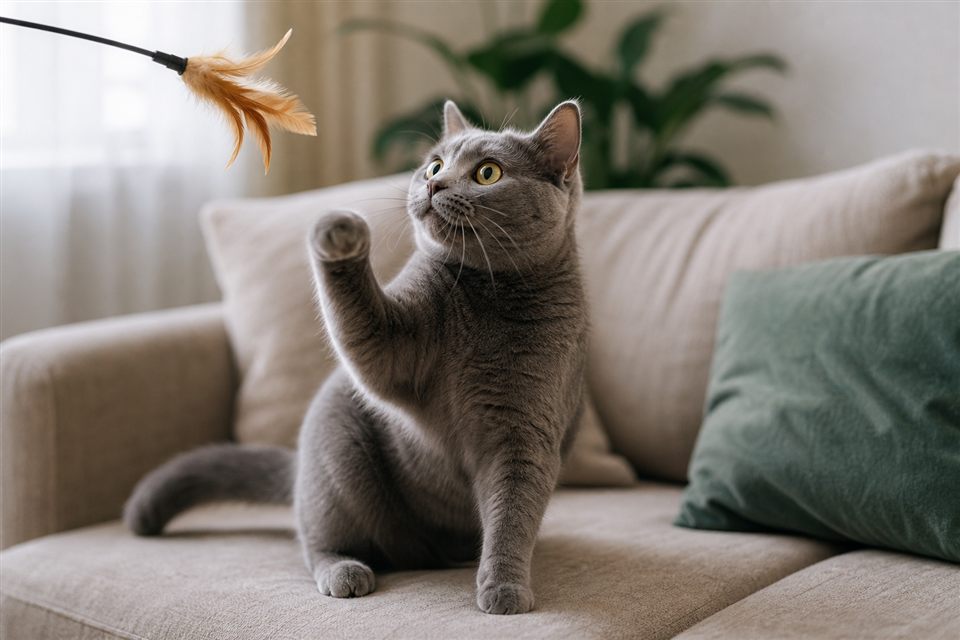
From across the living room, Willow—a shy rescue dilute calico—held Hannah's gaze and blinked slowly, eyelids drooping like curtains, then opened them again without looking away. Hannah's friend whispered, "That's a cat kiss." Hannah slow-blinked back, and Willow's tail tip curled once before she returned to her sun patch. The exchange took three seconds and shifted something in their relationship—less staring standoff, more quiet friendship.
Key points at a glance
- Slow blinking in cats often signals relaxation, trust, and non-threatening affection.
- Direct staring without blinking can feel confrontational in cat visual language.
- Slow blinking back is generally encouraged—it mirrors friendly communication.
- Context matters; slow blinks paired with tense body language need space, not forced eye contact.
- Not every cat slow-blinks; shy cats may show trust through proximity instead.
- Slow blinking can help build confidence with new or fearful cats when paired with treats and patience.
What the slow blink communicates
Researchers describe slow blinking as a affiliative signal—cats use it with familiar humans and sometimes with other cats they accept. The gesture says, in effect: I am comfortable enough to close my eyes near you; I am not preparing to fight or flee.
Wild and domestic cats rely heavily on visual signaling because vocalization is limited compared to dogs. Blink speed distinguishes calm from alert. A hard stare with dilated pupils means different things than soft eyes and lazy lids.
Willow's slow blink arrived after weeks of Hannah sitting quietly on the floor during feeding—trust earned before the eyes closed.
Should you slow blink back?
Yes, when the cat appears relaxed. Hannah narrowed her eyes deliberately, held briefly, opened slowly—matching Willow's tempo without staring aggressively afterward. Many cats respond by blinking again, approaching, or purring.
Tips for human slow blinks:
- Soften your face—no wide-eyed predator stare
- Blink slowly once or twice, then look slightly aside
- Avoid looming—sit or kneel to cat height
- Pair with calm voice if the cat accepts it; some prefer silence
Do not force eye contact on a cat who looks away, hides, or shows flattened ears. Slow blinking is invitation, not command.
Slow blink vs other eye behaviors
Half-closed sleepy eyes during petting mean contentment—overlap with slow blink family.
Rapid blinking or squinting with discharge may indicate eye infection, pain, or foreign body—vet visit, not bonding exercise.
Direct stare at another cat can escalate tension; slow blink de-escalates in multi-cat homes when used by confident cats.
Using slow blinks in training shy cats
Hannah used slow blinks during Willow's adjustment period:
- Sit at distance Willow chose
- Slow blink when Willow looked
- Toss treat beside Willow without approaching
- Repeat across sessions until Willow blinked first
Combined with predictable routines, the blinks told Willow Hannah was safe—not a threat who would chase when eyes closed.
What slow blinking does not mean
A slow blink is not a guarantee the cat wants petting right that second. Willow sometimes blinked from the sun patch without inviting hands. Read the full body: forward ears and leaning in invite touch; flat ears and tail flick mean blink appreciated, distance preferred. Slow blinking also differs from drowsiness mid-nap—context and repeatability across awake moments matter when interpreting trust signals.
When slow blinking stops
If Willow previously slow-blinked but now hides, swats, or avoids gaze, investigate stressors—new pet, pain, litter box issues—not failed romance. Medical pain makes cats withdraw from social signals. A vet check rules out illness when affection patterns change abruptly.
The bottom line
Willow's slow blink was a small gesture with big meaning: trust enough to shut the world out for a heartbeat. Hannah slow-blinked back and learned a language that needed no words. When your cat slow-blinks at you, returning the blink is one of the simplest ways to say you understand—and you feel safe too.
This article is for general education only and does not replace advice from a licensed veterinarian.