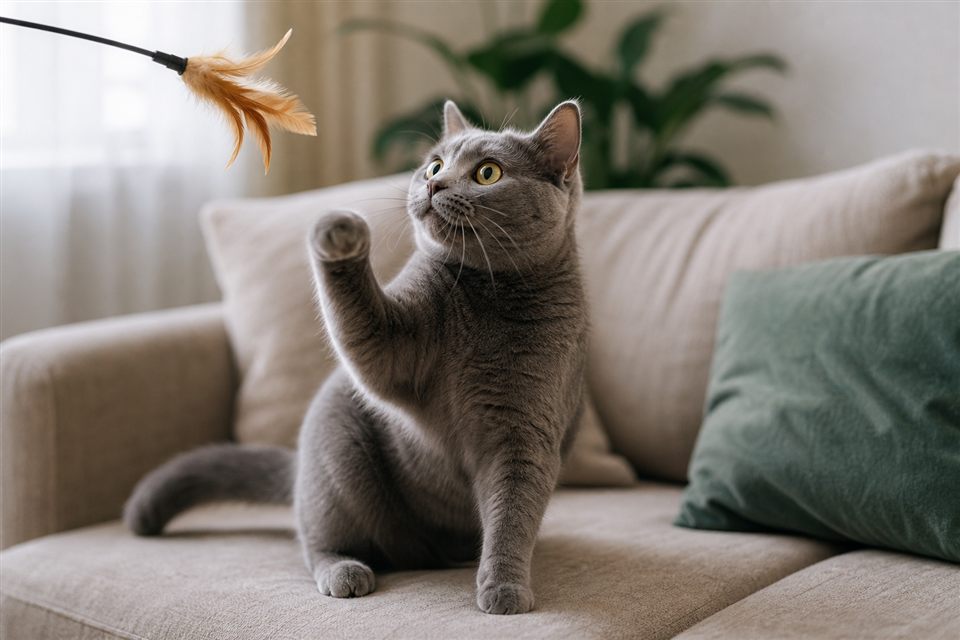
Your cat approaches dinner, sniffs, then rakes the floor beside the bowl like burying treasure in linoleum. The food sits untouched for a beat while paws scrape. Owners read it as rejection — "they hate this flavor again." More often it is ancient instinct: cache, cover, or mark — playing out on a surface that will never hold dirt.
Key points at a glance
- Floor scratching near food is common and usually not illness.
- Wild cats cover leftovers to hide scent from predators — indoor cats mimic on tile.
- Scent glands in paws deposit markers during scratching — territorial note-taking.
- Whisker fatigue or bowl placement can pair with fussy behavior — check bowl style.
- Sudden change with weight loss or vomiting — vet exam, not only behavior read.
Instinct: caching and covering
In nature, felids bury surplus kill to return later and reduce smell detection. Your cat may "dig" after eating or before — covering imaginary cache beside a full bowl. The behavior persists though no soil exists.
Scent marking
Paw pads release pheromones. Scratching around the feeding zone says "this territory is mine" — especially multi-cat homes or new furniture layout.
Bowl and food factors
| Clue | Possible link |
|---|---|
| Scratches then eats normally | Instinct only |
| Sniffs, scratches, walks away | Bowl location, whisker stress, or food preference |
| Only with certain bowl surface | Deep narrow dish touching whiskers |
| Only when other cat watches | Social tension at feeding station |
Try wide shallow dish, quiet corner, separate cats at mealtime.
Scratching vs disliking food
True rejection shows refusal over days, weight loss, or begging for different food constantly. Occasional floor pawing with reliable eating is ritual, not review.
When to intervene
- Redirect — place mat under bowl if claws damage floor; not punishment.
- Feed smaller meals if covering behavior follows always leaving leftovers — less "surplus" to cache.
- Enrichment — scratching post near feeding area satisfies paws elsewhere.
Medical rule-out
New obsessive circling, head tilt, or falling when pawing — neurologic issue, not caching. Dental pain — cat approaches food then leaves; different pattern. Vet if appetite drops.
The bottom line
Cats scratch the floor around food bowls because instinct says bury or mark the meal zone — not because they graded your kibble two stars. Improve bowl width and feeding peace in multi-cat homes; ignore harmless ritual when appetite stays strong. Appetite or weight changes deserve a clinic visit instead of a new flavor guess.
This article is for general education only and does not replace advice from a licensed veterinarian or certified feline behavior consultant.