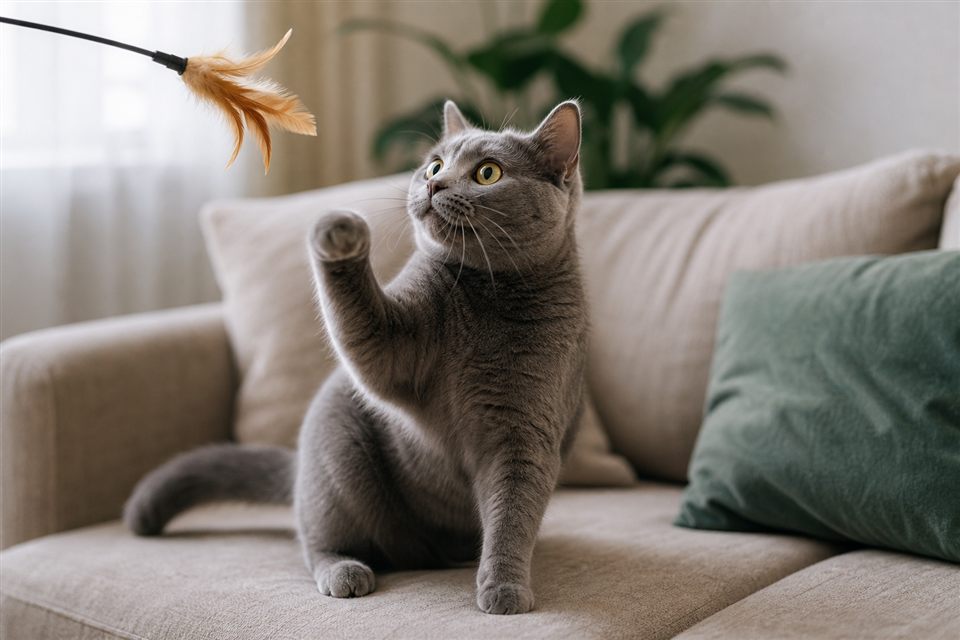
Every evening after dinner, Greg's young tuxedo, Zip, detonated into what the family called "crab mode"—back arched like a Halloween decoration, tail poofed, body turned sideways relative to the hallway, then a chaotic sprint bouncing off the couch. Zip looked twice his normal width, skittered past the dog without contact, and collapsed in a sunny patch thirty seconds later. Greg filmed it for friends who asked whether the cat was scared, angry, or auditioning for a cartoon. Usually, it was pure zoomie theater.
Key points at a glance
- Sideways running with an arched back during zoomies is playful posturing, not true aggression, when paired with loose movement and no sustained hiding.
- The sideways stance makes cats look larger—a mock defensive display borrowed into play.
- Zoomies release pent-up energy, especially in young cats and indoor-only pets.
- Poofed tail and arched back during play differ from stiff fear posture by context and duration.
- Regular play sessions and enrichment reduce destructive midnight zoomies for many households.
- Persistent arched-back skittering with pain vocalization or litter box avoidance needs veterinary evaluation.
What zoomies are
Frenetic random activity periods—zoomies—are normal in cats and dogs. Indoor cats accumulate energy when nap-heavy days lack hunting simulation. Zip's 8 p.m. burst tracked reliably with boring afternoon and full food bowl—digestion plus boredom equaled hallway Grand Prix.
Zoomies last seconds to a few minutes, end abruptly, and leave the cat relaxed afterward.
Why the sideways crab run
Mock defensive display. Cats arch and turn broadside to look bigger to threats. Kittens practice this in play fights. Adult play borrows the silhouette without real intent to fight.
Inviting chase. Sideways hop toward another cat—or a human—can mean " chase me." Zip crab-walked toward Greg's ankles then bolted—classic play solicitation.
Balance and agility drill. Sideways gait trains rapid direction changes useful in real hunting.
Pure joy movement. Not every behavior needs evolutionary justification; overstimulation feels good.
Reading body language: play vs fear
Play crab zoomies: bouncy steps, ears forward or swiveling playfully, no sustained hiss, returns to normal posture quickly, may chirp or trill.
Fear or pain: flattened ears, dilated pupils fixed, hair standing along spine without recovery, hiding for hours, swatting if approached, repeated without play triggers.
Zip's tail floof deflated when he stopped—play puff. Fear puff lasts longer and pairs with avoidance.
Age, breed, and household factors
Kittens and adolescents zoom most. Zip was fourteen months—peak silliness. Bengals, Abyssinians, and other high-drive cats may crab-run daily. Single-cat homes without playmates redirect play onto furniture unless humans wield wand toys.
Greg added two ten-minute prey-play sessions before dinner. Zip's crab zoomies shortened but did not vanish—acceptable trade.
When zoomies become problematic
Night destruction—schedule play earlier, feed puzzle meals, ignore 3 a.m. sprints if safe.
Dog conflict—supervise; some dogs chase arched cats thinking it's game.
Injury risk on slick floors—rugs in zoomie lanes help.
Nonstop frantic running without rest in seniors—hyperthyroidism, pain, or cognitive dysfunction possible. Greg would vet-check if Zip were twelve instead of one.
Enrichment beyond stopping the show
Crab zoomies are often healthy. Suppressing all bursts is unrealistic. Channel energy:
- Wand toys with kill-and-capture finale
- Cardboard boxes rotated weekly
- Window perches for bird TV
- Food puzzles slowing meals
Greg kept filming because Zip's sideways arc was funny—and because laughter meant Zip was thriving indoors.
Sideways running with other pets
Zip crab-ran toward the family dog as invitation; the dog learned to freeze until Zip passed. Supervise early introductions—some dogs chase arched cats. Zip never contacted the dog during zoomies; the display was solo or human-directed. If another cat joined, play could shift to mutual chase without sideways posture.
Recording for your vet or behaviorist
Ten-second videos help professionals distinguish play zoomies from neurologic oddities. Greg's clip showed bouncy recovery—useful baseline if Zip aged into different behavior later.
The bottom line
Zip running sideways with an arched back during zoomies was play practice wearing a monster costume. The crab walk looks dramatic to humans; to cats it is Tuesday evening energy disposal. Greg learned the difference between silly puff and scared puff—and let Zip be briefly ridiculous on the rug.
This article is for general education only and does not replace advice from a licensed veterinarian.