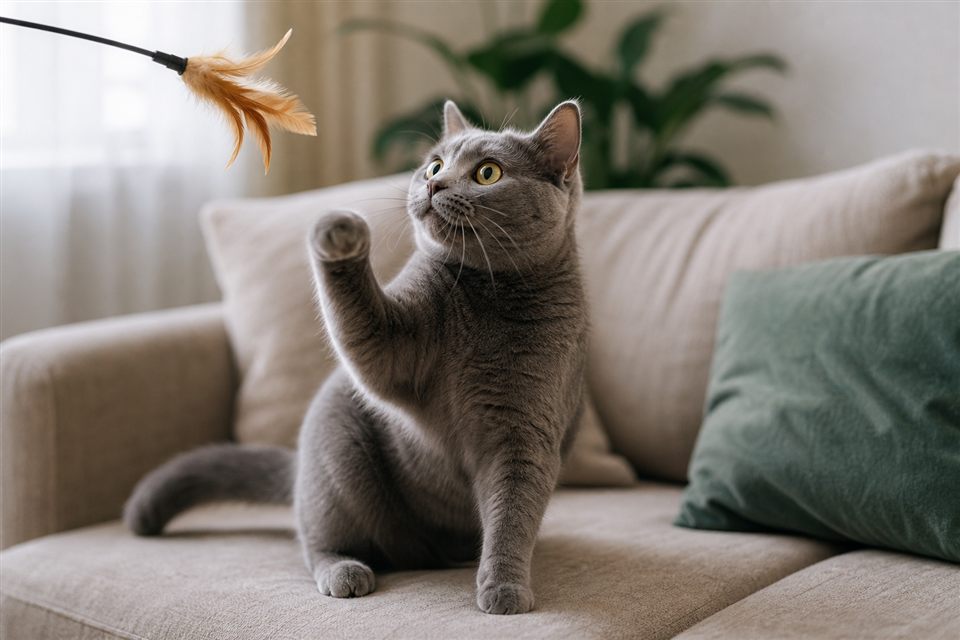
Every morning before breakfast, Oliver's Siamese mix, Luna, toured the living room perimeter rubbing her cheeks against the doorframe corners, the sofa leg, and the edge of Oliver's desk chair. She closed her eyes, pushed firmly, sometimes drooled slightly, then moved to the next vertical surface. Oliver wiped mysterious dark smudges from the baseboards monthly. Luna was not scratching an itch—she was running a scent-marking circuit that mapped her world in chemicals Oliver cannot smell but every visiting cat reads instantly.
Key points at a glance
- Face rubbing (bunting) deposits pheromones from glands on cheeks, chin, lips, and forehead.
- Cats mark safe territory, familiar objects, and social group members—including you—through rubbing.
- Corner and furniture edges concentrate rubbing because they align with gland placement and feel satisfying.
- Bunting usually signals comfort and ownership, not anxiety—unlike urine spraying.
- Synthetic feline facial pheromone diffusers mimic calming cheek scents in stressful environments.
Where feline facial scent glands live
Cats carry sebaceous and pheromone-producing glands in several head regions:
Temporal glands — above eyes near ears; produce marking secretions during cheek rubs.
Cheek glands — along sides of muzzle; primary bunting contact zone on corners.
Perioral glands — corners of mouth; deposit when cat rubs jaw on vertical edges.
Chin gland — underside of jaw; leaves subtle residue on horizontal surfaces after chin rubs.
Interdigital glands — paw pads; less involved in face rubbing but part of full marking repertoire when scratching accompanies bunting.
Luna's corner routine engaged cheek and perioral zones against protruding angles—maximum pressure, maximum deposit.
| Gland area | Rubbing surface | Message (feline) |
|---|---|---|
| Cheeks | Door corners, legs | "This is mine/safe" |
| Chin | Table edges | Ownership, comfort |
| Forehead | Your hand, shoes | Social bond |
| Full face | New furniture | Familiarization |
Why cats rub face on corners and furniture
Territorial mapping. Indoor cats establish home range without urine if confident. Bunting marks boundaries and objects as known—reducing need for spray marking in stable households.
Self-soothing. Facial pheromones include compounds associated with calm. Rubbing may reinforce psychological security—Luna's morning tour preceded relaxed loafing on the couch.
Social inclusion. Cats bunt people and pets they accept into colony scent profile. Oliver's ankles after shower receive chin rubs—Luna adds him to the group label.
New object integration. Fresh furniture or moved layout triggers intensive rubbing until smell profile matches Luna's map.
Greeting ritual. Returning home, Luna often head-butted Oliver's legs—affiliative bunting, not demand for food alone, though food follows.
Physical pleasure. Corners provide resistance massage for cheeks and gums—similar satisfaction to scratching posts for body glands.
Bunting versus scratching versus spraying
Bunting: Face and body rub, relaxed posture, no claw damage, pleasant context.
Scratching: Vertical claw marks, stretches muscles, interdigital gland deposit—complementary to bunting, different anatomy.
Urine spraying: Back to vertical surface, tail quiver, small urine amount—stress or territorial threat signal. Luna did not spray; she bunted. Different behavior, different meaning.
Can humans smell cheek gland secretions?
Usually not distinctly—though some owners notice a faint musky sweet odor on marked corners over time. Dark smudges on pale wood are often combined skin oil and environmental dust, not visible pheromone alone. Other cats detect chemical signatures at concentrations far below human threshold.
Should you stop face rubbing on furniture?
Generally no—bunting is healthy normal behavior. Excessive rubbing on single spot with hair loss or skin lesions needs vet dermatology review—allergy or infection, not marking.
Management options if smudging bothers Oliver:
- Apply washable corner guards or clear tape temporarily on prized antiques during Luna's integration phase
- Place cat-friendly rubbing posts or wall-mounted bunting brushes at favorite corners
- Use pheromone diffusers to supplement calm marking without dark marks on every leg
- Regular wipe-down with enzyme-free damp cloth—avoid ammonia cleaners that mimic urine smell
Never punish rubbing—it increases anxiety and may shift marking to spray or hiding.
Synthetic pheromones and bunting behavior
Products like Feliway mimic feline facial pheromones, signaling "safe territory" to reduce stress behaviors in moves, new pets, or vet recovery. They do not stop healthy bunting—they reduce conflict marking. Luna-level confident cats may show little change; anxious cats benefit more.
When rubbing behavior changes
Sudden increase in frantic rubbing, rubbing while yowling, or rubbing then biting can signal pain (dental disease, ear infection) or neurologic issue if accompanied by head tilt or circling. New avoidance of previously marked corners may indicate arthritis making neck extension painful.
Senior cats who stop bunting and withdraw warrant wellness exam.
The bottom line
Luna rubbed her face on corners and furniture because scent glands on her cheeks and lips turned Oliver's apartment into a labeled safe zone only cats fully read. Bunting is comfort, ownership, and social glue—not mischief or itch alone. Oliver installed a wall bunting brush at the doorframe and stopped fighting the smudges on the sofa leg. Luna kept mapping; Oliver kept a cleaner chair. Understanding gland-driven behavior turns mysterious face wipes into readable feline housekeeping.
This article is for general education only and does not replace advice from a licensed veterinarian.