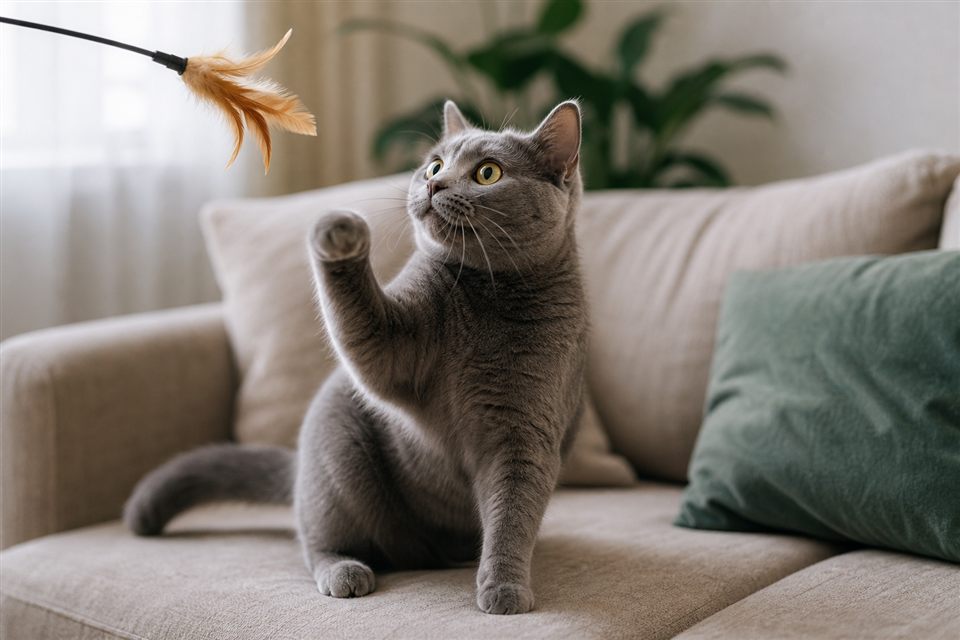
You shift under the covers and teeth land on your ankle — instant wake-up. This is not random malice. Moving lumps under fabric trigger predatory motor patterns: stalk, pounce, bite, rake with back feet. Bedroom darkness plus bored evening energy turns your toes into interactive prey toys.
Key points at a glance
- Toes twitching under blanket = prey signal — expect pounce.
- Evening play deficit — cat stores hunt drive for 2 am bed.
- Do not kick or scream — excitement reward unless you want encore.
- Pre-bed wand session — 10 minutes drain hunting urge.
- Sudden aggression with growling — pain or fear — vet before behavior plan.
Play vs true aggression
| Play pounce | Problem aggression |
|---|---|
| Ears forward, then play bow | Ears flat, hiss |
| Bite and release, no deep pressure | Sustained bite, skin break |
| Happens when feet move | Happens when you still |
| After idle evening | With hiding, appetite loss |
Pain-induced — arthritis, abscess — cat strikes when touched; not only under covers.
Why bedtime specifically
- You are still — cat hunts motion contrast.
- House quiet — plastic bag rustle of sheet sounds like scurrying.
- Young cats — crepuscular peak overlaps late evening.
- Single-cat indoor — prey quota unmet all day.
Fix the cycle without war
Before bed:
- Wand toy hunt — let cat catch kills on toy, not foot.
- Puzzle feeder small meal — post-hunt eat mimics wild pattern.
- Close door or cat sleep room if needed short term — not punishment, management.
During pounce:
- Freeze feet — remove prey animation.
- Toss toy away from bed — redirect.
- Never wiggle toes to tease — trains ambush.
Environmental tweaks
- Bedroom closed during day — less stake-out under covers.
- Automated toy in hall before your bedtime — pulls energy elsewhere.
- Second cat only if both cats play well — bad pairing worsens stress.
When to get professional help
- Broken skin nightly
- Child targeted with fear
- Redirect fails after 3 weeks consistent routine
Feline behavior consultant — not punishment sprays on bed.
The bottom line
Cats pounce on feet under blankets because moving fabric lumps look like prey and evening hunt drive needs an outlet. Pre-bed wand play, freeze-don't-flail during ambushes, and manage bedroom access until habit fades. Hissing, sustained bites, or new attacks on still feet warrant veterinary pain workup before blaming "crazy cat hours."
This article is for general education only and does not replace advice from a licensed veterinarian or certified feline behavior consultant.