At 6:12 a.m., a ceramic mug met the kitchen floor—pushed by Bean, a tuxedo cat who watched it fall with scientific interest, then made direct eye contact with Owen. Owen swore Bean did it on purpose. He was not entirely wrong. Cats who sweep pens, glasses, and phones off edges are following predictable feline logic, even when it feels like personal sabotage.
Key points at a glance
- Knocking objects off surfaces is normal cat behavior driven by predatory play, curiosity, and learning.
- Cats test whether items move, sound interesting, or trigger your reaction—feedback teaches repetition.
- It is rarely spite; cats connect cause and effect to outcomes they find rewarding.
- High shelves offer vantage points that make edge objects irresistible targets.
- Enrichment, secured valuables, and calm responses reduce the habit more than yelling.
- Sudden obsessive knocking with neurologic signs needs veterinary attention.
Hunting and play mechanics
Cat paws are precision tools for detecting prey movement. A stationary pen becomes a experiment: does it roll? rattle? bounce? One bat maps physics; a second bat confirms. Wild cats pat grass to flush rodents; Bean patrolled the counter to flush entertainment.
Objects that spin, clatter, or skitter activate chase reflexes. Glass especially rewards with dramatic noise—jackpot for a bored indoor hunter.
Attention and learned behavior
If Owen once sprinted into the room when Bean pushed a mug, Bean logged "mug equals human appears." Cats learn quickly that certain behaviors produce social engagement—even scolding is engagement. Early morning knocks sync with Owen's wake-up reflex, reinforcing timing.
Bean was not being malicious. He was using available tools to meet needs for stimulation and interaction when play sessions were irregular.
Exploration and territory
Cats inspect vertical territory. Shelves smell interesting, hold dust bunnies, and border windows. Edge items sit at paw height during patrol routes. Knocking clears space or tests stability of new objects—like a feline quality inspector who hates your knickknacks.
How to reduce shelf clearing without a war
Secure or remove temptations on narrow ledges—museum putty for collectibles, closed doors for fragile rooms.
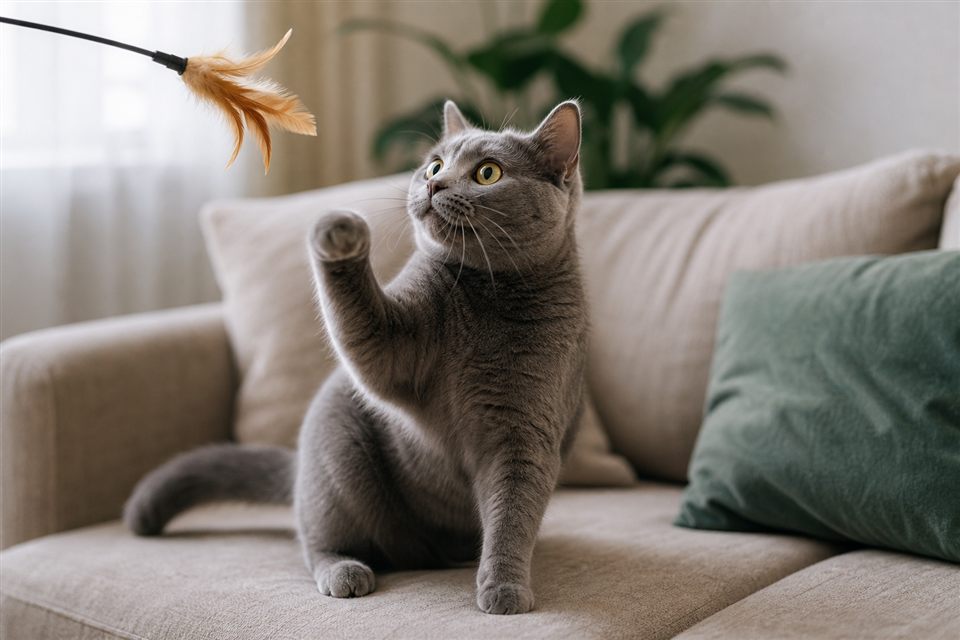
Increase daily play with wand toys that mimic prey speed and direction. Ten minutes of real hunting play beats an hour of yelling at mugs.
Ignore the performance when safe; pick up calmly after Bean leaves. If reaction is the reward, remove the show.
Offer legal knockables—puzzle balls, cardboard tubes, track toys on the floor.
Provide vertical outlets—cat trees, window perches—so shelves are not the only high ground.
| Trigger | Likely reason | Fix direction |
|---|---|---|
| Morning timing | Wake-up attention | Scheduled play before alarm |
| Glass items | Noise reward | Move or secure; no chase reaction |
| New decor | Novelty test | Introduce with spray deterrent on edges temporarily |
| Boredom afternoons | Under-stimulation | Food puzzles, rotation of toys |
When it is not just mischief
See a vet if Bean develops compulsive paw flicking, knocks invisible objects, or shows balance loss, head tilt, or seizures. Feline hyperesthesia syndrome and neurologic disease can mimic exaggerated batting. Senior cats with vision decline may misjudge edges more often—accident more than drama.
Long-term expectations
Owen stopped expecting Bean to never touch edges again—cats will be cats near gravity. He cat-proofed the breakables and scheduled two daily wand sessions. Knock frequency dropped from daily mug roulette to weekly pen incidents. Perfection is rare; reduction and safety are realistic goals that keep both species sane in shared homes.
The bottom line
Bean knocked Owen's mug off the table because cats are built to bat moving targets, explore heights, and learn what makes humans leap out of bed. It felt purposeful because it was—just not out of spite. More play, fewer reactives, and safer shelf staging turned Owen's mornings from ceramic roulette into something closer to peace.
This article is for general education only and does not replace advice from a licensed veterinarian.