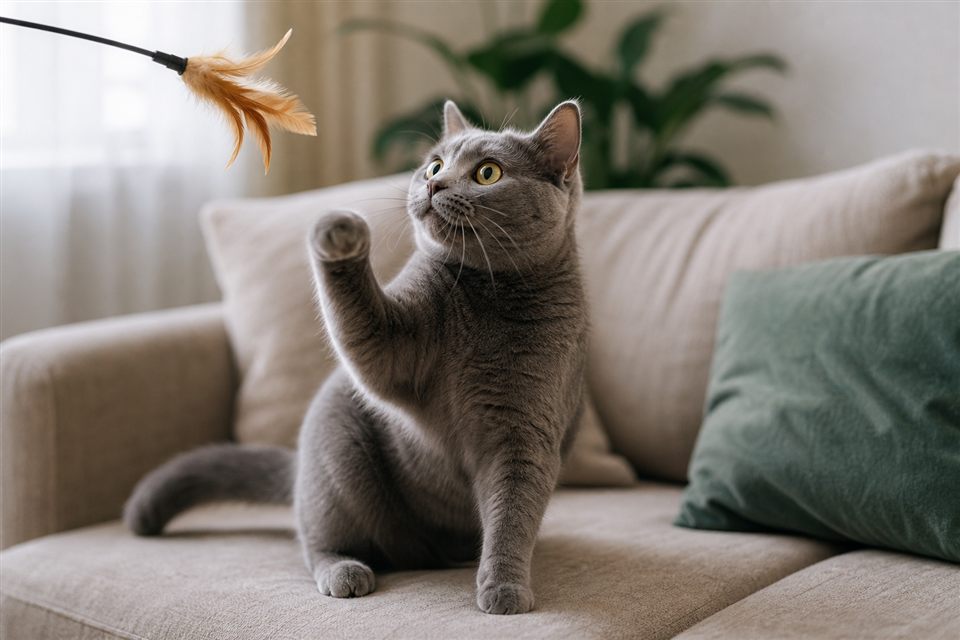
Every night on the couch, Simone's tabby, Figaro, climbed onto the fleece throw, purred loudly, and kneaded with front paws while suckling the fabric. The rhythm looked peaceful until Figaro's ears rotated sideways, his hind legs began bunny-kicking the blanket, and he clamped down with an aggressive bite—sometimes drawing blood from Simone's hand when it rested too close. Simone pulled away confused: was Figaro angry, playing, or overstimulated? The answer blended instinct, arousal, and a behavior chain many indoor cats express on soft textiles.
Key points at a glance
- Kneading plus blanket biting often combines comfort behavior (nursing reflex) with rising arousal that can tip into overstimulation.
- Ear flick, tail twitch, and sudden grip-and-kick signal it is time to stop petting and give space.
- Blanket aggression toward fabric is usually not true human-directed aggression—but hands in the blast zone get caught.
- Early weaning, stress, and breed temperament influence how intensely cats knead and bite soft objects.
- Redirect to toys, limit petting during kneading sessions, and never punish the bite reflex.
What kneading and blanket biting look like
Kneading (making biscuits) involves alternating front paw presses on soft surfaces, often with purring and half-closed eyes. Cats may suckle or chew fabric simultaneously—a behavior rooted in kittenhood nursing. The aggressive phase adds fast hind-leg bunny kicks, a full-mouth bite onto the blanket, and sometimes side-to-side head shake as if dispatching prey.
Figaro's sessions lasted two to five minutes. Purr volume rose, then flipped to a tighter grip. The blanket bore small wet spots and pulled threads. Simone's wrist bore scratches when she reached to pet mid-kick.
This differs from unprovoked human aggression across the room. The target is usually the textile; humans are collateral when hands overlap the "prey."
| Phase | Figaro's behavior | Simone's risk |
|---|---|---|
| Early | Slow knead, purr | Low |
| Peak | Suckling, deep knead | Medium if petting |
| Overstim | Ears back, kick-bite | High for nearby hands |
Why cats knead blankets in the first place
Nursing reflex. Kittens knead mother cat's belly to stimulate milk flow. Many cats retain kneading into adulthood on soft, warm surfaces—blankets, sweaters, other cats. It signals contentment and self-soothing.
Scent marking. Paw pads deposit scent during kneading. Figaro may be claiming the fleece as his comfort zone.
Relaxation before sleep. Kneading often precedes settling for a nap. The blanket becomes a surrogate littermate or mother.
Fabric texture. Fleece and wool mimic fur mouthfeel, triggering suckling in cats weaned early or those with strong oral fixations.
Is the aggressive bite overstimulation?
Often yes—but overstimulation here means arousal overload on a comfort behavior, not necessarily that Simone petted too much. Internal arousal builds during repetitive kneading and suckling until the nervous system flips from bliss to bite-kick discharge.
Overstimulation signs during kneading:
- Ears rotate sideways or flatten
- Tail tip twitches or thumps
- Skin ripples along back
- Purr changes pitch or stops
- Pupils dilate
- Grip intensifies without warning
Figaro crossed a threshold where the blanket became both comfort object and prey surrogate. Bunny kicking and biting are normal feline motor patterns for dismembering prey—released onto fabric when arousal peaks.
Not always human-caused overstimulation. Figaro sometimes bit the blanket without Simone touching him. The behavior can be self-driven—a closed-loop reflex some cats repeat nightly.
Early weaning and oral behaviors
Cats weaned before seven to eight weeks may show stronger blanket suckling and aggressive kneading. Oral fixation compensates for shortened nursing. This is not pathology—it is developmental history expressing on your throw.
Stress can intensify the behavior. New home, schedule change, or outdoor cat visible through window may increase self-soothing kneading frequency.
How to respond without making it worse
Keep hands clear during peak kneading. If Figaro is deep in the rhythm, do not stroke his back or belly. Watch ears and tail instead of assuming purr equals invite.
Use a barrier. Place a thick blanket layer Simone does not mind sacrificing. Redirect Figaro to that textile instead of her lap fleece if bites catch her skin.
Interrupt before the bite if possible. When ears flick and hind legs tense, toss a feather toy away from the couch to redirect prey drive onto appropriate target. Reward calm kneading ending without bite when you see it.
Never punish biting. Squirting, yelling, or hitting increases stress and can redirect true aggression toward Simone. Withdraw attention calmly; protect hands.
Offer alternatives. Chew-safe plush toys, heated pet bed, and scheduled play before evening couch time reduce pent-up hunting arousal that feeds into kick-bite finales.
Veterinary check if sudden change. New intense blanket aggression in a senior cat, or kneading with weight loss or excessive vocalization, warrants medical review for pain or hyperthyroidism.
When blanket biting is not overstimulation
Rarely, pain causes defensive biting when touched during kneading—arthritis in hips or spine makes petting during curled posture hurt. Dental pain can increase chew pressure on fabric. Obsessive kneading with barbered fur or self-injury needs vet behavior consult.
True redirected aggression toward humans—hissing when approached away from blanket—differs from collateral bite during fabric attack.
The bottom line
Figaro kneaded then bit the blanket aggressively because comfort nursing crossed into overstimulated prey reflex—not because he hated Simone. The knead-bite chain is common, especially in orally fixated or early-weaned cats. Simone learned to keep hands back, watch ear and tail tells, and redirect before the kick. Figaro still made biscuits nightly; Simone stopped losing blood to the fleece. Understanding overstimulation as an arousal ceiling—not random meanness—keeps the couch peaceful for both of them.
This article is for general education only and does not replace advice from a licensed veterinarian.