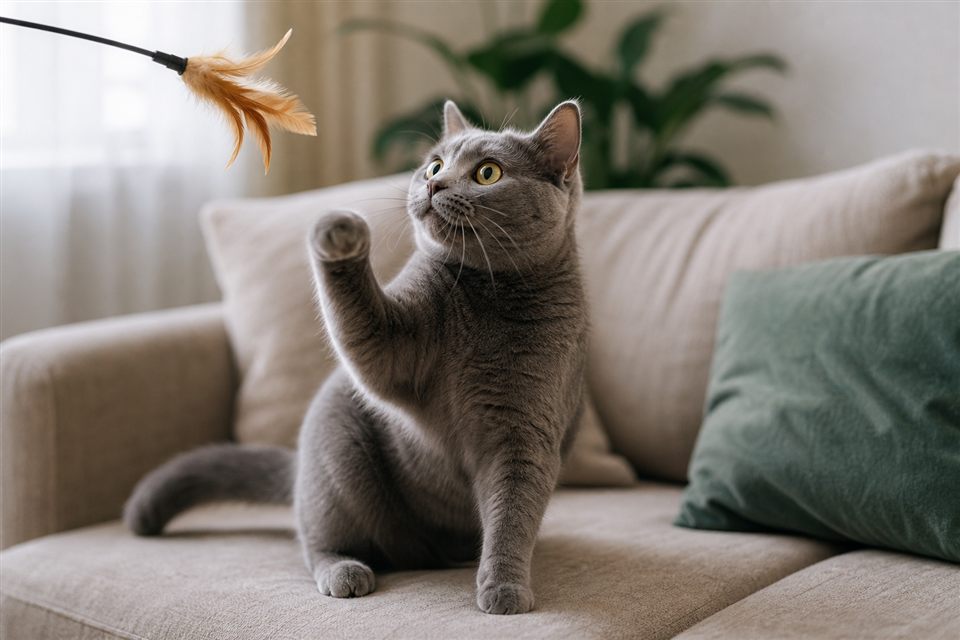
Every morning, Luisa's tabby, Miso, climbed onto the pillow and bonked her forehead against Luisa's cheek with surprising force—once, twice, then a slow purr. Luisa used to worry Miso was annoyed. A vet tech at the clinic smiled and said the behavior had a name: bunting. Miso was not head-butting Luisa away; she was claiming her favorite human as family, one scent gland at a time.
Key points at a glance
- Head butting, or bunting, is usually affectionate communication and scent marking, not aggression.
- Cats have scent glands on the forehead, cheeks, and chin used to deposit familiar smell on trusted surfaces.
- Bunting often means your cat feels safe, bonded, and wants social contact.
- Cats may bunt furniture, other pets, and you to create a shared household scent map.
- Rough bunting paired with flattened ears or swatting differs from friendly bumps.
- Returning gentle contact or slow blinks reinforces the bond your cat is building.
What bunting means in cat language
Bunting is a affiliative behavior—cats do it with individuals and objects they accept into their social group. Wild and feral cats bunt colony mates to mix scents and signal cooperation. Domestic cats extend that ritual to couches, doorframes, and owners who pass the trust test.
When Miso pressed her forehead to Luisa's face, she transferred pheromones from temporal glands near her ears. To Miso, Luisa smelled wrong until she smelled like home. Repeated bunting refreshes that label: you belong here, with me.
Why cats head butt people specifically
Greeting ritual. Many cats bunt after you return from work—scent update plus hello.
Affection and attention request. Miso sometimes bunted Luisa's book until Luisa petted her chin.
Reassurance in new spaces. After moving apartments, Miso bunted Luisa more often, re-marking her anchor person.
Social ranking without dominance drama. Unlike dog hierarchy myths, cat bunting is cooperative scent sharing, not "dominance over humans."
Some cats bunt gently; others use linebacker enthusiasm. Body context tells the story—soft eyes and purring mean welcome; stiff body means reconsider approach.
Bunting vs head pressing
Do not confuse bunting with head pressing—a cat compulsively pushing head against walls or furniture without relaxed body language. Head pressing can indicate neurological illness, pain, or toxicity and needs urgent veterinary evaluation. Bunting is social, intermittent, and paired with normal behavior. Head pressing is persistent, odd, and often accompanied by lethargy or vision changes.
How to respond when your cat bunts you
Offer your hand or cheek at their level so they control contact. Scratch under the chin or behind ears where scent glands also live. Avoid grabbing the head; let Miso choose pressure and duration. Slow blinking back communicates calm friendship in cat visual language.
If bunting wakes you too early, redirect after a brief acknowledgment—morning play or breakfast on schedule—rather than pushing Miso away harshly, which can confuse affectionate intent.
Bunting other pets and objects
Miso bunted the corner of the couch, the cat tree post, and Luisa's older Labrador's flank during cautious friendship weeks. Shared scent helps multi-species homes feel cohesive. New furniture often gets a bunt tour before anyone sits—normal territory labeling, not vandalism. Feliway and similar synthetic pheromone products mimic aspects of facial marking for stressed cats, though they never replace real social bonds with you.
When bunting changes suddenly
See your vet if Miso stops bunting altogether while hiding, or if bunting becomes frantic with pacing, yowling, or disorientation. Senior cats with cognitive changes may alter social rituals. Dental pain can make facial contact uncomfortable—less bunting, more lip smacking or food avoidance.
The bottom line
Miso's morning forehead thumps were not rude—they were membership cards written in scent. Luisa learned to lean in for the bump and call it what it was: bunting, cat for "you're mine and I'm yours." Head butting from a relaxed cat is one of the warmest compliments in feline vocabulary.
This article is for general education only and does not replace advice from a licensed veterinarian.