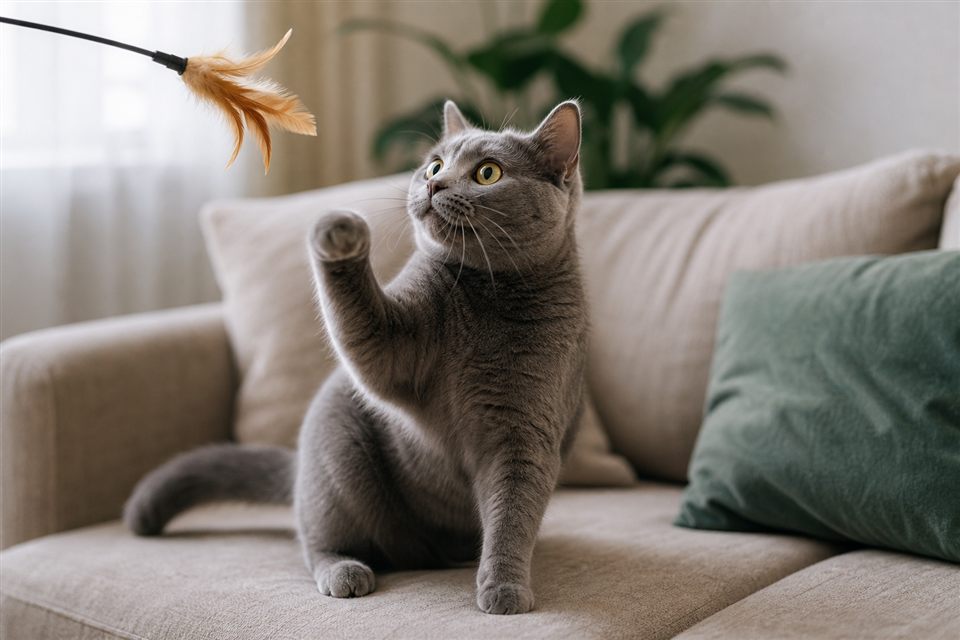
11 PM hallway NASCAR — cat ricochets off couch, yowls once, vanishes. Frenetic random activity periods (FRAPs) — zoomies — are normal for indoor cats with stored predatory energy. Wild sprint differs from pain or thyroid — context and age separate fun from flag.
Why nights specifically
Cats are crepuscular — peak activity dawn and dusk — your evening TV time = their hunt o'clock.
Sleep all day while you work → battery full at bedtime.
After litter box — some cats sprint post-poop — vagus nerve stimulation — weird but common.
Normal zoomies look like
- Flat ears forward, play face
- Ends in 5–15 minutes
- Self-play — tail chase, toy pounce
- Eats and sleeps after — normal
When zoomies aren't harmless
| Red flag | Worry |
|---|---|
| New in senior cat | Hyperthyroid, pain |
| Constant all night | Stress, compulsive |
| Hiding after sprint | Fear pain |
| Bald patches from running | Dermatology |
| Yowling prolonged | Hypertension, dementia |
Senior sudden change — vet before laughing it off.
How to survive without sleep loss
Pre-bed hunt:
- 10–15 min wand toy — let catch kills
- Puzzle feeder small meal after — natural sequence eat-sleep
Environment:
- Quiet ignore during safe zoom — attention can reward
- Soft paws — trim nails — less noise trauma
Do not:
- Spray water — stress
- Lock in room without outlet — worse yelling
Multi-cat zoomies
One cat triggers chase — ensure escape routes — bullying not play if hiding, urine.
Kittens vs adults
Kittens — multiple zooms daily — normal. Adults — 1–2 bursts typical.
The bottom line
Cats get nighttime zoomies because they are built to hunt at dusk and stored energy has to go somewhere — pre-bed play sessions shrink the 3 am Grand Prix. Ignore safe sprints, redirect with toys before you sit down, and book a senior cat exam if wild runs appear suddenly or pair with weight loss and yowling. Zoomies are usually comedy, not exorcism.
This article is for general education only and does not replace advice from a licensed veterinarian or certified feline behavior consultant.