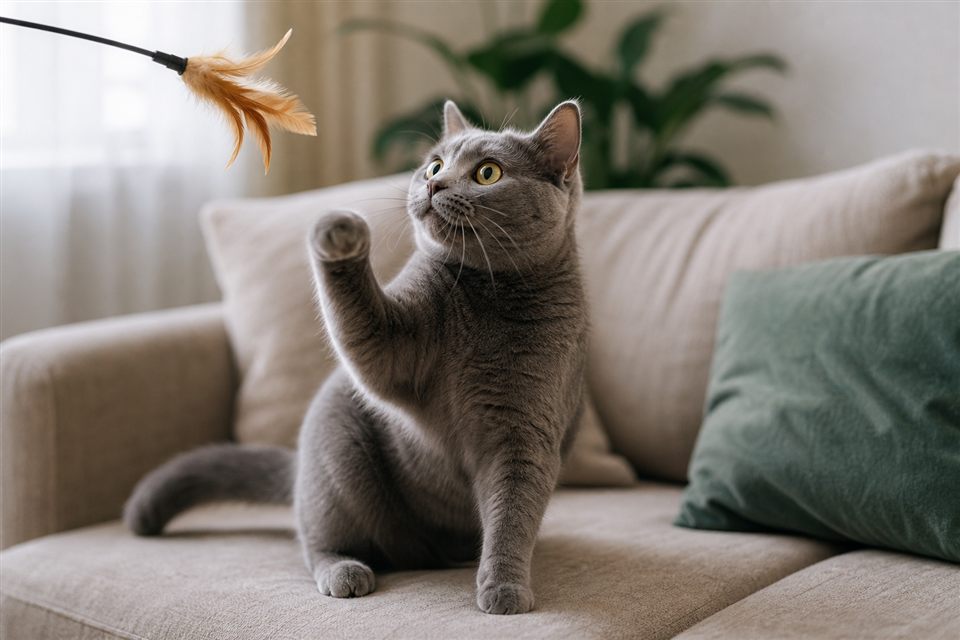
You are stroking your cat's favorite spot when the tail tip starts thumping like a metronome. Purring may still run. Owners guess excitement — sometimes yes, often "almost enough." Tail language sits on a dial between contentment and overstimulation, and the flick frequently lands in the yellow zone.
Key points at a glance
- Tail tip twitch during petting often signals rising arousal — pleasure or irritation.
- Full tail lash plus flattened ears — stop touching before swipe.
- Slow swaying tail at rest can mean focus or mild annoyance — context matters.
- End petting at first yellow signs — shorter sessions prevent bites.
- Tail flick while staring at bird — hunting focus, not about you.
Tail signals while being petted
| Tail movement | Likely meaning |
|---|---|
| Tip twitch only, relaxed body | Borderline OK — watch closely |
| Tip thump faster, skin rippling | Overstimulation building — pause |
| Whole tail whip | Stop now — bite risk |
| Tail wrapped around you loosely | Affection |
| Tail puffed | Fear or offense — not petting moment |
Overstimulation timeline
Many cats tolerate 30–90 seconds on sensitive zones (lower back, belly) before nerves overload. Tail flick is early warning — not rudeness. Continuing usually earns love bite or swat.
Fix: End session before flick escalates; treat on floor; resume later.
Not always about petting quality
- Wrong spot — belly trap when cat showed side only.
- Whisker fatigue — face petting too long.
- Pain — arthritis along spine; flick when touched hip. Vet if new.
Tail flick without petting
Window hunting — tip twitch while bird watching is predatory focus. Other cat visible — territorial arousal. Do not interpret all flicks as petting feedback.
What to do when you see tip twitch
- Pause hand — wait 5 seconds.
- If twitch stops and cat leans in, continue lighter.
- If twitch accelerates, stand up — session over.
- Never punish flick — communication, not defiance.
Multi-cat homes
One cat's flick may signal other cat approach — tension in room, not your strokes.
The bottom line
Cats flick their tail tip during petting when stimulation stacks toward overload — treat it as polite request to pause, not invitation to pet harder. Read ears, skin, and lash speed together; stop early and sessions stay bite-free. New flicking with flinch or hiding warrants pain check at the clinic.
This article is for general education only and does not replace advice from a licensed veterinarian or certified feline behavior consultant.