Nadine came home at 6:20 p.m. to a trail of pothos leaves and a wet spot on the rug. Fern, her three-year-old calico, sat beside the 14-inch pot looking pleased. The plant had been a $28 grocery-store impulse in May. By August it was a stump. Nadine's search history that night was "pothos cat vomit" and "is lily water enough to kill." She threw the bouquet in the trash before she unpacked groceries.
Key points at a glance
- Chewing plants can mean fiber-seeking, play, boredom, or a cat who likes the crunch.
- Lilies, sago, and some common "office plants" are emergencies, not a wait-and-see.
- Bitter sprays fail if the plant still sits at cat face height with no other greens.
- Cat grass (wheat, oat, or barley) is the swap that actually gets used.
- Hang, cage, or relocate toxic plants; do not rely on a cat's self-control.
- Repeated vomiting, drooling, or a quiet cat after chewing means call the clinic now.
Why do cats eat houseplants?
Indoor cats graze. Some want roughage to help pass hair. Some like the movement of leaves when they bat them. Fern treated the pothos like a salad bar and a toy. New plants smell like soil and grocery produce, which is interesting in a house that otherwise smells like litter and salmon pouches.
Boredom shows up as 3 p.m. pruning. A cat left with closed blinds and no play will invent a hobby. Nadine had started a night class on Tuesdays. Fern's plant raids clustered on those evenings.
Which plants are a true emergency?
True lilies (Lilium and Hemerocallis) can cause fatal kidney failure in cats from pollen, water, or a tiny bite. Sago palm, oleander, and autumn crocus are in the same "do not own this" category for cat homes. Pothos, philodendron, and peace lily cause oral pain and vomiting from calcium oxalates; they are miserable, not usually a lily-level toxin, but they still do not belong in Fern's face.
If you are unsure, photograph the plant and call poison control or your vet. Waiting for "maybe she'll be fine" is how lily cases get to dialysis.
| Plant or material | Risk to cats | Safer move |
|---|---|---|
| True lilies, daylilies | Kidney failure; emergency | Never keep them; trash water too |
| Pothos, philodendron, peace lily | Mouth pain, vomiting | High shelf in a closed room |
| Spider plant, parlor palm, calathea | Generally lower risk | Still watch for choking on long leaves |
| Cat grass (wheat/oat/barley) | Usually fine in small amounts | Grow in a heavy pot Fern cannot tip |
| Essential-oil "repellent" sprays | Can be toxic by themselves | Skip; use placement, not perfume |
How do you stop the chewing without a chemical war?
Grow cat grass. A $4 seed kit in a ceramic pot, refreshed every 10–14 days, gave Fern a legal crunch. Put it on the floor where she already patrols, not in a forgotten bathroom. If she vomits yellow foam after a huge graze, offer less at a time; some cats overdo greens.
Make the houseplant boring and hard to reach. Nadine hung the next pothos from a ceiling hook in the guest room and shut the door. Sticky tape on the rim of a pot deters some cats; others peel it like a snack. Aluminum foil around soil works for a week. Plan for placement, not gadgets.
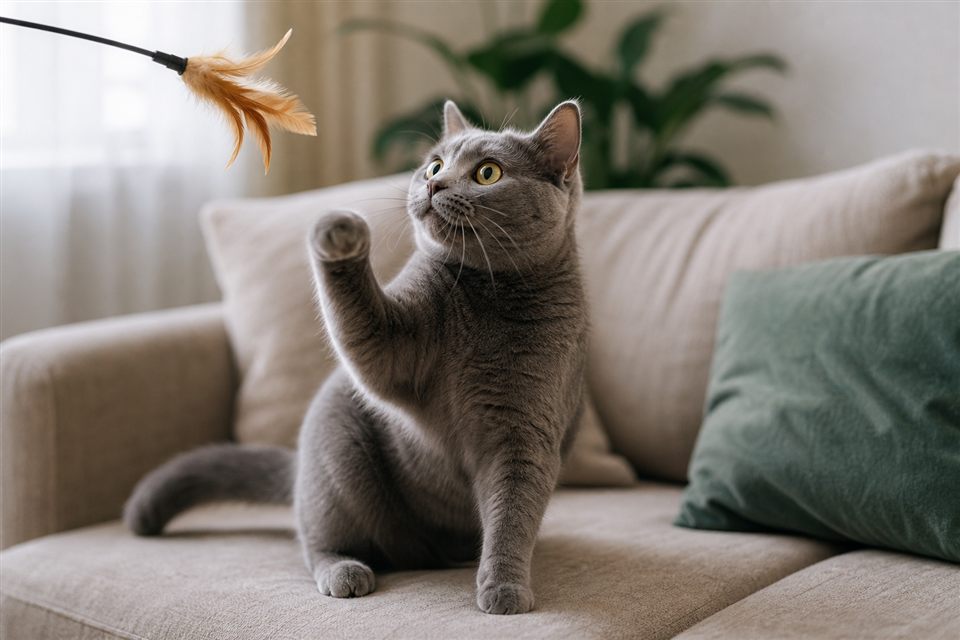
Increase hunting play at 5:30 p.m. when you get home. A wand toy, then dinner, then the plant is less of an event. Puzzle feeders at noon on class nights cut the 3 p.m. boredom window.
Do not hit or spray the cat in the face. You will get a cat who waits until you leave. Check every vase. Bouquet lilies from a gas station are how many indoor cats get poisoned.
If Fern keeps chewing cords, fabric, or plastic, ask the vet about pica. That is a medical workup, not a taller plant stand.
This article is for general education only and does not replace veterinary or poison-control advice. If your cat chews an unknown or toxic plant, call your vet or a pet poison hotline immediately.