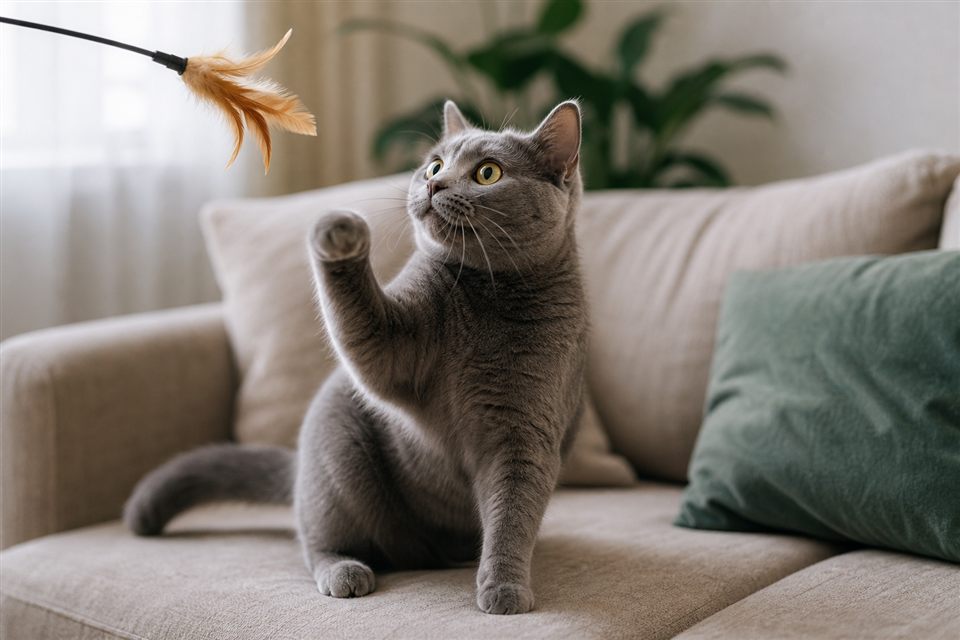
Lena found a twitching cricket on her pillow at six in the morning. Mochi, her tabby, sat beside the bed with the satisfied stillness of someone who had completed a major project. The cricket escaped under the dresser. Lena wondered whether Mochi had brought a gift of gratitude — or simply relocated hunting practice from the windowsill to the bedroom. With insects, the answer is almost always hunting. The "gift" label fits better with larger prey left for cat parents who outdoor cats consider family.
Key points at a glance
- Live insects in the house usually mean your cat is hunting successfully — not presenting a social gift in the classic sense.
- Indoor cats redirect prey drive toward flies, moths, spiders, and crickets because those targets move like prey.
- True gifting behavior more often involves dead or injured mice and birds delivered to trusted humans.
- Hunting bugs is normal; panic is understandable but punishment teaches nothing useful.
- Reduce unwanted deliveries with screens, play-based prey outlets, and safe insect removal routines.
Hunting versus gifting: what Mochi is actually doing
Cats are obligate predators with a fixed action pattern: stalk, chase, pounce, grab, sometimes manipulate with paws. Insects trigger that chain reliably. A fluttering moth or skittering cricket is a legal target in a cat's brain.
Hunting explains most bug deliveries. Mochi caught something alive, carried it to a comfortable zone — often where she eats or sleeps — and continued the sequence. Live prey sometimes escapes, which is how Lena got a bedroom cricket.
Gifting in cat behavior literature usually describes outdoor cats bringing dead or maimed vertebrate prey to household members they trust. The motivation is debated — teaching, provisioning, or simply leaving catch in a safe den — but it is a different context from chasing houseflies.
Mochi was not thanking Lena for breakfast. She was being a competent predator in a house with excellent bug acoustics.
Why indoor cats focus on insects
Prey drive without outdoor access. Indoor life removes mice and birds but not the need to hunt. Bugs become the main event.
Movement triggers. Fast, erratic motion activates chase reflexes faster than static toys sometimes do.
Seasonal influx. Open windows and porch lights invite moths and crickets inside.
Night activity. Lena's 6 a.m. cricket matched Mochi's peak hunting hours.
Is this behavior normal?
Yes. Hunting insects is normal cat behavior even in cats fed premium diets. Full bowls do not erase predatory wiring. Concern arises only if Mochi eats toxic insects, swallows large quantities, or shows obsessive hunting to the exclusion of rest, eating, or social interaction — rare, but worth mentioning to your vet.
Avoid toxic exposures: fireflies, venomous spiders, and pesticide-treated bugs pose risk if eaten.
When in doubt, prevent access and remove insects promptly.
What Lena did instead of scolding
Play prey sessions daily. Wand toys with erratic movement satisfied stalk-and-pounce needs before dawn patrol.
Secure windows and doors. Screens reduced moth entry. Porch light timing changed to attract fewer insects.
Calm removal protocol. Lena trapped crickets with a cup and card rather than chasing Mochi, which could feel like shared hunt game.
No punishment for catches. Yelling or spraying water damages trust without reducing prey drive.
Puzzle feeders. Mental effort at mealtimes took edge off idle hunting energy.
| Situation | Likely meaning | Practical response |
|---|---|---|
| Live bug on bed | Hunting relocation | Remove insect, add play session |
| Dead mouse at door | Possible gifting/provisioning | Dispose safely, check outdoor access |
| Bug hunting nightly | Normal prey drive peak | Scheduled evening play |
| Obsessive constant hunting | Possible stress or medical issue | Vet behavior consult |
When to talk to your veterinarian
Mention bug hunting if Mochi ingests unknown insects and vomits, drools excessively, develops facial swelling, or suddenly increases hunting while losing weight. Hyperthyroidism and other conditions can change activity patterns. Sudden behavior shifts deserve a checkup even when bugs are involved.
The bottom line
A cat that brings live insects into the house is usually hunting, not gifting in the traditional prey-delivery sense. Mochi's pillow cricket was predatory success relocated indoors — completely normal for a cat with working instincts and limited outdoor targets. Lena reduced unwanted surprises with screens, dawn play sessions, and calm insect removal. You cannot train prey drive away, but you can channel it and keep your bedroom mostly cricket-free.
This article is for general informational purposes only and does not replace advice from your veterinarian.