You wake up beside a vole, a sock, or a soggy catnip mouse placed with ceremony on your pillow. Disgusting? To you, yes. To your cat, it may be the highest compliment their instincts allow — sharing prey with family, teaching offspring, or announcing successful hunt even when prey is rubber.
Key points at a glance
- Gift-giving is normal hunting behavior — indoor cats substitute toys for real prey.
- Spayed females and males both do it — not only nursing mothers teaching kittens.
- Praise calmly, dispose safely — screaming teaches fear, not "no gifts."
- Increase play hunting at dusk to reduce real rodent deliveries if you have pest access.
- Live prey indoors — address rodent control; cat may have eaten part — ask vet about parasites.
Instinct behind the "present"
Wild and feral cats bring prey to safe dens — kittens, mates, or trusted colony members. Domestic cats treat your bed as core territory and you as family. Depositing catch says: this is mine, I trust you, here is food.
Toy versions mean the same motor pattern fired — stalk, pounce, carry, deposit — even without calories attached.
Common variations
| Gift type | Likely meaning |
|---|---|
| Dead mouse or bird | Real hunt success; sharing |
| Stolen sock or hair tie | Prey-shaped object; play carry |
| Catnip mouse at night | Peak hunting hours; practice |
| Live prey (still moving) | Teaching or incomplete kill sequence — urgent to separate safely |
Should you punish or praise?
Do not yell or chase — cat learns you are unpredictable, not that gifts are unwanted.
Quiet response:
- Remove prey with gloves — dispose sealed; wash bedding if needed.
- Brief calm acknowledgment — some behaviorists suggest mild praise for trust, then redirect.
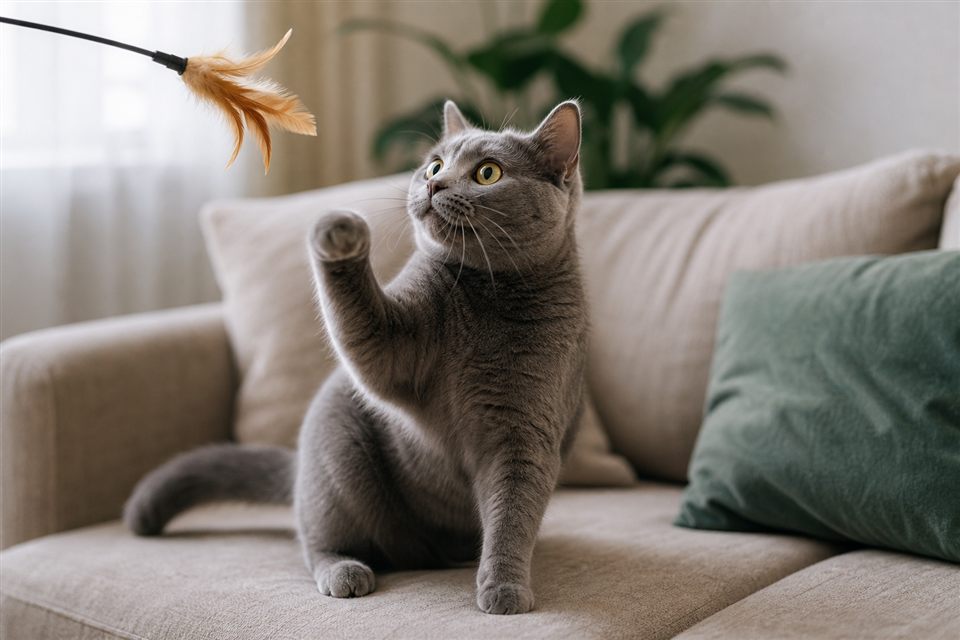
- Engage wand toy later same evening — satisfies hunt cycle.
Consistency matters less than not reinforcing panic.
Reduce real rodent gifts
If actual mice appear:
- Pest control humane traps or professional — poison risks cat secondary poisoning.
- Seal entry points — gaps around pipes, doors.
- Limit cat outdoor access at dawn/dusk peak hunt times if indoor-outdoor.
Deworming per vet schedule if hunting continues.
Indoor-only cats and toy gifts
Increase interactive play — 10–15 minutes, wand toy mimicking bird flight, end with treat to complete hunt-eat-groom-sleep loop.
Rotate toys — novelty reduces 3 a.m. sock deliveries slightly, not always to zero.
When gift behavior changes suddenly
Senior cat who never hunted indoors now delivers objects plus weight loss or yowling — medical check (hyperthyroidism increases activity).
Obsessive carrying without eating or interacting — rare compulsive disorder; behavior consult.
Safety if prey was partially eaten
Contact vet about tapeworm, toxoplasmosis, and rodenticide exposure if poison used in home or neighborhood. Bring sample of rodent if identification helps risk assessment.
The bottom line
Cats leave mice and toys on beds because instinct says share the catch with family — gross to humans, logical to cats. Dispose prey safely, boost scheduled indoor hunting play, and control rodents if real kills appear. Save dramatic reactions; redirect energy instead of shaming a behavior millions of years old.
This article is for general education only and does not replace advice from a licensed veterinarian or certified feline behavior consultant.