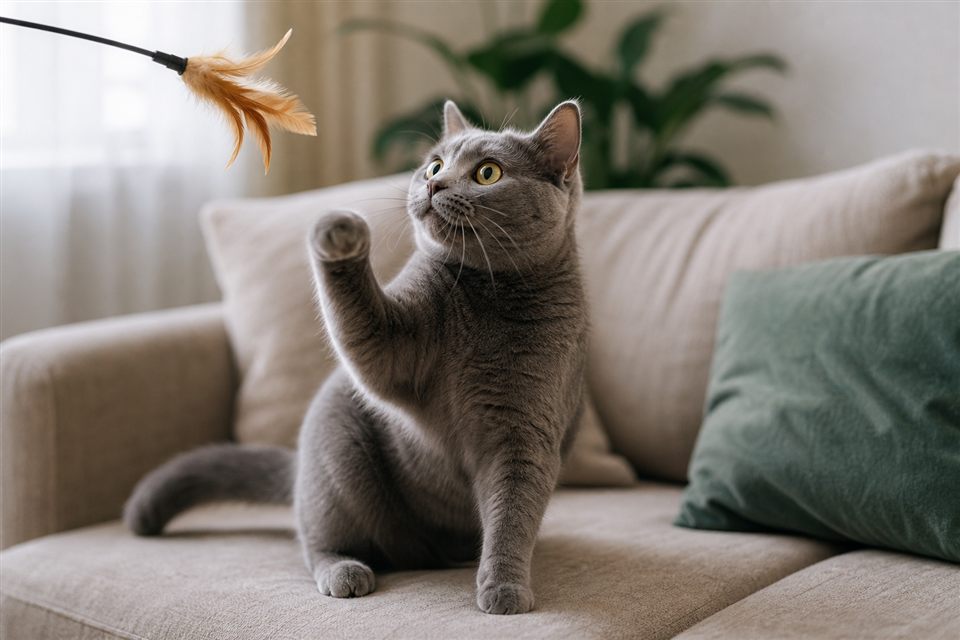
During Sunday morning lie-ins, Keisha's longhaired mix, Basil, climbed onto the pillow, purring loudly, and began licking Keisha's hairline with rough sandpaper strokes. Sweet—until Basil grabbed a strand, nipped her scalp, and held on like a tiny lion on a gazelle. Keisha yelped. Basil looked offended. Was it love? Grooming? Aggression? For many cats, hair and scalp biting sits in a blurry zone between affectionate allogrooming and overstimulated play—and context tells you which.
Key points at a glance
- Scalp and hair biting often starts as social grooming extended to a human "family member."
- Overstimulation turns licking into nipping when sensation builds past the cat's tolerance.
- Play hunting on moving hair resembles prey behavior, especially in young cats.
- Attention seeking and stress can also drive the habit.
- Redirect with toys, cap session length, and never punish—abrupt reactions can escalate bites.
Grooming behavior directed at your hair
Cats groom each other in bonded groups—especially head and neck areas hard to reach alone. When Basil licked Keisha's scalp, he was treating her like a preferred cat friend.
Signs it is grooming-flavored affection:
- Slow purring, kneading nearby
- Rhythmic licking before any bite
- Relaxed ears and soft eyes
- Happens during calm cuddle time
- Bite is gentle grab, not full pressure
Allogrooming reinforces social bonds. Hair is the closest human equivalent to fur. Basil was saying Keisha belongs to his colony.
When grooming becomes overstimulation
Cats have finite petting tolerance. Scalp skin is sensitive. Repeated licking plus hair pulling can flip a switch from bliss to "too much" in seconds.
Overstimulation clues:
- Licking accelerates, then abrupt bite
- Skin twitching, tail thumping on the bed
- Ears rotate sideways or flatten
- Dilated pupils despite purring (purring does not always mean happy)
- Cat stays on you but body tenses
The bite is a stop signal—not necessarily hatred. Basil wanted the session to end or change intensity.
| Phase | Basil's behavior | Keisha's best response |
|---|---|---|
| Friendly groom | Slow licks, purr | Enjoy briefly or offer brush |
| Rising arousal | Faster licks, tail twitch | End session, still hands |
| Overstim bite | Grab and nip | Stand up, redirect to toy |
Learning Basil's pre-bite signals shortened Keisha's scalp injuries dramatically.
Play and predatory behavior on hair
Loose hair moves. Ponytails swing. Basil at eighteen months treated Keisha's bun like a twitching rodent.
Play-bite signs:
- Ambush from behind the couch headrest
- Pounce without prior licking
- Bunny kicks on a hair bundle
- Happens during energetic times of day
Redirect to a wand toy before the pounce. A tired cat bites hair less.
Attention seeking and habit
If Keisha laughed, shrieked, or pushed Basil away dramatically, she accidentally rewarded dramatic bites with interaction. Even negative attention reinforces social species.
Quiet disengagement—stand up, leave the room, no eye contact for thirty seconds—teaches that biting ends fun.
Stress and displacement behavior
New pets, moves, or schedule chaos can increase odd grooming targets. Basil chewed Keisha's hair more the week her roommate moved out. Extra play, predictable feeding, and Feliway diffusers helped; so did addressing the household change.
Persistent compulsive grooming of human hair or self—barbering bald patches—needs veterinary evaluation for pain, allergy, or anxiety.
How to reduce hair and scalp biting
Cap cuddle sessions. Stop petting while Basil is still loose, before the twitching starts.
Offer a grooming brush as substitute for scalp licking.
Keep hair tied or covered during known trigger times if bites hurt.
Morning play session before lie-ins burns hunt drive.
Never use hands as toys with kittens—hair becomes lifelong prey.
Use a verbal cue to end cuddles ("all done") and set Basil on the floor with a treat on his bed.
Check dental and mouth pain if biting is new in an older cat—discomfort changes behavior.
When bites are serious
Seek behavioral help if Basil breaks skin repeatedly, bites without warning after months of predictability, or shows aggression beyond hair sessions—hissing, chasing, guarding. A veterinary behaviorist can assess whether overstimulation, fear, or pain drives the pattern.
Children, roommates, and hair-biting cats
Basil treated everyone's hair like a toy until Keisha set house rules: no rough play with hair, ponytails during couch time, and separate wand-toy sessions for kids after school. Children squealing and whipping hair triggers predatory chases—predictable but preventable.
Roommates with long hair need the same briefing. A shared "cuddle cutoff" signal—Keisha taps Basil's bed when scalps are off limits—keeps bites from becoming a household argument. Document any broken skin for medical care; cat mouths carry bacteria even when love bites feel small.
The bottom line
Basil bit Keisha's hair and scalp because he loved her like a cat friend, got overstimulated on sensitive skin, and sometimes hunted her ponytail for sport. Grooming and overstimulation overlap in the same session more often than owners expect. Watch for tail thumps and faster licks, end contact early, and redirect young cats to toys. Keisha still gets morning scalp licks—but she ends them on her terms before Basil's tiny lion impression leaves a mark.
This article is for general education only and does not replace advice from a licensed veterinarian.