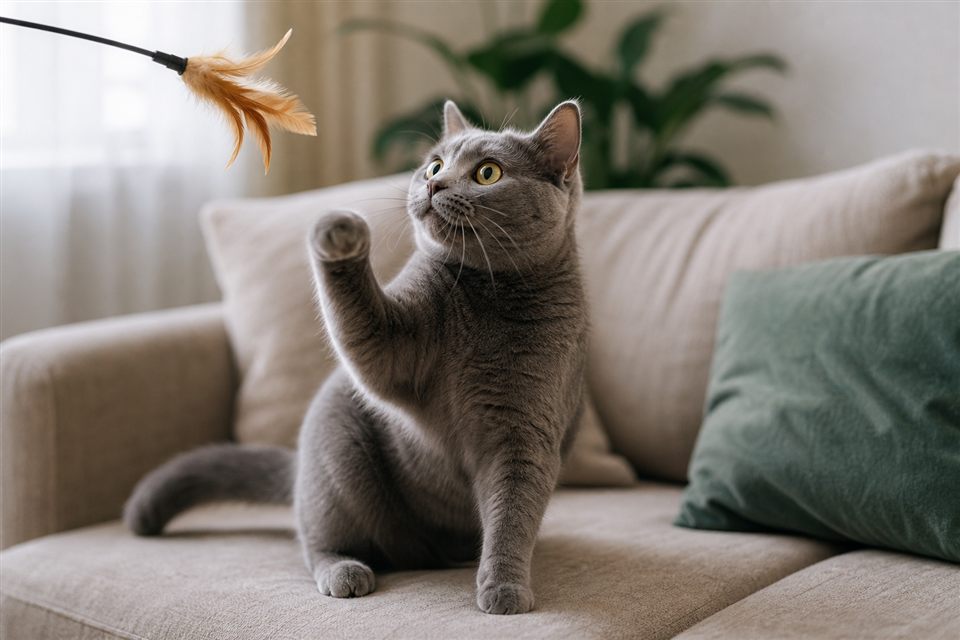
You are stroking your cat. The motor runs. Then — chomp. Not a break-skin attack, but a quick grab with teeth, sometimes with claws. You think: make up your mind. Behaviorists call many of these petting-induced or love bites — communication that the interaction crossed a line your cat cannot say in words.
Key points at a glance
- Gentle bites during purring often signal overstimulation, not sudden aggression.
- Cats have a petting threshold — length and spot matter as much as pressure.
- Watch ears, tail, and skin twitch — bites rarely come with zero warning.
- Do not punish — redirects trust; stop petting and wait instead.
- Sudden painful biting with hiding or appetite change needs a vet pain check.
Why purring and biting happen together
Purring is not purely happiness. Cats purr when painful, nervous, or seeking comfort too. During petting, purring may mean contentment until stimulation stacks — repeated touch on the same nerve paths triggers a reflex bite to stop input.
Kittens learn rough play with littermates; adult cats sometimes mouth hands without full aggression — especially if play biting was rewarded when they were young.
The overstimulation timeline
| Stage | Body language | What to do |
|---|---|---|
| Green | Slow blink, relaxed whiskers, leaning in | Pet chin or cheeks; keep sessions short |
| Yellow | Tail tip twitch, skin rippling, ears rotating | Stop before bite; offer toy |
| Red | Stare, flattened ears, paw swipe or bite | End contact; ignore 30 seconds |
Many cats prefer short sessions — thirty seconds of perfect petting beats five minutes ending in teeth.
Where to pet — and where to avoid
Usually welcome:
- Cheeks and chin — scent gland areas.
- Base of ears — light strokes.
- Shoulders — along the grain of fur.
Often overstimulating:
- Belly — even if they roll over (trust display, not invite).
- Lower back near tail — triggers sensitivity in many cats.
- Full-body long strokes repeated rapidly.
Learn your individual cat's map — some tolerate belly; most do not.
Love bites vs. true aggression
| Love bite / overstimulation | Aggression |
|---|---|
| Quick nip, may lick after | Sustained bite, holds on |
| During active petting | Unprovoked when you walk by |
| Body loose before/after | Arched back, puffed tail, hiss |
| Returns soon for attention | Hides, skips meals |
Aggression warrants behavior professional help — especially with children in the home.
How to reduce biting without ruining bond
- End petting at yellow signals — you choose stop before cat enforces it.
- Use a toy intermediary — wand play after brief petting satisfies hunt drive.
- Never use hands as toys with kittens — teaches biting hands is play.
- Reward calm petting with treat on floor, not while reaching toward face.
- Schedule predictable cuddle times — some cats tolerate more at dusk after play.
When pain may be the cause
Arthritis, dental disease, or skin pain lowers tolerance overnight. A cat who always enjoyed lap time but now bites when touched on one hip needs an exam — not discipline.
Senior cats with hyperthyroidism can seem irritable with altered touch sensitivity too.
The bottom line
Gentle bites while purring usually mean "enough petting for now," not betrayal. Read early warning signs, favor chin over belly, keep sessions short, and stop before the teeth arrive. If biting is new, painful, or paired with illness signs, let your veterinarian rule out pain before blaming personality.
This article is for general education only and does not replace advice from a licensed veterinarian or certified feline behavior consultant.