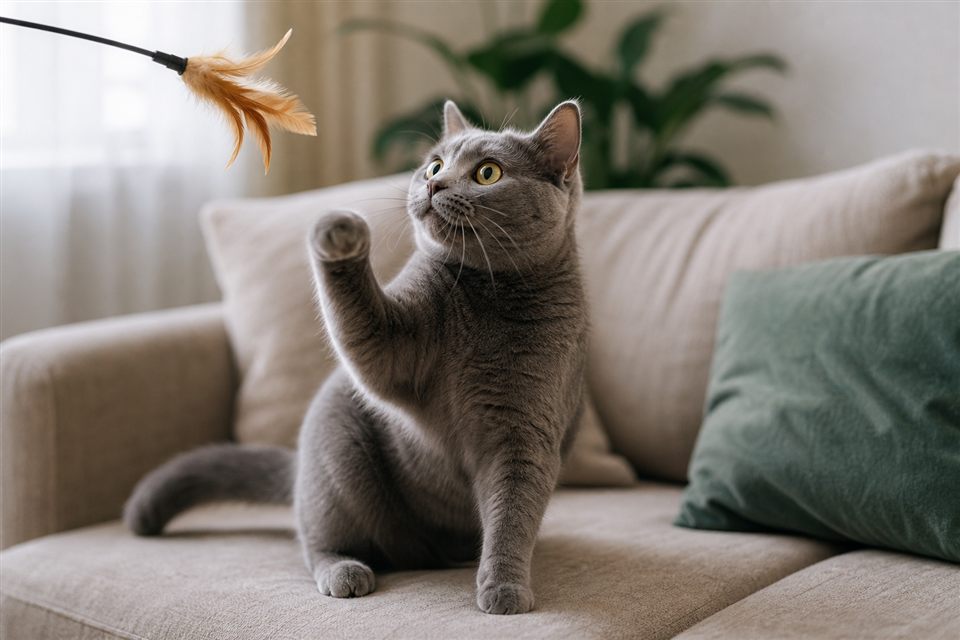
You walk through the hallway and suddenly teeth clamp onto your ankle — classic feline ambush. Most ankle biting is predatory play, not true aggression. Indoor cats with unspent hunting drive treat moving feet like prey. The behavior is common, especially in young cats and single-cat households, but it hurts and can become a habit without the right outlets.
Key points at a glance
- Ankle biting usually means your cat needs more appropriate hunting-style play.
- Moving feet trigger prey drive — running away often makes it worse.
- Redirect to wand toys before bites happen, not after.
- Scheduled play sessions twice daily reduce surprise attacks.
- Sudden behavior changes in older cats warrant a veterinary check.
Why cats target ankles specifically
Your ankles move at prey height, dart unpredictably, and disappear around corners — perfect hunting simulation. Cats crouch, wiggle their hindquarters, then pounce. This sequence is normal play behavior that becomes a problem when the target is your skin instead of a toy.
Kittens learn bite inhibition through littermate feedback. Solo kittens or those weaned early sometimes never fully refine how hard is too hard on human skin.
What to do in the moment
When you feel the stalk begin, stop walking. Stand still and go neutral — no squealing or foot shuffling, which mimics struggling prey. Once your cat disengages, redirect to a wand toy and let them chase and bite that instead. Never use your hands as toys.
If a bite already happened, avoid yelling or chasing. Calmly step behind a door for 30 seconds to end the game. Consistency teaches that ankle attacks stop the fun entirely.
Long-term fixes that actually work
Schedule two 10–15 minute interactive play sessions daily using feather wands or motorized toys. End sessions with a small meal or treat to mimic hunt-eat-groom-sleep cycle. Rotate solo puzzle feeders and kick toys so your cat can bathe hunting energy when you are busy.
| Tactic | Effect |
|---|---|
| Twice-daily wand play | Drains predatory energy |
| Food puzzle after play | Completes hunting sequence |
| Ignoring + redirect | Stops reinforcement of bites |
| Never run from cat | Reduces prey trigger |
When ankle biting is not just play
If biting comes with flattened ears, growling, hissing, or happens in cats who previously never played rough, pain or stress may be involved. Arthritis, hyperthyroidism, and environmental changes can lower tolerance. A vet exam rules out medical causes before behavior plans go further.
The bottom line
Ankle ambush biting is your cat asking for better hunting opportunities — not dominance or spite. Replace feet with toys, play proactively, and stay boring when bites happen. Most cats improve within a few weeks of consistent redirected play.
This article is for general education only and does not replace advice from your veterinarian. Always consult a qualified professional about your individual pet's diet and health.