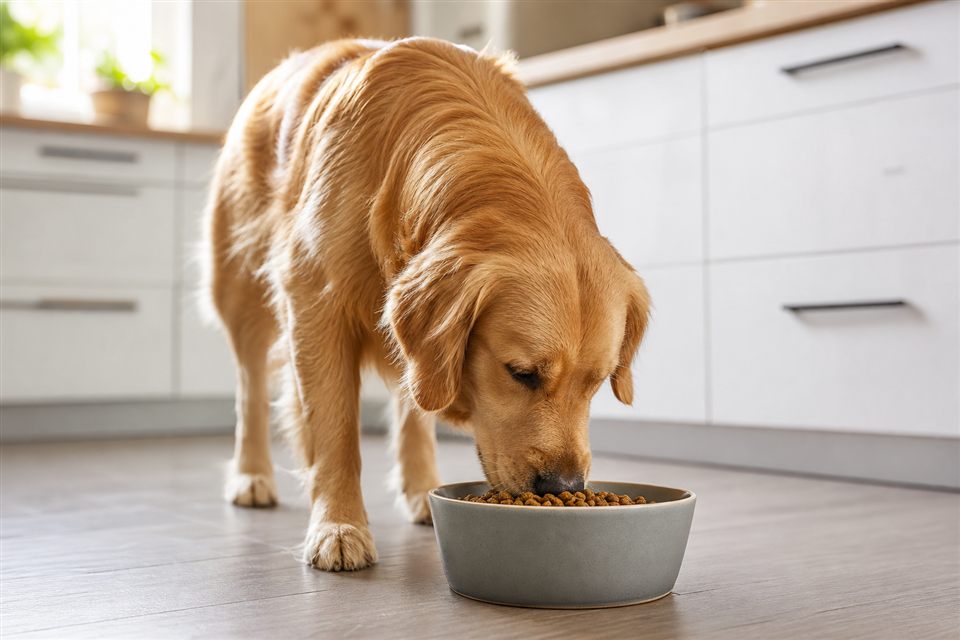
The kibble vanishes in forty seconds. Two minutes later, undigested food reappears on the rug. Speed eating annoys owners and stresses digestive systems — sometimes dangerously in large deep-chested breeds where bloat risk rises with gulped air. Slowing the bowl is mechanical; fixing the habit is management plus sometimes medical rule-out.
Key points at a glance
- Regurgitation right after eating often links to gulping air and food — slow feeding helps many dogs.
- Slow feeder bowls, mats, and puzzle feeders add minutes to meals cheaply.
- Split meals twice daily beats one giant bowl for many gulpers.
- Large breed deep-chested dogs — slow eating reduces (not eliminates) GDV/bloat risk; know emergency signs.
- Weight loss, chronic vomiting, or bloating abdomen — vet exam before blaming speed alone.
Gulping vs true vomiting
| Regurgitation (often speed-related) | Vomiting (illness possible) |
|---|---|
| Passive expulsion, tube-shaped food | Abdominal heaving |
| Minutes after eating | Can be hours after |
| Food looks undigested | Bile, digested material |
| Dog wants to re-eat it | Often feels unwell |
Video for your vet if unsure — distinction guides testing.
Mechanical slow-down tools
Slow feeder bowls — ridges and mazes work for kibble.
Snuffle mats — scatter dry food in fabric folds; nose work slows intake.
Lick mats — wet food spread thin; freeze for longer sessions.
Food puzzle toys — Kong Wobbler, treat balls — meal becomes project.
Muffin tin — small portions in cups; DIY zero cost.
Hand-feeding training — ultimate control for severe gulpers during behavior rebuild.
Size appropriately — brachycephalic dogs need shallow designs they can reach.
Management habits
- Two or three smaller meals daily instead of one feast.
- Calm feeding room — separate from other pets who compete.
- Elevated bowl — helps some large dogs swallow less air; worsens others — trial individually.
- Soak kibble briefly — soft food gulps differently; discard if not eaten in 30 minutes.
- Pre-meal walk — short calm walk, not vigorous exercise immediately before or after large meals in bloat-prone breeds.
Bloat awareness for at-risk breeds
Great Danes, shepherds, setters, standard poodles, others — gulping air contributes to gastric dilatation-volvulus (GDV) — life-threatening stomach twist.
Emergency signs: distended hard abdomen, retching without vomit, collapse — ER vet now.
Slow feeding is one layer of prevention, not guarantee. Discuss gastropexy with your clinic for high-risk breeds.
When slow feeders are not enough
See veterinarian if:
- Vomiting persists after slowing meals two weeks.
- Weight loss or diarrhea ongoing.
- Food aggression extreme around bowl — behavior professional.
- Megaesophagus suspicion — regurgitation in young dog, thin body condition.
Conditions like inflammatory bowel disease, parasites, and esophageal disorders mimic "fast eater" problems.
Cats note
This article targets dogs; cats also vomit from speed — slow feeders for cats exist separately if you have both species.
The bottom line
Dogs who inhale meals then puke undigested food often improve with slow feeder bowls, scattered feeding, and split portions. Large deep-chested breeds benefit doubly from calmer intake and bloat awareness. If slowing meals does not stop vomiting within a couple weeks, or if systemic signs appear, veterinary workup beats buying a third puzzle bowl.
This article is for general education only and does not replace advice from a licensed veterinarian. Suspected bloat is always an emergency.