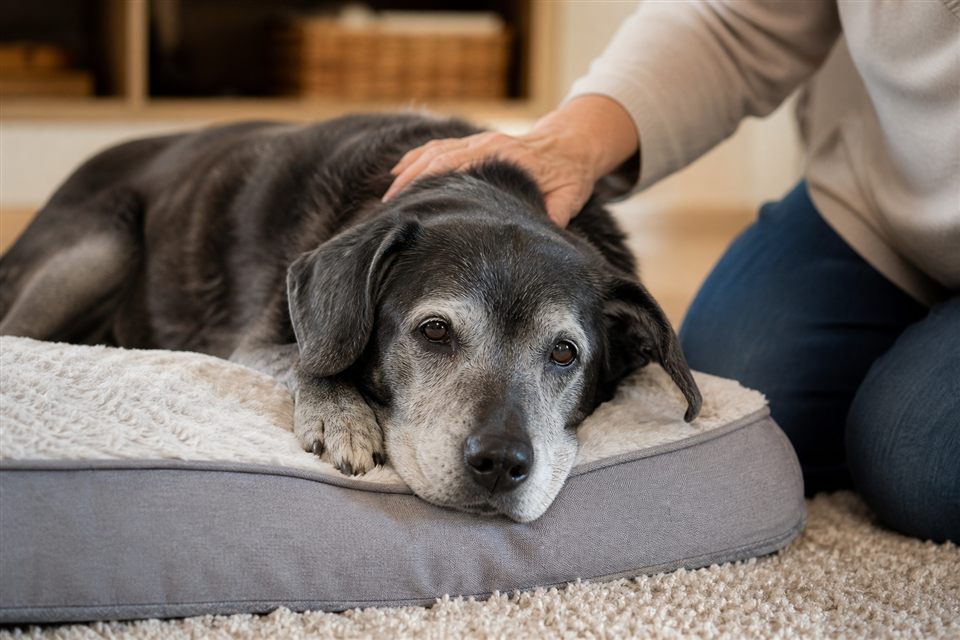
Senior dogs who slept soundly for years suddenly pace hallways at three AM—owners stumble awake wondering if pain, confusion, or bathroom urgency drives circuits around the bed. Night restlessness in geriatric dogs commonly reflects cognitive dysfunction syndrome resembling dementia, untreated arthritis pain, vision or hearing loss increasing disorientation, or need to eliminate more frequently. Anxiety and medication side effects also appear. Distinguishing causes guides treatment—pain management, cognitive support supplements, night lights, and structured routines improve nights better than ignoring exhaustion hoping age alone explains everything.
Cognitive Dysfunction Versus Physical Causes
Cognitive dysfunction shows disorientation, altered sleep-wake cycles, house soiling, decreased interaction, and anxiety especially nighttime—sundowning pattern familiar in human dementia. Arthritis pain worsens lying still—dogs pace seeking comfortable positions. Vision loss makes darkness frightening without night lights. Urinary frequency from kidney disease or infections increases bathroom urgency. Hypothyroidism and brain tumors less commonly mimic cognitive signs—bloodwork and imaging rule out when progression rapid.
Managing Nighttime Restlessness
Maintain daytime exercise and mental enrichment promoting deeper night sleep when pain controlled. Provide orthopedic beds in familiar quiet locations. Use night lights reducing disorientation. Structured late evening potty trip. Discuss pain medications, gabapentin, or anti-anxiety plans with veterinarians. Prescription cognitive diets and supplements like SAMe or selegiline help some dogs per veterinary guidance. Keep household calm predictable—moving furniture worsens confusion.
Key Points
- Sudden night pacing in seniors needs veterinary evaluation—not normal aging dismissal.
- Cognitive dysfunction disrupts sleep-wake cycles with disorientation signs.
- Arthritis pain often worsens at rest—treat pain before assuming dementia only.
- Night lights and consistent routines reduce anxiety in vision-impaired dogs.
- Bloodwork rules treatable conditions mimicking cognitive decline.
- Medication and supplement plans require veterinary supervision.
Practical Tips
- Log pacing episodes noting duration and accompanying vocalization.
- Avoid rearranging furniture during cognitive decline progression.
- Use baby gates blocking stairs if disoriented dogs risk falls.
- Play gentle daytime enrichment tiring mind without overexerting body.
- Discuss melatonin or prescription options only with veterinarian dosing.
When to Contact Your Veterinarian
Book exams for new night pacing, house soiling, or personality changes in dogs over nine. Emergency care for collapse, severe pain vocalization, or inability to settle with distress.
This article is for general educational purposes only and does not replace professional veterinary advice. Contact your vet if your pet shows ongoing symptoms.