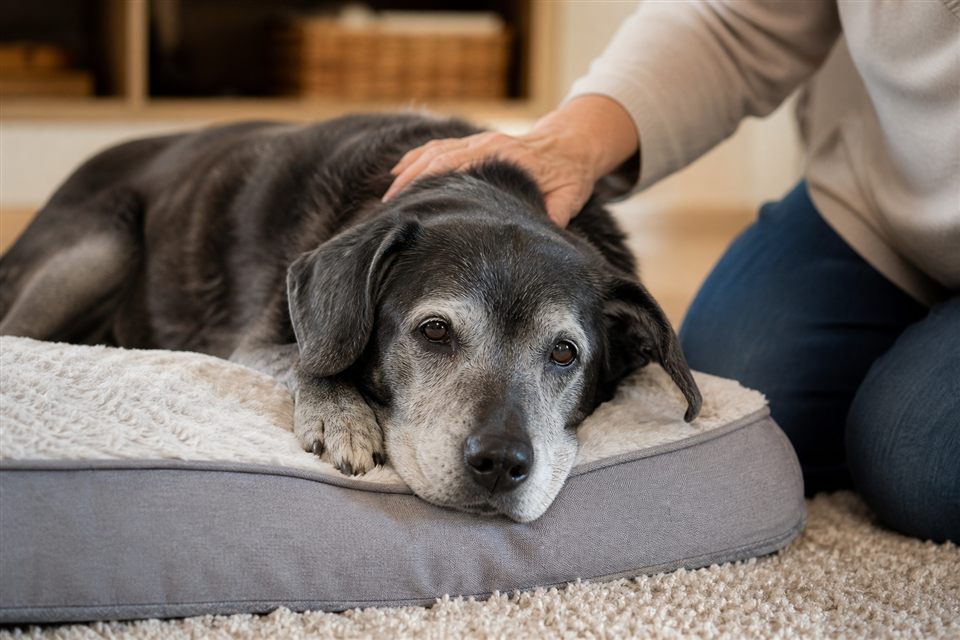
Deep groans as dogs collapse onto beds sound dramatic yet often reflect satisfied exhaustion in healthy adults. Other groans accompany stiff joints shifting into position or abdominal discomfort that owners misread as harmless old-age noise. Distinguishing content sighs from pain requires watching mobility before and after lying down, appetite patterns, and whether groaning increased suddenly in middle-aged rather than senior years.
Large deep-chested breeds groaning with restless pacing and tight abdomen need immediate bloat evaluation regardless of age. The sections below separate common benign causes from orthopedic and emergency patterns worth veterinary attention.
Benign groaning versus pain-related groaning
Benign: Single groan when flopping down, normal gait afterward, eager meals, no reluctance to rise. Pain suspected: Repeated groans each time standing or lying, hesitation before stairs, lip licking, reduced play, irritability when touched along back or hips. Video a full lie-down sequence for your clinic when unsure.
Arthritis and mobility contributors
Senior dogs with hip or spine arthritis groan adjusting posture to reduce joint pressure. Orthopedic beds, ramps, and weight loss reduce strain. Prescription pain plans from your veterinarian improve comfort more than ignoring groans as inevitable aging. Morning stiffness lasting over thirty minutes suggests inflammatory joint disease benefiting from treatment.
Questions owners ask most often
Do puppies groan normally? Yes often during deep sleep and stretching. Can groaning mean bloat? Bloat pairs with unproductive retching and swollen abdomen more than simple groan. Should I start supplements? Only after exam confirms arthritis; random supplements delay proper diagnosis.
When groaning suggests abdominal emergency
Gastric dilatation-volvulus produces restlessness, drooling, distended belly, and repeated unsuccessful vomiting attempts. Groaning alone without those signs rarely indicates bloat. Still, large breeds with sudden groaning and pacing after meals need emergency clinic contact immediately.
Supporting comfortable rest at home
Provide memory foam beds away from drafts. Warm compresses on sore hips help some seniors after veterinary approval. Gentle massage along shoulders relaxes muscles but avoid pressing painful joints. Consistent low-impact exercise maintains muscle that stabilizes arthritic limbs.
Key Points
- Not every groan means pain; context and mobility matter.
- Sudden increase in groaning with stiffness warrants orthopedic exam.
- Bloat shows retching and abdominal distension not groan alone.
- Video lie-down sequences help veterinarians assess pain.
- Weight management and orthopedic beds support arthritic seniors.
Practical Tips
- Log groaning frequency alongside appetite and walk willingness weekly.
- Use ramps to sofas to reduce painful jumping in stiff dogs.
- Avoid strenuous exercise immediately after large meals in deep-chested breeds.
- Discuss pain medication trials at senior wellness visits before winter stiffness peaks.
- Keep emergency vet route saved for suspected bloat symptoms.
- Never assume groaning is normal without exam when behavior changes suddenly.
Building a two-week action plan
Choose one or two changes from this article to implement this week rather than attempting every tip at once. Note your pet's baseline behavior on day one, then review progress on day fourteen with the same lighting and timing conditions when possible. Small consistent adjustments outperform dramatic overhauls that last only a few days. If you see no improvement after following veterinary guidance for two weeks, schedule a follow-up rather than switching randomly to unrelated internet advice that may confuse the underlying issue further.
First-time pet owners often search these symptoms late at night and worry unnecessarily or wait too long. When in doubt, call your veterinary team with a short video clip; many clinics offer nurse triage by phone. The guidance here supports informed conversations with professionals rather than replacing hands-on examination of your individual dog or cat.
When to call your vet
Schedule evaluation for new groaning with lameness, appetite loss, or touch sensitivity. Emergency care is mandatory for unproductive vomiting, swollen abdomen, collapse, or groaning with pale gums. Your veterinarian can assess arthritis, abdominal pain, and cardiac causes with exam and imaging as indicated.
Summary for busy owners
If you remember only a few points from this guide, keep these in mind: watch for patterns that repeat daily rather than one isolated incident, adjust home routines before buying expensive products, and contact your veterinary team early when behavior or appetite changes alongside the main symptom. Most problems improve fastest when medical causes are ruled out first and management stays consistent for at least two weeks before you declare an approach failed. Write down dates and take short videos so your next appointment covers facts rather than guesses.
This article is for general educational purposes only and does not replace professional veterinary advice. Contact your vet if your pet shows ongoing symptoms.